Power without accountability: Why political scandals keep happening and who profits
Politics is evolving, but is it improving? Leaders today are becoming more powerful, but they are no longer answerable to the people.
Power without accountability
Politics is evolving, but is it improving? Leaders today are becoming more powerful, but they are no longer answerable to the people. Globally, governments are making important decisions without providing definitive answers. This is referred to by experts as “power without accountability,” and it is currently one of the main dangers to democracy.
This goes beyond a few bad politicians.It’s a part of a larger trend that includes dark money becoming more prevalent, politics becoming less transparent, and politicians using new technology to influence public opinion.
So, let’s discuss:
What being politically responsible really means
How veiled political advertisements and algorithmic bias undermine democracy
Why establishing an open and honest government is the best way to protect citizens
What ordinary citizens can do to ensure that power serves the people rather than the other way around
What does “power without accountability” mean?
To put it briefly, political accountability requires leaders to be able to defend their actions and accept responsibility for their mistakes. Doesn’t it sound simple? In actuality, however, it is a combination of institutions, laws, regulations, and public pressure.
In the absence of accountability, leaders can:
Spend public funds without disclosing their whereabouts.
Enact laws that only benefit their supporters or friends.
Silence critics and journalists without fear of punishment.
Consider this: in some locations, businesses are awarded billion-dollar contracts without having to submit bids.There are instances where leaders flagrantly disregard court orders.These scandals are not merely sporadic; they demonstrate the system’s flaws and the leaders’ lack of public listening.
The Significance of Political Accountability
1. Public trust and political accountability
The functioning of a democracy depends on trust.People must think that their leaders are working for them, that the laws are fair, and that their votes matter.When trust is betrayed, people stop voting, protesting, and believing in change.When people lose faith, democracy suffers.
2. Political Responsibility and Corruption
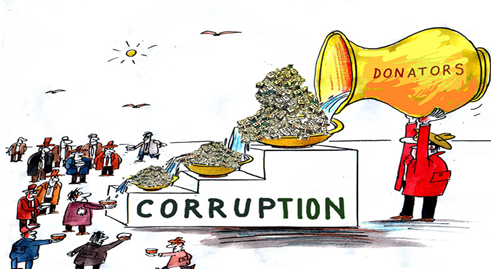
When there are insufficient checks and balances, corruption spreads swiftly.In politics, dark money shows how unreported donations can influence government actions.Regulations will no longer be fair to all if powerful people or big businesses can obtain power in secret.
3. Social stability and political accountability
If people believe the system is unjust, they may demonstrate, go on strike, or even take up arms.History demonstrates that social discontent is almost inevitable when governments ignore popular desires for an extended period of time.
Issues with Contemporary Politics and Openness
Information Control by the Government
In certain regions, the news only presents the government’s version of events.There is a risk of imprisonment or threats for independent journalists.If the government is unclear about its decision-making processes, citizens are unaware of how and why they are made.
The Effects of Algorithmic Bias on Democracy
What we see on social media is determined by algorithms.This algorithm bias may conceal or encourage political statements due to corporate policies or even government pressure.People are influenced in this way without even realizing it.
The Function of Covert Political Advertising
Political ads used to be accessible to all.Nowadays, a lot of online advertisements are only visible to specific users, and the advertisers are frequently unknown.Due to their ability to mislead, incite conflict, and go unchallenged, hidden political commercials have a significant impact.
Dark Money’s Growing Influence in Politics
What is meant by “dark money”?
It’s political spending in which the donors are anonymous. Who is funding elections or policy changes is unknown to us.
Why It’s Dangerous
Strong groups are made possible by dark money:
- Distribute phony campaigns
- Encourage policies that are only beneficial to them.
- Avoid being noticed while political systems are being changed.
Real-world examples
Investigations have shown that covert networks have spent billions of dollars on elections worldwide.Usually masquerading as public service organizations or charities, these organizations are actually influencing politics.
An open government is the most effective way to combat corruption.
Corruption despises transparency. Making decisions in public makes it more difficult for leaders to misuse their power.What is meant by “open government transparency”?
- Online posting of contracts, political contributions, and budgets
- Making policy debates public
- Allowing people to independently examine how money is spent
- Strong openness regulations are typically associated with lower levels of corruption and increased public trust.
Algorithm Prejudice and Political Responsibilities
Social media is quickly overtaking other news sources for billions of people.In order to increase clicks, algorithms that favor extreme or frightening content may:
- Accelerate the spread of false information
- Increase the size of political divides
- Don’t talk too loudly.
Controlling the way political content is displayed online is therefore as important as regulating TV and print advertisements.

How Democracy Is Harmed by Hidden Political Ads
Because it targets people covertly, hidden advertising is bad.It’s possible for two people in the same city to see quite different political messages without even realizing it.This enables campaigns to:
- Make inconsistent promises to various groups.
- Avoid discussing facts in public.
- Send hateful or fearful messages to particular demographics.
- Regulations that clearly identify the source of all online political advertisements are necessary.
- How Ordinary People Can Assist in Restoring Accountability
Governments and tech companies aren’t the only ones responsible. We, the populace, are also capable of:
- Contribute to the advancement of investigative journalism
- Demand transparency through campaigns and petitions.
- Vote frequently, even in municipal elections.
- Verify the veracity of political news before disseminating it.
- Join nonviolent organizations that seek change.
- Case Studies of Nations That Are Doing It Correctly
Estonia’s Digital Transparency: By viewing all of the nation’s laws, budgets, and contracts online, citizens can monitor spending.
Limiting donations and requiring complete disclosure are two ways that New Zealand’s political donation laws combat dark money.
Canadian Political Ad Regulations: All political advertisements, online or in print, must disclose the source of funding.
What Happens If We Don’t Address the Problem?
If power without responsibility continues to grow, we should anticipate:
- More corruption and injustice
- Democratic systems that are less effective
- More misinformation and disarray
- People have completely lost faith in you.
- Once trust is lost, it may take decades to rebuild it.
Final Thoughts
These days, politics is difficult to comprehend. These days, leaders use secret policies, clandestine funding, and social media tactics to maintain their positions of authority without being held accountable to the public.
Democracy is about more than just politics; it’s also about equality, justice, and allowing everyone to voice their opinions.If we fight for open transparency, control algorithmic bias, expose dark money, and expose hidden advertisements, we can restore accountability.
Only when its citizens are informed, united, and not afraid to ask difficult questions can a democracy remain strong.
About The Author