Why Are People Protesting AI Companies in 2026?
Protesting AI Companies in 2026
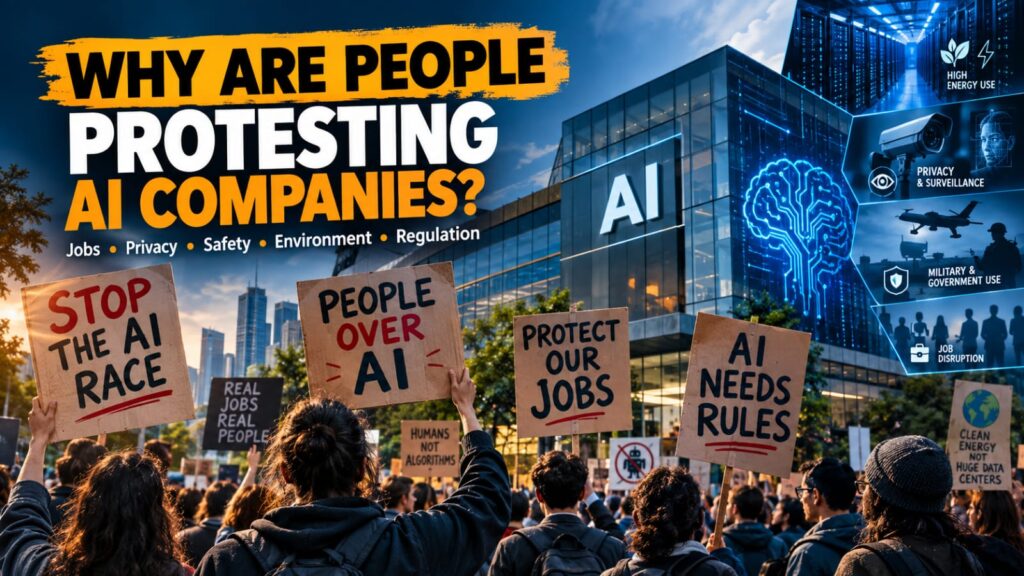
Why are people protesting AI companies in 2026? Jobs, data centers, military contracts and safety fears are behind it. Here’s what the protests and polls show.
Why Are AI Companies Facing Protests in 2026?
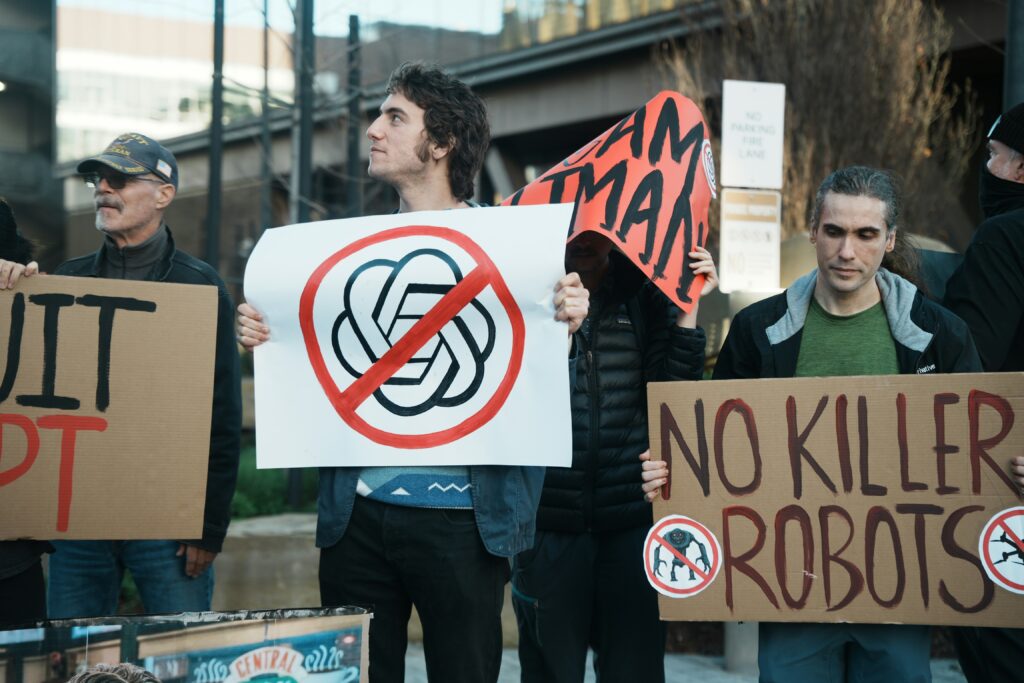
Picture a body bag left outside a tech office. Five years ago that would have sounded like a movie prop. This year it was a real protest scene outside OpenAI’s headquarters, meant to draw attention to AI and warfare. The display was meant to show concerns about military technology and AI in warfare.
If you’ve seen headlines about people protesting AI companies in 2026 and wondered what it’s all about, you’re not alone. The anger isn’t coming from one place. It comes from several worries piling up at once. Here’s a plain breakdown.
Why Are People Protesting AI Companies in 2026?
The short answer is that AI stopped being an abstract tech story and started touching paychecks, power bills and politics.
Most protests fall into four groups:
1. Safety fears: some people want a pause on the most advanced AI.
2. Jobs: people worry their work will disappear.
3. Data centers: neighbors and voters push back on energy, water and noise.
4. Military and government contracts: critics object to AI in war and immigration enforcement.
Each of these draws a different crowd, which is why AI protests in 2026 look messy from the outside.
The “Stop the AI Race” March in San Francisco
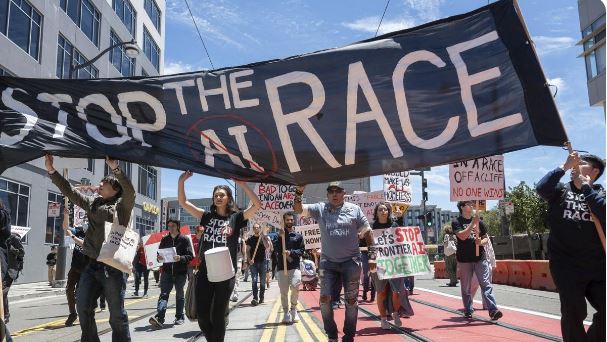
The biggest recent street action happened on July 11. Around 400 people marched through San Francisco to protest the leading AI companies. Other outlets counted fewer, so “several hundred” is the safe description. The march was organized by Stop the AI Race and moved from OpenAI’s headquarters to the Anthropic and Google DeepMind offices, with signs and speeches and no reported violence.
Their argument is worth understanding. Protesters say the leaders of AI companies have themselves warned repeatedly about the existential risks of the technology. So the question they ask is simple: if you believe it’s that dangerous, why keep racing?
The demand is also narrower than “ban AI.” The organizers want a conditional halt to development, with existing models staying available and narrow AI applications still allowed. They also publicly distance themselves from violence and say they’re committed to peaceful protest.
Why Are People Protesting Against AI? The Job Fear
Ask someone on the street why they’re uneasy about AI and jobs usually come up first. The polling backs this up.
A Quinnipiac poll from March found 70% of Americans think AI will reduce job opportunities, and 30% worry their own job could become obsolete, up from 21% the previous April. A separate survey from Bentley University and Gallup found that 79% of respondents expect AI to reduce the number of US jobs over the next decade.
Executives haven’t helped. Anthropic CEO Dario Amodei warned earlier this year that AI will cause an “unusually painful” disruption in the job market. When the people building the technology say that, workers hear a warning aimed at them.
Here’s a scenario you may recognize. A junior copywriter, a customer support agent or a paralegal sees their company roll out an AI tool “to help the team.” Nobody says anyone is being replaced, but everyone is quietly doing the math. That uncertainty is a big part of why AI protests and job losses keep showing up in the same sentence.
Why Are AI Companies Being Protested Over Data Centers?
If you live near a planned data center, this one may feel the most real.
The numbers shifted fast. A Penn Annenberg survey found opposition to a local data center rising from 49% in February–March to 61% in June–July, while support fell from 21% to 14%. It cut across party lines too: 69% of Democrats, 54% of Republicans and 53% of independents said they’d be against new projects in their area.
The reasons are practical. In the Quinnipiac poll, electricity costs, water use and noise were the main reasons people gave for opposing data centers. The pushback is also having real effects: at least 75 data center projects worth $130 billion were disrupted in the first quarter of 2026, according to Data Center Watch.
There’s a twist, though. A poll from Milltown Partners found that only 8% of data center opponents said they know of one near their home. The pollsters’ read is that data centers have become a stand-in for broader anger at an AI future many Americans don’t want but fear they’ll have to pay for. In other words, the data center is where people can actually show up and say no.
Military Contracts and Trust
Another strand of AI protests in 2026 has little to do with chatbots at work. In March, protesters chalked messages outside the Anthropic and OpenAI headquarters after a Pentagon standoff, praising Anthropic and condemning OpenAI.
The theme came back at OpenAI’s DevDay on September 29. More than a dozen groups rallied at the entrance, urging OpenAI to end ICE and military contracts and criticizing the environmental impact of data centers. Public opinion leans the same way on the military question: a slight majority of Americans oppose the military using AI to select targets, while 36% support it.
The last row matters. Liferaft says threats targeting AI executives, companies and data centers rose sevenfold between late February and May, and some firms have told employees not to display company branding. Peaceful protest is the norm, but the climate is tense, and reports of attacks on executives show how heated things have become.
How to Make Sense of This Without Getting Lost
If you’re trying to form your own view, here’s a simple approach:
1. Separate the issues. A protest about existential risk is not the same as one about electricity bills.
2. Check the poll details. Look at who was surveyed, when, and how the question was worded.
3. Look for primary sources. Organizer statements, company announcements and local council records tell you more than a viral clip.
4. Follow your local news. Many data center decisions are made at county or city level, where public comment is open.
5. Don’t assume everyone shares one goal. Some protesters want a pause, some want regulation, and some just want lower power bills.
Where This Leaves Us
Protesting AI companies in 2026 isn’t one movement with one demand. It’s a mix of safety campaigners, worried workers, frustrated neighbors and critics of military contracts, all pointing at the same industry. The polls suggest the mood is souring even as many people keep using AI tools at work.
Public pressure is already changing outcomes, from stalled data centers to new moratorium proposals. New York Governor Kathy Hochul backed a one-year data center moratorium, and Sanders and Ocasio-Cortez introduced a federal moratorium bill in March. Whether companies answer with more transparency or just more security will likely decide how the next year goes.
FAQs
Why are people protesting AI companies in 2026?
Mainly because of fears about job losses, the cost and environmental impact of data centers, AI safety risks and military contracts.
What are AI protests about in 2026?
They cover several issues at once. Some groups demand a pause on frontier AI, others target data center projects, and others oppose government and military deals.
Are the protests violent?
The large marches reported this year have been peaceful. Organizers of the San Francisco march said they reject violence, though security firms report a rise in online threats.
Do most Americans oppose AI?
Not across the board. Views are mixed, but polls show growing worry about jobs and rising opposition to local data centers.
Can protests actually change anything?
They’ve already influenced data center plans and political debate, though results vary by place.

C0-Founder and Editor
Tazeen and Arzoo are the Co-Founders and Editors of THE NEWSTER. They specialize in covering world news, technology, weather, business, and trending stories. Their mission is to deliver accurate, timely, and well-researched journalism while making complex topics clear, reliable, and easy for readers to understand.
About The Author