Meer Raza Murder Case: What Really Happened? Full Story, CCTV & Suspects Explained
Meer Raza Murder Case
The Meer Raza Murder Case has gripped Karachi for weeks here’s the full story, what the CCTV footage shows, and where the investigation stands right now.
Meer Raza Murder Case: What Happened to Him? CCTV, Suspects and Latest Investigation
I’ve been glued to my phone every night for the past three weeks, refreshing Karachi news pages the way I used to refresh cricket scores. That’s how deep the Meer Raza Murder Case has pulled people in not because it’s sensational, but because every few days something genuinely doesn’t add up, and a grieving family keeps standing in front of cameras asking the same simple question: who killed our son?
If you’ve only caught bits and pieces of this story on social media, I get it the timeline has twists, the police kept changing their story, and there’s now a business partner, a missing pistol, an exhumed body, and dozens of “suspects” who technically aren’t suspects. Let me walk you through it properly, the way I’ve been piecing it together myself.
Who Was Mir Raza Ali?
Mir Raza Ali also widely written as Meer Raza was a 25-year-old businessman from Karachi. He wasn’t a random victim of street crime; he was an IBA graduate who co-owned a popular dessert shop called Wafflix. By most accounts, he was a young guy building something for himself, running a business with a partner, and living a fairly normal life with his parents.
That’s what makes this case sting so much. This wasn’t some abstract crime statistic it was a well-known, well-liked young entrepreneur who simply didn’t come home one night.
Describe Full Story: How the Night Unfolded
Here’s the timeline as investigators and family members have described it publicly.
On the night of July 28, Raza came home from his shop and told his family he’d be back within ten minutes. He left again and never returned.
CCTV footage recovered later shows him at home between 10pm and 11pm, taking a pistol out of a drawer, checking it, and placing it in his car before heading out. What’s still unclear, even to investigators, is whether he actually carried that weapon with him when he left the house. A separate piece of footage shows him boarding a taxi, but the camera angle was too far away to confirm if he was holding anything.
According to a cab driver’s statement, Raza booked an online ride at 3:57am. Notably, he left behind his smartwatch, wallet, and house keys taking only his phone and roughly Rs1,000 in cash. His parents have said this small detail alone convinced them something was deeply wrong, because it wasn’t like him to leave home that lightly, that late, without saying where he was going.
His body was discovered the next day, July 29, in bushes near Shahi Qila Ground in Karachi’s Gulistan-e-Jauhar area, not far from a wedding hall. A gardener at the site was the one who first spotted him.
Why the Meer Raza Murder Case Blew Up: The Suicide Controversy
Here’s where this case took its first major turn, and honestly, where public trust in the investigation started falling apart.
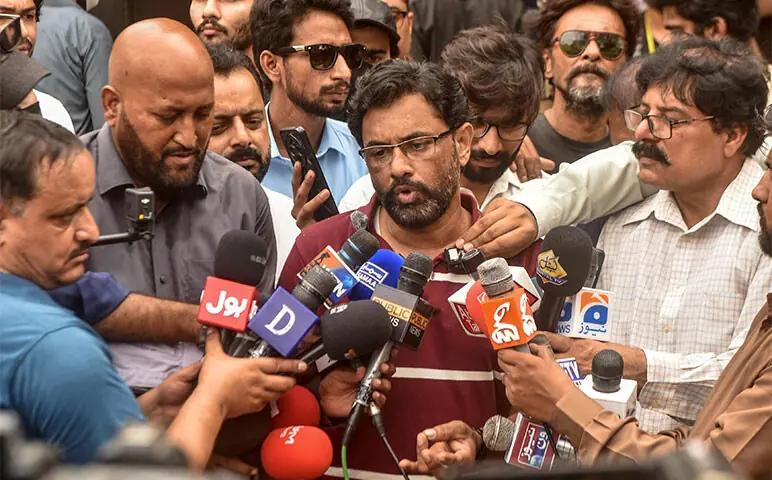
Initial police reports leaned toward suicide. Raza’s family rejected that theory from day one. His father repeatedly told reporters that his son was murdered, not a man who took his own life, and the family’s lawyer, Jibran Nasir, publicly accused police of pressuring the family for hours and pushing them to accept the suicide narrative instead of investigating properly.
The family pushed back hard enough that a court allowed Raza’s body to be exhumed for a second post-mortem. That fresh autopsy changed everything.
The re-examination found a gunshot wound to his back, along with additional signs of injury on his body. A chemical analysis reportedly found acid particles and gunshot-residue elements on his shirt. Blood tests also detected sedatives in his system. Based on these findings, police formally added Section 302 of the Pakistan Penal Code the murder charge to the FIR, alongside Section 201, which covers destroying evidence or shielding an offender.
In plain terms: the physical evidence made the suicide theory very hard to defend, and the case flipped into an active murder investigation almost overnight.
The CCTV Footage: What It Actually Shows (and Doesn’t)
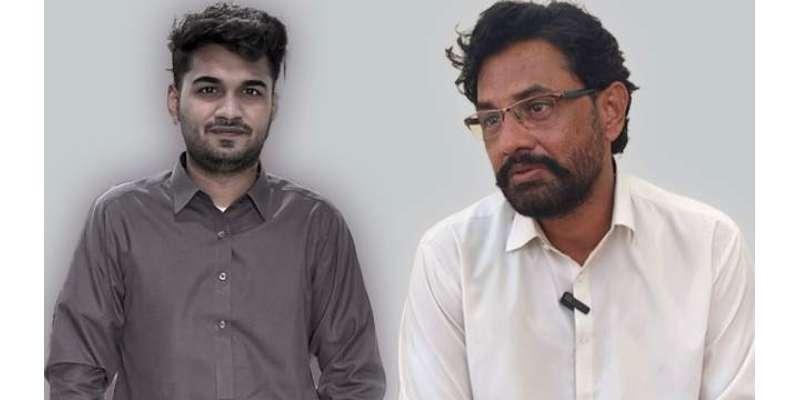
A lot of the online buzz around this case centers on CCTV footage, so let’s be precise about what’s actually been confirmed.
1. Home footage (10pm–11pm): Raza is seen in his kitchen, retrieving a pistol, checking it, and placing it in his car.
2. Departure footage: He’s seen boarding a taxi later that night, but the camera was positioned too far away to tell if he was carrying the weapon.
3. Taxi booking record: A driver confirmed picking him up via an online ride-booking service at 3:57am.
That last confirmed sighting is the point investigators keep circling back to after that, there’s a gap in verified footage until his body was found the next day.
There have also been complaints about how this evidence was handled. The family’s lawyer publicly alleged that a guesthouse DVR potentially containing footage relevant to the case was carried around informally by a police officer instead of being secured properly, and that Raza’s smartwatch sat with a senior police official for over a week before being returned to the family. Those allegations led to a formal inquiry request against several officers.
Suspects, Bail, and the Business Partner Question
This is the part people misread the most, so let me be careful here.
Despite headlines throwing around the word “suspects,” Raza’s family and their lawyer have publicly clarified that they have not formally accused any specific individual of the killing. What they’ve done is hand investigators a list of names people who might have relevant information without labeling anyone as guilty.
One name that’s come up repeatedly is Muhammad Ahmed Bhardey, described as Raza’s business partner, who ran one of their two shops while Raza ran the other. Bhardey sought and was granted pre-arrest bail, meaning he hasn’t been arrested or charged, but is cooperating with the investigation as a precaution against being detained. His lawyer has stated he was called to the crime scene around 1am and has fully cooperated with police.
Separately, police have been questioning people who reportedly owed Raza money, along with friends, associates, and people who happened to be near the crime scene, plus staff connected to a guesthouse investigators believe he may have stayed at before his death.
None of this means guilt. It means the net is wide, and as of this writing, no single person has been formally charged with the murder.
The Bigger Fallout: A Judicial Probe and Police Accountability
What’s made this case bigger than a typical local crime story is how much it’s exposed about the investigation itself.
The original medico-legal officer who conducted the first post-mortem was removed after an inquiry found serious lapses in that initial exam the one that had leaned toward the suicide theory. The Sindh government has moved to set up a judicial commission to independently probe the killing, separate from the police investigation itself. And the original investigation team was dissolved entirely, replaced by a five-member committee formed on the orders of Sindh’s police chief.
The family’s lawyer has gone further, formally demanding a criminal inquiry against three specific police officers over how evidence was allegedly mishandled.
If you’re keeping score, that’s: one removed medical officer, one dissolved investigation team, a fresh judicial commission, and a formal misconduct complaint all stemming from a single case. That’s not normal, and it’s a big part of why this story has stayed in headlines for weeks instead of fading after a few days.
Read More : Karmelo Anthony Case Explained: Why Everyone Is Talking About His Story
Where the Case Stands Right Now
As of mid-August 2026, here’s the honest state of play:
– The case is officially classified as murder, not suicide.
– A court has given investigators until August 24, 2026 to complete their probe and submit findings.
– No individual has been formally charged with the killing.
– A judicial commission has been approved to independently review the case.
– Police are actively working through digital evidence, including DVR footage, phone records, and call data from dozens of contacts.
It’s an active, ongoing investigation not a closed case so some of these details will likely shift again by the time you’re reading this.
Read More : Ketan Agarwal Murder Case: The Chilling Truth Behind the Lohagad Fort “Accident”
FAQs About the Meer Raza Murder Case
Who was Mir Raza (Meer Raza) Ali?
He was a 25-year-old Karachi businessman and IBA graduate who co-owned a dessert shop called Wafflix. He went missing on July 28, 2026, and was found dead the next day.
Was it suicide or murder?
Police initially explored a suicide theory, but the family disputed it from the start. A second post-mortem, ordered after the body was exhumed, found a gunshot wound to the back and other signs of injury, leading police to officially file murder charges.
What does the CCTV footage show?
It shows Raza at home handling a pistol before he left that night, and later boarding a taxi though the footage doesn’t clearly show whether he was carrying the weapon. He was picked up by an online cab at 3:57am, which is the last confirmed sighting of him alive.
Has anyone been arrested for the Meer Raza Murder Case?
Not formally. Dozens of people have been questioned or detained for investigation, and one individual Raza’s business partner has pre-arrest bail, but no one has been officially charged with the murder as of mid-August 2026.
Why did the police investigation get restarted?
The original medico-legal officer was removed after lapses were found in the first post-mortem, and the initial investigation team was dissolved amid the family’s complaints about mishandled evidence. A new five-member team and a judicial commission are now involved.
When will the investigation be completed?
A court has directed investigators to submit their findings by August 24, 2026, though ongoing cases like this often see extensions if evidence review is still underway.
Final Thoughts
What strikes me most about this case isn’t just the mystery of what happened that night it’s how hard one family has had to fight just to get their son’s death taken seriously. If the first post-mortem hadn’t been challenged, if the family hadn’t pushed for exhumation, this might have quietly closed as a suicide case. Instead, it’s forced a judicial commission, an overhaul of the investigation team, and real scrutiny of how police handle evidence in high-profile cases.
There’s still no confirmed answer to who killed Mir Raza Ali, and there may not be one until the courts and the new investigation team finish their work later this month. But if there’s one thing this case has already proven, it’s that persistence from a grieving family can change the direction of an entire investigation and that’s worth paying attention to, whatever the final outcome turns out to be.

C0-Founder and Editor
Tazeen and Arzoo are the Co-Founders and Editors of THE NEWSTER. They specialize in covering world news, technology, weather, business, and trending stories. Their mission is to deliver accurate, timely, and well-researched journalism while making complex topics clear, reliable, and easy for readers to understand.
About The Author