Himalayan Glaciers Are Collapsing: Is This What Caused Nepal’s Catastrophic Floods?
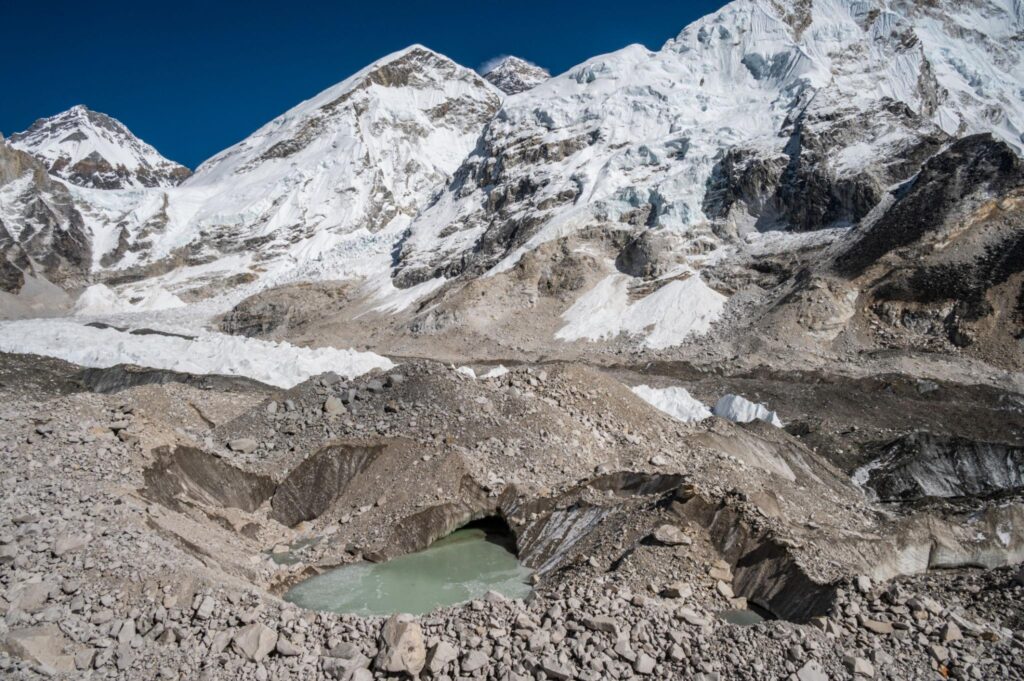
Himalayan Glaciers Are Collapsing
Himalayan glaciers are collapsing at record rates, and scientists say it may explain Nepal’s catastrophic floods. Here’s what’s really happening in the mountains.
Himalayan Glaciers Are Collapsing: Is This What Caused Nepal’s Catastrophic Floods?
A friend of mine trekked through Langtang valley two years ago and sent me photos of a glacier tongue creeping between two ridgelines pale blue ice, totally silent, almost postcard-pretty. That same stretch of mountains is where, on August 26, 2026, a piece of that landscape broke loose and killed hundreds of people in minutes. Those old trekking photos are a reminder that the Himalayas aren’t a frozen, unchanging backdrop. They’re moving, thinning, and cracking apart faster than most of us realize.
If you’ve seen headlines about Himalayan Glaciers Are Collapsing and wondered whether this was a freak accident or something scientists have dreaded for years, here’s the plain-language rundown.
1. What Happened in Nepal?
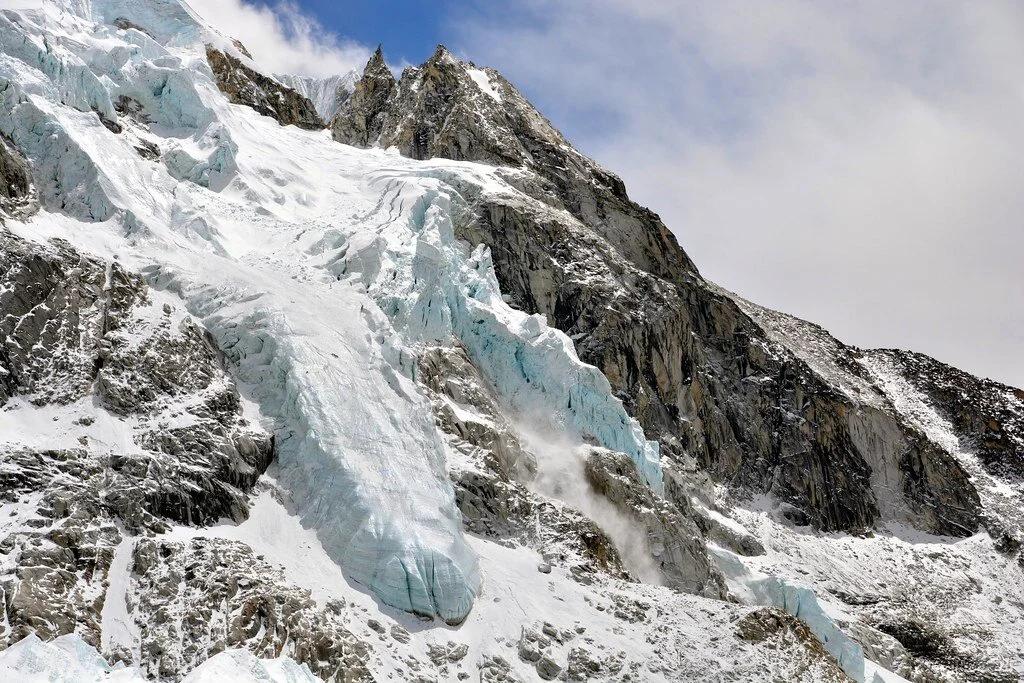
At around 8:40 a.m. on August 26, a roughly 610-meter-wide section of glacier sheared off high above the Lhende river near Langtang Lirung, close to the Nepal-China border. It fell nearly 1,200 meters, hitting the valley with enough force that seismic stations logged it as a magnitude 4.4–5.2 earthquake. The falling ice briefly dammed the river; when that gave way, a wall of water and debris tore through Rasuwa district and downstream along the Trishuli and Narayani rivers. Water levels rose about 9 meters in 30 minutes. More than 600 people have died in Nepal alone, with over 1,000 still missing.
2. What Is Causing Himalayan Glaciers to Collapse?
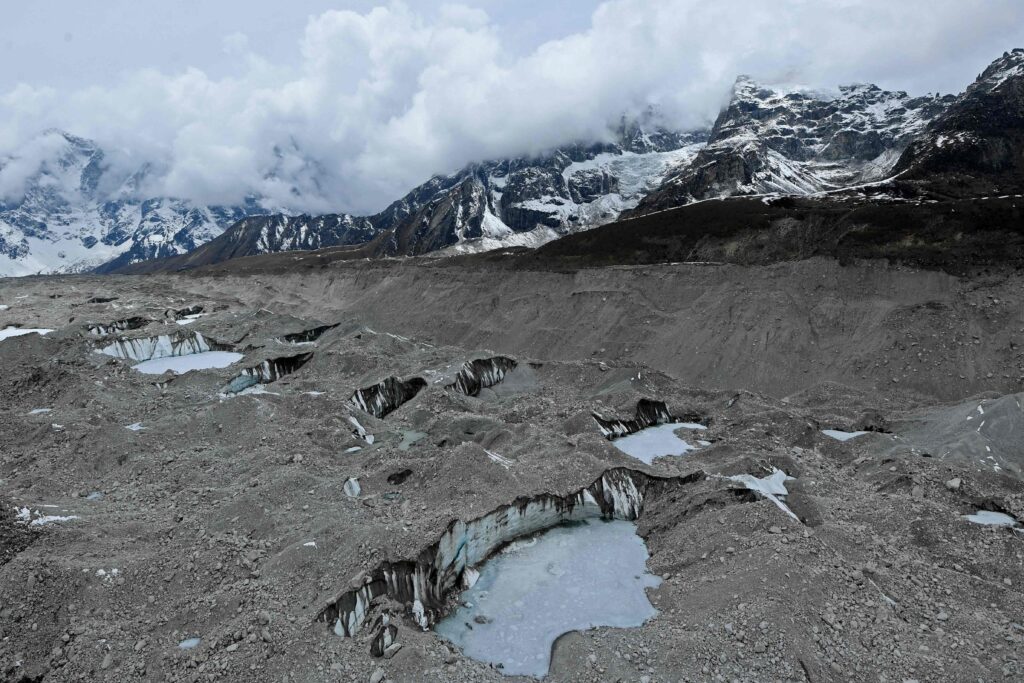
It’s not just “ice melting into water” it’s closer to structural failure. Ice in high mountains often holds rock together, like glue in the cracks (a form of permafrost). As temperatures rise, that ice-glue melts and the rock loses its support. Combined with decades of thinning, you get exactly the kind of sudden collapse that hit Langtang Lirung. As one British Antarctic Survey scientist put it, shrinking glaciers become unstable, and sudden failures can occur with little warning.
3. Did Glacier Collapse Trigger Nepal’s Catastrophic Floods?
This is about as close to confirmed as it gets days after a disaster. Before-and-after satellite images clearly show a chunk missing from Langtang Lirung. Some early reports guessed a glacial lake had burst, but imagery from before the event shows no major lake there. Instead, the falling glacier itself displaced the river with enough force to cause lake-burst-level devastation through a different mechanism.
4. What Is a Glacial Lake Outburst Flood (GLOF)?
Since GLOF Nepal is trending, here’s the simple version. A GLOF happens when a lake formed by melting glacier ice usually held back by a loose wall of rock and debris called a moraine suddenly bursts, like a dam made of gravel instead of concrete. Triggers include:
– An avalanche or landslide crashing into the lake
– Gradual erosion of the moraine wall
– A supraglacial lake (one that forms on the glacier’s surface) draining suddenly through a crack
Nepal saw exactly this in July 2025, when a supraglacial lake in Tibet drained and swept away the Nepal-China Friendship Bridge, killing at least nine people.
5. Why Are Himalayan Glaciers Melting Faster?
ICIMOD reports from March 2026 months before this disaster found Himalayan glaciers had lost up to 27 meters of ice thickness since 1975, and lost around 12% of their area and 9% of their ice reserves between 1990 and 2020. The most alarming stat: the rate of ice loss has doubled since 2000. Glaciers between 4,500 and 6,000 meters elevation are especially exposed to “elevation-dependent warming” high altitudes heating up faster than lower ground.
Read More : Why Could Nepal’s Flood Recovery Cost $5 Billion? The Damage Is Worse Than It Looks
6. Which Areas in Nepal Are Most at Risk?
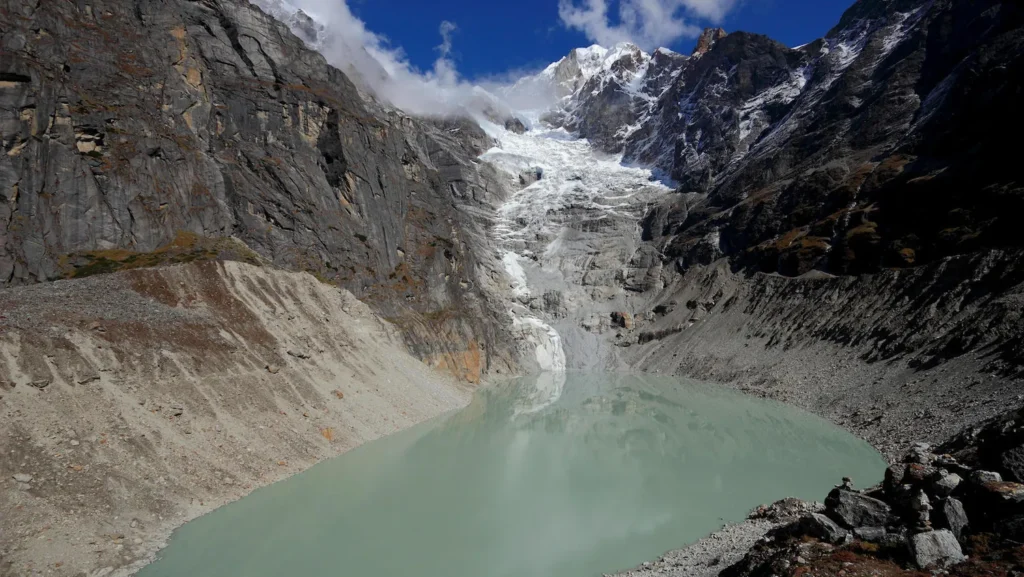
An ICIMOD-UNDP inventory has identified 47 Potentially Dangerous Glacial Lakes 21 in Nepal, 25 in Tibet, and 1 in India feeding Nepal’s major river basins. High-risk dangerous glacial lakes Nepal is watching include Tsho Rolpa, Imja Tsho, Thulagi, Lower Barun, Lumding Tsho, and Hongu 2. The most exposed districts include Solukhumbu, Sankhuwasabha, Dolakha, Sindhupalchok, and as this week proved Rasuwa and the Trishuli basin.
7. How Much Damage Have the Floods Caused?
Nepal’s Finance Minister estimates reconstruction costs at $4–5 billion, close to a tenth of the national economy. Early assessments include 41 bridges destroyed, 42 km of road wiped out plus an 80-km stretch of highway to the China border, roughly 700 MW of hydropower knocked offline, and thousands of homes buried under silt.
8. What Are Scientists Warning About?
Researchers are careful not to draw a direct, one-to-one climate link to this specific event just yet that takes proper study. But nearly every scientist adds the same caveat: the Hindu Kush Himalaya is warming, glaciers are melting faster than 15 years ago, and events like this are becoming more likely. One geologist described glaciers “hanging above our heads,” warning that when they let go, it hits like “a tsunami from the sky.“
Read More : Nepal Flash Floods 2026: Hundreds Dead After Glacier Collapse Triggers Devastating Floods
9. Could More Catastrophic Floods Happen?
Realistically, yes and possibly soon. With 47 lakes already flagged and ice loss accelerating, Nepal faces a growing list of pressure points, not a single resolved threat. A new lake has already formed at this week’s collapse site and is being closely monitored for a possible second burst.
10. Is Climate Change Making Nepal’s Floods Worse?
Indirectly, almost certainly. Warming accelerates glacier retreat, glacial lakes and unstable rock faces multiply, and more precipitation is falling as rain instead of snow even at high elevations, raising landslide risk. No scientist will say climate change “caused” this exact flood in one sentence but the trend line is impossible to ignore: a warmer Himalaya is a more unstable Himalaya.
Read More : Europe’s Rivers Are Drying Up: The Europe Water Crisis 2026 Explained
11. What Can Nepal Do to Prevent Future Disasters?
Nepal has real, proven tools already:
1. Lake-lowering projects successfully done at Tsho Rolpa and Imja Tsho
2. Early warning systems community sensors giving villages minutes to evacuate
3. Satellite hazard mapping tracking which lakes are expanding fastest
4. Cross-border cooperation with China, since 25 of the 47 dangerous lakes sit in Tibet
5. Resilient rebuilding designing new roads, bridges, and hydropower for future glacial events, not just past flood levels
12. What Happens Next?
Rescue and relief continue across Rasuwa, Nuwakot, Dhading, and Gorkha, while authorities watch the newly formed lake at the collapse site. Expect fresh scientific studies on whether this fits the broader warming pattern, plus pressure on Nepal and international partners to fund monitoring before the next lake fails.
Read More : 7.4-Magnitude Earthquake Hits Colombia – What Happened and Why Was It So Powerful?
Frequently Asked Questions
Why are Himalayan glaciers collapsing?
Rising temperatures melt the ice holding high-altitude rock together while thinning glaciers from the surface down, making sudden structural failures more likely on steep terrain.
Did melting glaciers cause Nepal’s floods?
Satellite imagery confirms a large glacier section broke away and triggered the flooding. Scientists say it’s too early to directly link this specific event to climate change, though the broader warming trend is well documented.
What is a glacial lake outburst flood?
A GLOF happens when a glacier meltwater lake, dammed by loose rock and debris, suddenly bursts and sends a flash flood downstream often triggered by avalanches or landslides.
Why are Himalayan glaciers melting so quickly?
ICIMOD research shows ice loss across the region has doubled since 2000, driven by elevation-dependent warming that hits high-altitude zones even faster than lower ground.
Are Nepal’s glaciers becoming more dangerous?
Yes 47 potentially dangerous glacial lakes have been identified feeding Nepal’s river basins, several expanding rapidly.
Can glacier-related floods be prevented?
Not entirely, but risk can be reduced. Nepal has already lowered water levels at high-risk lakes and installed early warning systems that have given villages critical evacuation time.

C0-Founder and Editor
Tazeen and Arzoo are the Co-Founders and Editors of THE NEWSTER. They specialize in covering world news, technology, weather, business, and trending stories. Their mission is to deliver accurate, timely, and well-researched journalism while making complex topics clear, reliable, and easy for readers to understand.
About The Author