Europe’s Rivers Are Drying Up: The Europe Water Crisis 2026 Explained

Europe’s rivers are drying up fast. Here’s a first-hand look at the Europe water crisis 2026, what’s causing it, and what it means for daily life.
Europe’s Rivers Are Drying Up: What’s Driving the 2026 Water Crisis?
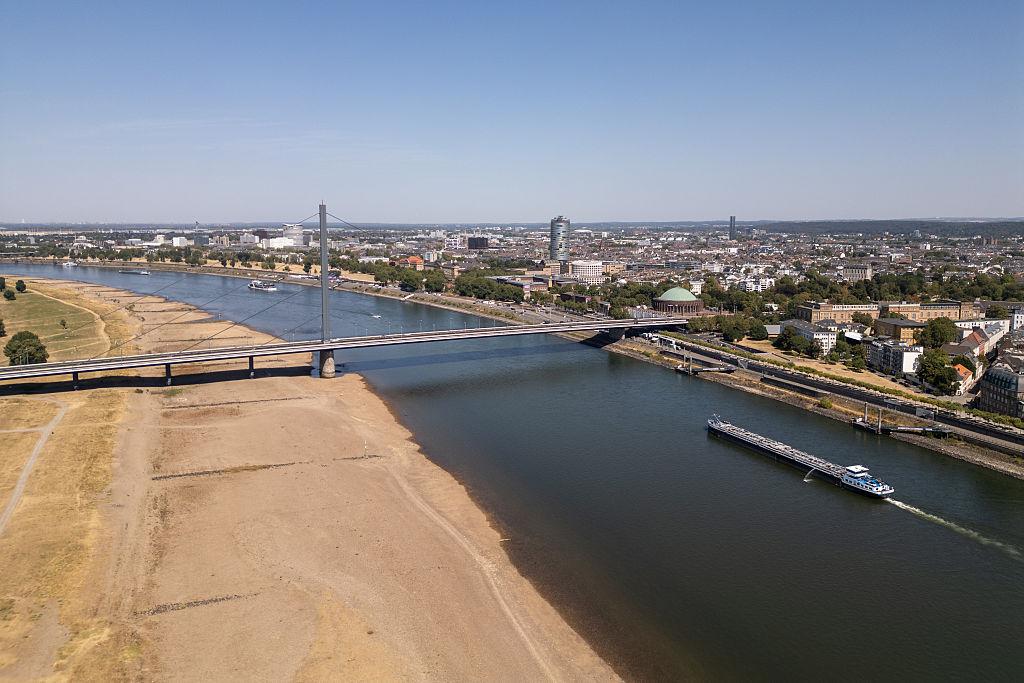
Last month I stood on a bridge over the Rhine near Cologne and honestly didn’t recognize the river. I’ve crossed that bridge a dozen times over the years, and the water always felt close, almost pushy, lapping right up near the walking paths. This time there was a beach. An actual sandy, cracked-mud beach where boats used to glide past. A guy next to me with a fishing rod just shook his head and said, “I’ve lived here forty years, never seen it like this in July.“
That moment is basically why I started digging into what’s really going on. Europe’s rivers are drying up in a way that isn’t subtle anymore it’s visible from space, it’s showing up in shipping schedules, in grocery prices, and in whether or not your neighbor’s garden survives August. So let’s talk about it the way I’d explain it over coffee, not like a textbook.
So What’s Actually Happening Right Now?
Here’s the blunt version. As of August 2026, four of Europe’s biggest rivers the Rhine, the Danube, the Po, and the Loire have all hit record-low water levels in the same summer. That’s not four separate local droughts. That’s a continent-wide event.
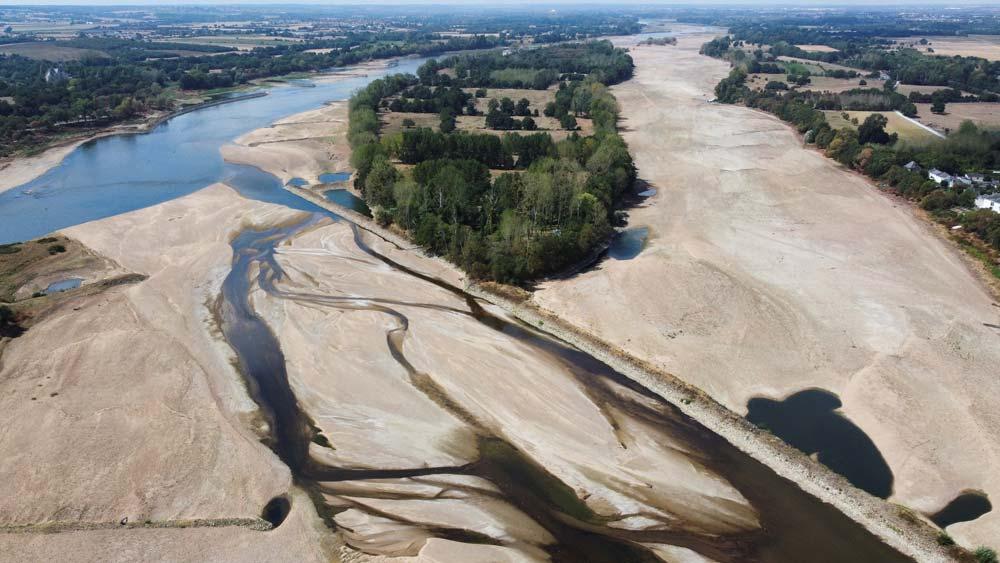
The EU’s Joint Research Centre confirmed it directly: drought conditions that started building in spring got dramatically worse through July and August, pushing these rivers to levels nobody has recorded before. Satellite images from Copernicus (the EU’s Earth-observation program) show exposed sandbanks and gravel bars on the Loire, Po, Rhine, and Danube that are normally hidden meters underwater.
I know satellite data can feel abstract, so here’s a number that made it real for me: at Kaub, a critical chokepoint on the Rhine in Germany, water levels dropped to around 9 inches this year. The previous record low, set back in 2018, was 9.3 inches. We didn’t just break the record we blew past it.
European Rivers at Record Low Levels — The Numbers
I put together a quick table because honestly, seeing the stats side by side hit harder than reading paragraphs about it.
| River | Region Affected | What the Data Shows |
|---|---|---|
| Rhine | Germany, Switzerland, Netherlands | Record-low flow along ~85% of monitored stretches; shipping halted near Kaub |
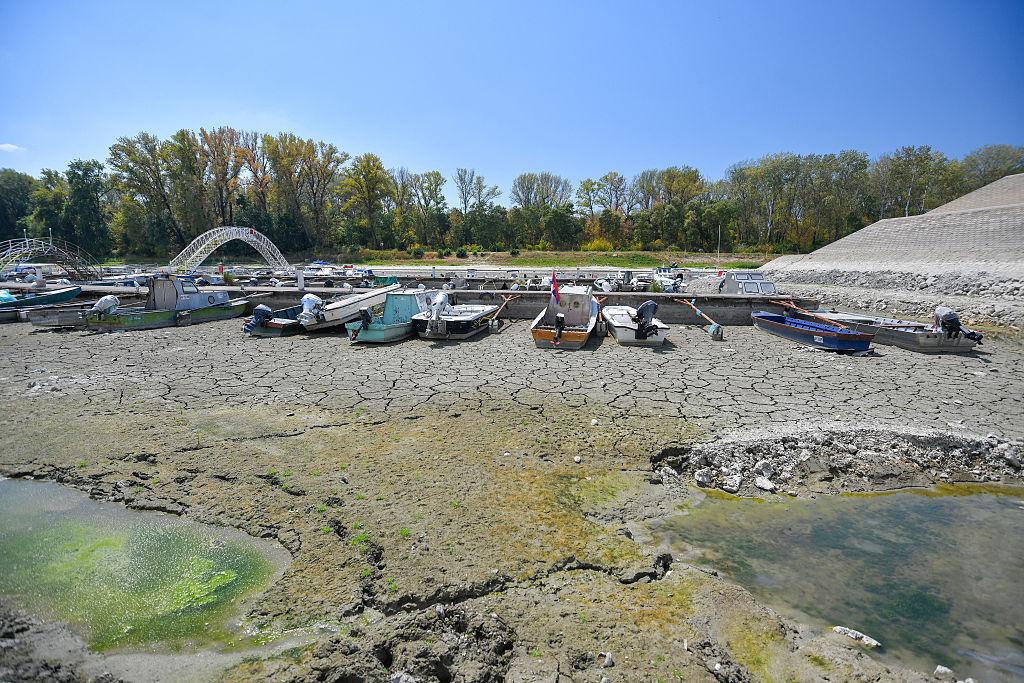
| Danube | Hungary, Serbia, Bulgaria, Romania | Record lows across roughly two-thirds of the river; nearly forced shutdown of Hungary’s Paks nuclear plant |
| Po | Northern Italy | Extreme drought along about 40% of its course; pressure on irrigation and hydropower |
| Loire | France | Unusually low flow since late June; wide exposed channel near Saumur |
| Thames | United Kingdom | Record-low average flow along 95% of monitored sections |
| Rhone | Switzerland, France | Record lows along roughly 30% of its length |

Read More : North Korea Nuclear War Warning: Will US-South Korea Drills Spark a Real Crisis?
Those percentages come from flow-rate analysis using the European Flood Awareness System (EFAS), which tracks water discharge every six hours across the continent. When multiple independent monitoring systems all point the same direction, that’s not noise that’s a real pattern.
Why Is This Happening? The Real Causes of Drought in Europe 2026
I’ll be honest, when I first started reading about this I expected one big villain like “no rain.” But it’s actually a stack of smaller problems piling on top of each other, and that’s what makes it so severe.
1. A brutally hot, dry spring set the stage early
This didn’t start in July. Drought signals were already flashing in May 2026, according to the Joint Research Centre. Rainfall was below average across huge parts of the continent, and temperatures were running hotter than normal well before summer even officially started. Think of it like starting a road trip with your gas tank already at a quarter tank you’re in trouble before you’ve gone anywhere.
2. Repeated heatwaves, not just one
This is the part that surprised me most. It wasn’t a single heat spike. Hydrologists tracking the Rhine basin pointed to five distinct heatwaves hitting the region this year. Each one dries out soil a little more, evaporates river water a little faster, and gives the ground less chance to recover between events.
3. Weak snowmelt from the Alps
A lot of people don’t realize how much of Europe’s summer river flow actually comes from winter snow melting slowly in the mountains. This past winter, snowfall in the Alps was low. Less snowpack means less of that steady, slow-release water feeding the Rhine and Rhone through summer. It’s like a water savings account that never got funded properly.
4. Climate change and Europe drought the pattern behind the pattern
I want to be careful here and not turn this into a lecture, but the scientists tracking this aren’t guessing. Researchers studying the Rhine basin have directly linked this summer’s heat and dryness to the broader warming trend, and they’re blunt that these events are becoming more frequent and more intense, not less. Multiple climate observatories monitoring rivers across Europe describe this as consistent with a warming climate that’s shifting how rain falls and how fast rivers dry out.
It’s worth saying plainly: climate change and Europe drought aren’t separate topics anymore. They’re the same conversation.
Read More : Ukraine Sends New Peace Proposal to US: Could the Russia-Ukraine War Finally End?
What This Actually Means for Everyday Life
This is the part that isn’t always covered well how does a low river actually touch your life if you’re not a boat captain or a farmer?
Shipping and supply chains. The Rhine is one of Europe’s busiest cargo routes, carrying everything from grain to coal to industrial chemicals. When water gets too shallow, cargo ships can’t load fully or can’t pass certain points at all. Germany’s inland waterway sector has warned that stretches near Kaub could become impossible to navigate for both commercial barges and tourist boats. Some companies are already shifting cargo to rail and road, which is slower and more expensive and that cost tends to trickle down to consumer prices eventually.
Energy production. This one genuinely surprised me. The Danube’s low flow nearly forced Hungary to shut down its only nuclear power plant at Paks, because the plant relies on river water to cool its reactor. Hydropower along the Po is also under pressure since less water flowing means less electricity generated.
Agriculture. Farmers along the Po in Italy and the Loire in France are dealing with serious irrigation shortages during the exact months crops need water most. If you’ve noticed produce prices creeping up lately, drought-hit harvests are part of that story.
Drinking water and daily habits. In several regions, local authorities have introduced watering restrictions for gardens, limits on car washing, and in some towns, guidance around water use generally. It’s not dramatic rationing everywhere, but it’s a real shift from “unlimited tap water” being something nobody thinks about.
Wildfires. Dry ground plus heat is a dangerous combo. Burnt land across the EU this year was already ahead of the same period in 2025, and 2025 itself was the worst wildfire year on record for burned area in the EU. Drought and fire risk feed each other.
Read More : US Fires Missiles at Cargo Ship Near Iran: What Happened in the Strait of Hormuz?
What I Learned Trying to Track This Myself
I wanted to see if you could actually monitor this stuff without being a climate scientist, so I spent a weekend poking around a few free tools. Sharing them here because they made the whole situation click for me in a way news headlines didn’t:
– Copernicus European Drought Observatory (EDO) free, public, updates every 10 days with drought severity maps across Europe. You can zoom into your own region.
– European Flood Awareness System (EFAS) shows river discharge data, which is basically how much water is actually flowing through specific points on major rivers.
– Copernicus Sentinel-2 satellite imagery freely browsable, and honestly the before-and-after images of the Loire, Po, and Danube are more convincing than any statistic. Seeing the actual sandbars where water used to be hits different.
If you’re the kind of person who likes to check things yourself rather than just take a headline’s word for it, spending twenty minutes on EDO’s live map is worth it. It’s not locked behind a paywall or an account it’s just there.
A Quick Step-by-Step: How to Follow This Story Yourself
1. Start with the EDO drought map to see the current severity level in whichever country or region you care about.
2. Cross-check river-specific data on EFAS if you want actual discharge numbers rather than a general color-coded severity map.
3. Look at recent Sentinel-2 satellite comparisons for a visual gut-check pick a river near a town you know and compare this August to a few years back.
4. Follow your local water utility or municipality page for any restrictions where you live these get updated faster than national news usually reports them.
5. Watch shipping and energy news if you want to understand the economic ripple effects rather than just the environmental headline.
Severe Drought Across Europe 2026 Is It Really the “New Normal”?
I asked myself this after that day on the Rhine bridge, and it’s the question every expert I read circles back to. Researchers who study these rivers over long time periods aren’t just calling 2026 a bad year they’re warning that low-water summers like this could become the standard pattern rather than the exception, as the broader climate keeps shifting.
That doesn’t mean every single summer from now on will look exactly like this one. Weather still varies year to year. But the trend line more heatwaves, weaker snowpack, drier springs points toward this becoming a lot more common, not less.
Read More : West Bank at Breaking Point: What Is Happening in the Occupied Territory?
FAQs
Is this the worst European drought ever recorded?
For several specific rivers including major stretches of the Rhine, Thames, and Danube yes, current data shows record-low flow levels, meaning the lowest since consistent monitoring began.
Which countries are hit hardest right now?
Germany, France, Italy, Hungary, Serbia, and the UK are all seeing significant impacts, but the JRC has described drought as affecting large parts of the continent overall, not just isolated countries.
Will this affect food prices?
It’s a real possibility. Irrigation shortages along the Po and Loire during peak growing season can reduce crop yields, and reduced yields often show up later as higher prices at the store.
Is climate change definitely the cause?
Scientists studying the Rhine basin and broader European drought patterns have directly connected this summer’s conditions to global warming trends, describing more frequent and intense heat and drought events as part of that pattern. No single summer proves a trend on its own, but the pattern across multiple years is consistent with what climate researchers have been warning about.
What can an average person actually do?
Small things add up when they’re widespread reducing unnecessary water use, checking local restrictions before watering gardens or washing cars, and just staying informed through tools like the EDO map so you know what’s actually happening in your area rather than relying on guesswork.
Are rivers expected to recover by autumn?
Forecasts as of mid-August 2026 point toward continued warm and dry conditions into September, with ongoing heatwave risk, so a quick turnaround isn’t expected. Recovery typically depends heavily on autumn and winter rainfall plus next winter’s snowpack in the Alps.
Final Thoughts
Standing on that bridge over the Rhine, what struck me wasn’t really the statistics it’s the fisherman who’d never seen it that low in forty years. Numbers on a report are one thing. A guy shaking his head at a beach where a river used to be is another.
The Europe water crisis 2026 isn’t a distant, abstract problem happening to someone else. It’s showing up in shipping delays, in nuclear plant cooling concerns, in your grocery bill, and in whether you can water your tomatoes this month. The causes stack up a dry spring, repeated heatwaves, weak Alpine snowmelt, and a climate that’s shifting the baseline and none of them are going away on their own.
If there’s one thing worth taking from this, it’s that checking in on your local water situation isn’t overreacting anymore. It’s just paying attention to something that’s actually changing in real time, right under the bridges we walk across.

C0-Founder and Editor
Tazeen and Arzoo are the Co-Founders and Editors of THE NEWSTER. They specialize in covering world news, technology, weather, business, and trending stories. Their mission is to deliver accurate, timely, and well-researched journalism while making complex topics clear, reliable, and easy for readers to understand.
About The Author