DR Congo Crisis: How War and Cobalt Are Fueling a Humanitarian Disaster
DR Congo Crisis
The DR Congo crisis has displaced millions and left cobalt mines soaked in exploitation. Here’s what’s really happening in the Congo war, explained simply.
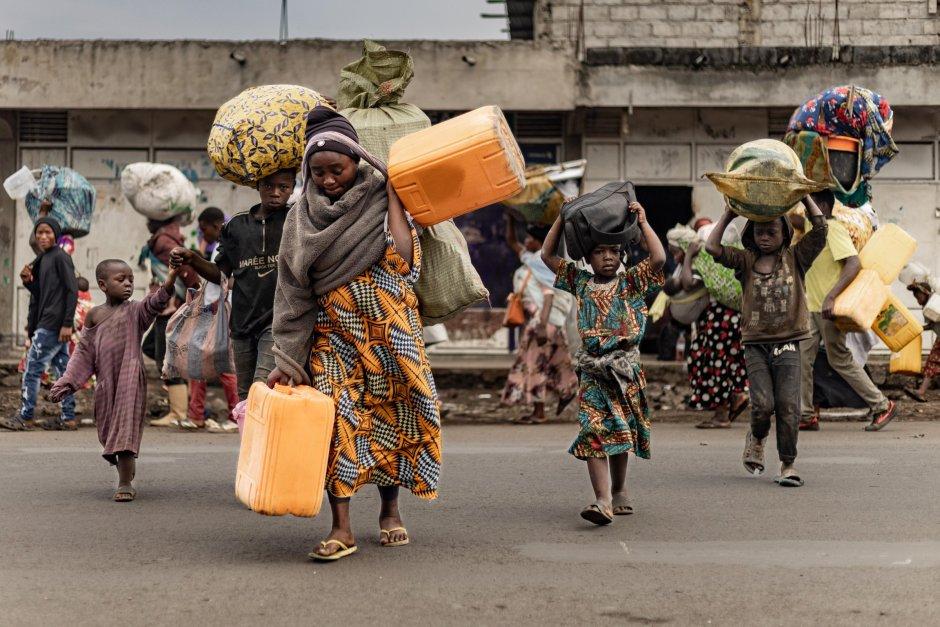
A phone battery. An electric car. A laptop that lasts all day. Almost none of us think about where the cobalt inside those batteries actually comes from. But if you trace it back far enough, a lot of it comes from a stretch of eastern Congo where villages are burning, families are walking for days with nothing but what they can carry, and kids are digging in mud pits instead of sitting in classrooms.
That’s the part of the story that doesn’t make it onto the spec sheet of your new phone. And it’s why the DR Congo crisis deserves more attention than it gets.
I’ve spent time reading through UN reports, aid worker accounts, and mining investigations for this piece, and honestly, the numbers stopped feeling like numbers pretty quickly. They started feeling like a country stuck on repeat, decade after decade, while the rest of the world buys the batteries and looks away.
Let’s get into what’s actually going on.
What Is Happening in the Democratic Republic of Congo?
The Democratic Republic of Congo crisis is, at its core, a war over land, ethnicity, and minerals that has never really stopped since the mid-1990s. Right now, the epicenter is the eastern provinces North Kivu, South Kivu, and Ituri where an armed group called M23 has seized major cities including Goma and Bukavu.
Here’s the thing that surprises a lot of people: this isn’t a small, contained rebellion. It’s a full-blown regional war involving the Congolese army (FARDC), dozens of local militias, and troops backed by neighboring Rwanda. Millions of people have been forced from their homes, hospitals are overwhelmed, and disease outbreaks keep piling on top of the violence.
A peace agreement was signed in Washington in June 2025, brokered with US involvement, and there have been ceasefire talks in Qatar since. But on the ground, fighting has continued in pockets, drones are now part of the conflict, and territory keeps changing hands. Peace on paper hasn’t yet translated into peace in the Kivus.
Why Is Eastern Congo Trapped in War?
This is the question everyone asks, and the honest answer is: there’s no single reason. It’s a tangle of overlapping problems that feed each other.
– Leftover tension from the 1994 Rwandan genocide. Hutu militias fled into eastern Congo after the genocide, and Rwanda has used their continued presence as a justification for military involvement in Congo ever since.
– A weak central government. Kinshasa, the capital, is over 1,600 km from the conflict zone. State authority in the east has been thin for decades, leaving room for armed groups to fill the gap.
– Minerals. Gold, coltan, tin, and cobalt are all mined in the conflict zone, and controlling a mine or a trade route is often more profitable than farming ever could be.
– Ethnic and land disputes that predate colonialism but were sharpened by it, and never got resolved after independence.
Put those together and you get a region where armed groups have every incentive to keep fighting and very little incentive to disarm.
Who Are the M23 Rebels and Other Armed Groups?
M23 (short for the “March 23 Movement“) is the group you’ll hear about most. It’s a Congolese Tutsi-led rebellion that first emerged in 2012, went quiet for years, and then re-emerged in 2021 with much greater strength. UN experts and multiple governments say M23 receives arms, training, and even direct troop support from Rwanda something Rwanda has repeatedly denied, though it has acknowledged having a “security interest” in the region.
But M23 is far from the only player. Congo’s east has an estimated 100-plus armed groups, including:
– FDLR a Hutu militia with roots in the 1994 genocide
– Wazalendo a loose coalition of pro-government militias fighting alongside FARDC against M23
– CODECO and other Ituri-based militias fighting over land and ethnic control
– ADF (Allied Democratic Forces) an ISIS-affiliated group known for brutal attacks on civilians
Each group has its own agenda, but they all operate in the same power vacuum, and civilians are almost always caught in the middle.
7 Million People Displaced by the Conflict
Read More : Himalayan Glaciers Are Collapsing: Is This What Caused Nepal’s Catastrophic Floods?
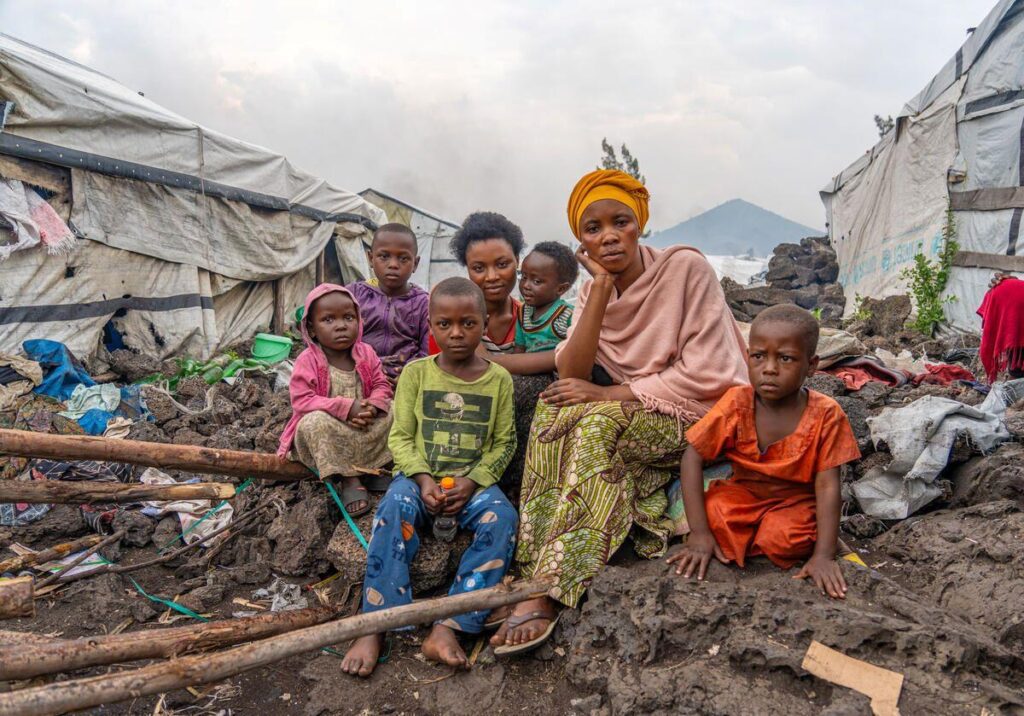
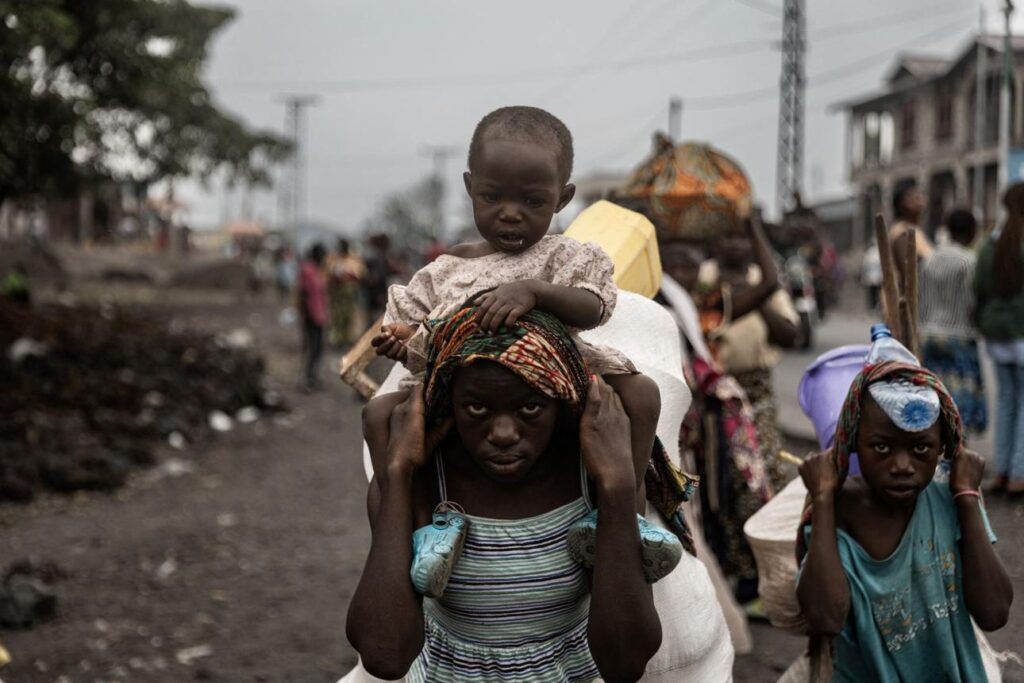
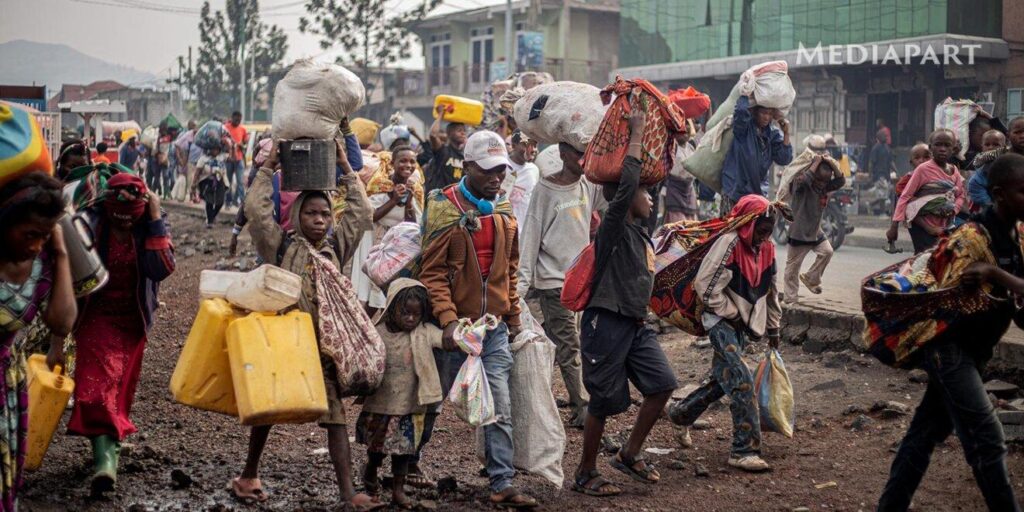
This is the number that should stop you mid-scroll: more than 7 million people have been internally displaced inside DR Congo, with UN agencies tracking figures that have swung between 5.8 million and over 8 million depending on the month, as fighting pushes people out and brief lulls let some return home to destroyed villages.
That makes the Congo humanitarian crisis one of the largest displacement emergencies on the planet bigger than most wars you hear about on the news. On top of the internal displacement, more than 1.2 million Congolese refugees are living in neighboring countries, most of them in Uganda.
What does displacement actually look like day to day? It’s not just tents. It’s families sleeping in schools, church compounds, and open fields. It’s displacement camps that get attacked again, forcing people to move a second or third time. Aid workers call this “secondary displacement,” and in eastern Congo it’s become almost routine.
Congo’s Cobalt: The Mineral Powering the World’s Batteries
Here’s where the war connects directly to your everyday life. DR Congo holds over 50% of the world’s known cobalt reserves, and it supplies roughly 70% of global cobalt production. Cobalt is a key ingredient in the lithium-ion batteries that power electric vehicles, smartphones, laptops, and renewable energy storage.
This isn’t a small side industry it’s central to the global clean energy transition. Every EV manufacturer, every big tech company, needs Congolese cobalt somewhere in its supply chain, whether they advertise that or not.
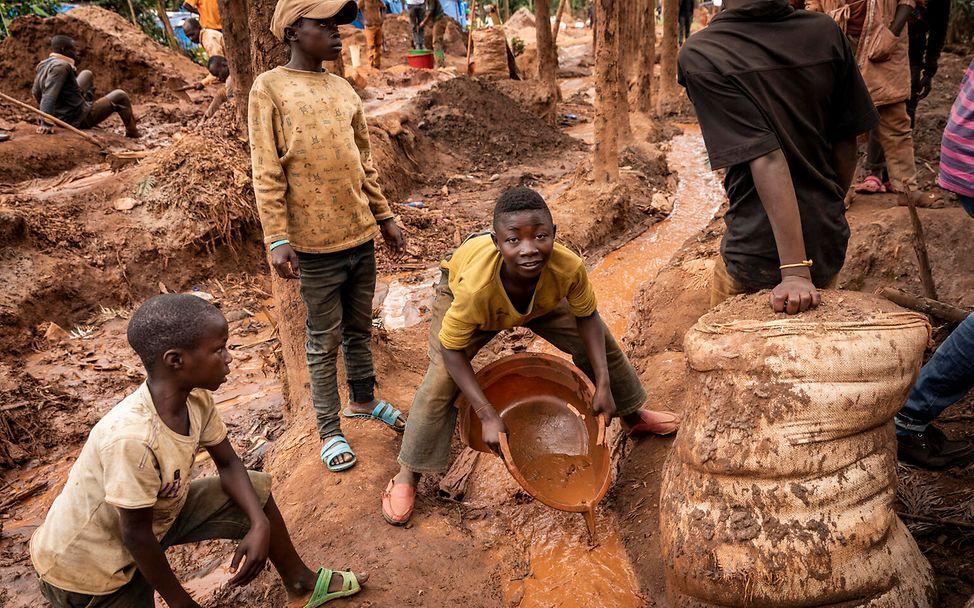
The problem is that a huge share of that cobalt is dug up by hand, in dangerous, informal mining operations known as artisanal small-scale mining (ASM), which produces around 20–30% of the country’s total cobalt output and it’s this segment where almost all the human rights abuses are concentrated.
The Dark Reality of Child Labor in Cobalt Mines
Of the roughly 255,000 Congolese people mining cobalt by hand, researchers estimate that somewhere between 25,000 and 40,000 are children some as young as six or seven years old. They dig with their bare hands or basic tools, breathe in toxic dust, and risk tunnel collapses, all for wages that often work out to less than $2 a day.
Investigations have also found that a large share of miners over three-quarters, according to US Department of Labor research work under conditions that meet the definition of forced labor: debt bondage, coercion, or no real alternative for survival.
This is the uncomfortable truth behind the clean energy story. The batteries marketed as part of a greener future are, in part, built on child labor and exploitation that most consumers never see or think about.
Read More : Why Could Nepal’s Flood Recovery Cost $5 Billion? The Damage Is Worse Than It Looks
Women and Girls Facing Sexual Violence
Sexual violence has been used as a weapon of war in eastern Congo for over two decades, and this current wave of fighting is no exception. Armed groups on multiple sides have been documented using rape as a tool of intimidation and control, particularly against displaced women and girls who have already lost the protection of their homes and communities.
Displacement camps, ironically, are some of the highest-risk locations overcrowded, under-policed, and often located near active front lines. Survivors frequently have little to no access to medical care, psychological support, or justice, because the health and legal systems in the region have been stretched to the breaking point.
Hunger and Malnutrition: Another Crisis Within the Crisis
War doesn’t just kill people directly it destroys the ability to grow and transport food. Nationally, close to 28 million people in DR Congo are facing acute food insecurity, with the sharpest concentration in the conflict-hit eastern provinces.
Floods in 2025 wiped out thousands of hectares of farmland in Kasai and Maniema, compounding a crisis that was already severe. When families are displaced multiple times, they lose their fields, their livestock, and their ability to plant the next season’s crop which means hunger doesn’t just spike during fighting, it lingers for years afterward.
Ebola, Mpox and Cholera: The Health Crisis
Congo is currently dealing with a genuinely brutal combination of outbreaks on top of the war. In May 2026, authorities confirmed a new Ebola outbreak spreading across Ituri, North Kivu, and South Kivu the same provinces torn apart by conflict. Mpox has also spread significantly, prompting the WHO to declare it a public health emergency of international concern after cases crossed into Uganda. Cholera, meanwhile, has been surging in both the east and around Kinshasa, worsened by flooding and collapsed sanitation systems.
Displacement, weak health infrastructure, and cross-border movement linked to trade and mining all make outbreaks harder to track and contain. A health worker can’t run a vaccination campaign in an area that’s an active front line.
How Illegal Mining Is Fueling the Conflict
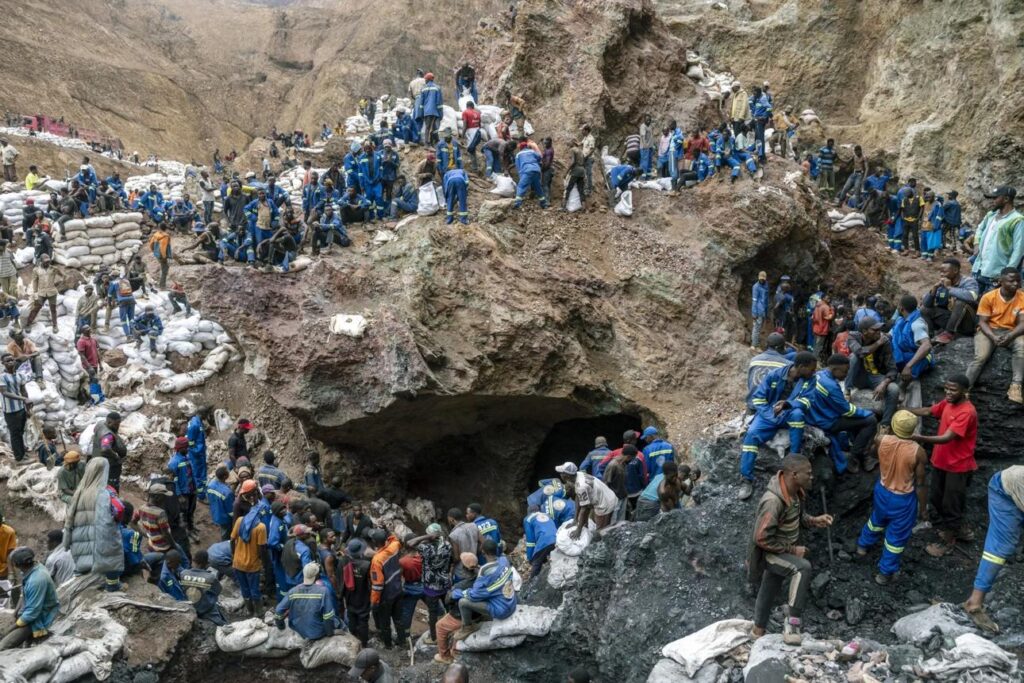
Armed groups don’t just fight over ideology they fight because controlling a mine or a trade corridor is enormously profitable. Illegally mined gold, tin, tantalum, and cobalt get smuggled out through informal networks, often crossing into Rwanda or Uganda before entering the legitimate international supply chain, effectively “laundering” conflict minerals into products that end up in phones and cars worldwide.
Investigations have named several international firms including Chinese mining and battery companies as buyers linked to this supply chain, and in 2026 the US Treasury sanctioned a Rwandan mining company after it was flagged as a handler of minerals smuggled from eastern DRC. But enforcement remains patchy, and the profit incentive for armed groups to keep fighting over mineral-rich territory hasn’t gone away.
Read More : Nepal Flash Floods 2026: Hundreds Dead After Glacier Collapse Triggers Devastating Floods
Rwanda’s Role in the Eastern Congo Conflict
Rwanda’s involvement is one of the most contested issues in this entire conflict. Multiple UN expert reports, along with the US and EU, have accused Rwanda of arming, training, and even deploying troops alongside M23. Rwanda’s government has generally denied direct control over M23 while acknowledging security concerns tied to the FDLR militia operating near its border.
Whatever the exact command structure, the practical effect is the same: Rwandan involvement has turned a domestic Congolese rebellion into a much larger regional conflict, one that’s proven far harder to resolve through negotiation alone.
What Is the International Community Doing?
The response has been a mix of diplomacy, sanctions, and humanitarian funding but critics say it’s nowhere near enough given the scale of need.
– The UN peacekeeping mission (MONUSCO) remains on the ground but has struggled to protect civilians amid intensified fighting and drone warfare.
– The US brokered the Washington Accords in June 2025, pushing both governments toward a formal peace deal tied to regional economic and minerals cooperation.
– The EU and US have imposed targeted sanctions on individuals and companies linked to the illegal minerals trade.
– Humanitarian funding remains a major gap. The 2025 UN response plan sought $2.5 billion to help 11 million people but only a small fraction of that was actually funded.
Latest Peace Talks and Ceasefire Efforts
Since the Washington Accords were signed, Qatar has stepped in as a mediator for direct talks between the Congolese government and M23 a separate track from the Rwanda-DRC state-to-state agreement. M23 partially withdrew from some positions in South Kivu in mid-2026 under pressure, but by July 2026 the UN was reporting renewed clashes involving drones and heavy artillery in South Kivu’s Fizi and Mwenga territories.
In short: there’s a peace framework on paper, but implementation has been slow and uneven, and both sides continue to accuse each other of violations. Analysts widely agree that without a way for M23 to be politically and economically reintegrated not just militarily defeated any ceasefire is likely to be fragile.
Read More : Europe’s Rivers Are Drying Up: The Europe Water Crisis 2026 Explained
Why Has Congo’s Crisis Continued for Decades?
If you’re wondering why this keeps happening, it’s worth naming the underlying pattern plainly:
1. Mineral wealth creates a financial incentive for armed groups to keep fighting rather than disarm.
2. A weak, distant central government can’t project real authority into the east.
3. Regional politics (especially with Rwanda and Uganda) keep pulling Congo’s internal conflict into a wider geopolitical struggle.
4. International attention and funding are inconsistent, often spiking after a major city falls and fading once it’s off the news cycle.
None of these problems fix themselves quickly, which is exactly why this has dragged on for close to 30 years in various forms.
DR Congo Crisis: Key Facts at a Glance
| Issue | Current Scale |
|---|---|
| People internally displaced | Over 7 million (peaked near 8.2 million in 2025) |
| Congolese refugees abroad | Over 1.2 million, mostly in Uganda |
| People facing acute food insecurity | Around 28 million nationwide |
| Share of world’s cobalt reserves in DRC | Over 50% |
| Share of global cobalt production from DRC | Around 70% |
| Children working in cobalt mines | Estimated 25,000–40,000 |
| Miners in conditions meeting forced labor criteria | Over 75%, per US Department of Labor research |
| People in need of humanitarian aid | Over 21 million |
| 2025 UN humanitarian appeal funding secured | Roughly 9% of the $2.5 billion requested |
Can Peace Finally Come to the Democratic Republic of Congo?
Realistically, peace will take more than one agreement signed in a foreign capital. The Washington Accords and the Qatar-mediated talks are genuinely more serious diplomatic efforts than Congo has seen in years, partly because they tie peace to economic cooperation on minerals giving outside powers, including the US, an actual stake in seeing it succeed.
But agreements only matter if armed groups on the ground buy in, if Rwandan troops actually withdraw, and if the Congolese state can extend real services and security into the east instead of just military force. History here is not encouraging Congo has seen peace deals before that collapsed within a year or two. Cautious optimism is fair. Certainty is not.
What Can the World Do to Prevent This From Repeating?
This isn’t just Congo’s problem to solve alone, especially given how tightly the world’s tech and EV industries are tied to Congolese cobalt. A few things that would genuinely move the needle:
– Real supply chain accountability companies tracing cobalt to its actual mine of origin, not just paperwork audits that are easy to fake.
– Sustained humanitarian funding, not just spikes in attention when a city falls.
– Support for formalizing artisanal mining, so miners get fair pay and safety standards instead of being pushed further into informal, unregulated pits.
– Pressure on all regional actors, not just one side, to actually implement ceasefire terms instead of treating them as a pause before the next offensive.
Read More : 7.4-Magnitude Earthquake Hits Colombia – What Happened and Why Was It So Powerful?
What Happens Next?
In the short term, expect the pattern to continue: intermittent clashes, slow and uneven implementation of the Washington Accords, and continued strain on displacement camps and health systems. The Qatar talks and the minerals-for-security framework give some reason to think this round of diplomacy might stick better than past attempts but until Rwandan-backed forces fully withdraw and M23 is brought into a political process rather than just a battlefield one, the underlying triggers for renewed fighting remain in place.
For the millions of displaced Congolese families, “what happens next” isn’t really a policy question. It’s whether they’ll get to go home this year, next year, or not at all.
FAQs
Why is the DR Congo crisis still going on after so many years?
Because the root causes weak state control in the east, competition over mineral wealth, and unresolved regional tensions with Rwanda have never been fully addressed, even when individual ceasefires or peace deals have been signed.
What is causing the current wave of displacement in eastern Congo?
Renewed fighting between M23 and Congolese government forces, along with attacks by dozens of smaller armed groups, has forced millions from their homes since 2021, with sharp spikes after M23 captured Goma and Bukavu in early 2025.
Is Congo’s cobalt mining linked to the war?
Yes, indirectly and directly. Illegally mined minerals help fund armed groups, and the broader instability makes it far easier for exploitative, unregulated mining including child labor to continue with little oversight.
What is the Washington Accords peace agreement?
It’s a peace treaty signed by DR Congo and Rwanda in Washington, D.C. in June 2025, aimed at ending Rwandan military involvement in eastern Congo and setting up an economic framework tied to critical minerals trade.
How many people have died in the Congo conflict?
Exact figures are difficult to verify given the scale and remoteness of the fighting, but humanitarian organizations describe recurring mass casualty events, alongside deaths from disease, malnutrition, and lack of medical care that often go uncounted in official tolls.
Can ordinary consumers do anything about the cobalt mining crisis?
Individually, not a huge amount but supporting companies that publish real, verifiable supply chain audits, and staying informed enough to ask questions, adds pressure over time. The bigger fixes have to come from governments and industry-wide regulation.

C0-Founder and Editor
Tazeen and Arzoo are the Co-Founders and Editors of THE NEWSTER. They specialize in covering world news, technology, weather, business, and trending stories. Their mission is to deliver accurate, timely, and well-researched journalism while making complex topics clear, reliable, and easy for readers to understand.
About The Author