Nepal-Tibet Floods 2026: Why Are Thousands Still Missing After the Devastating Disaster?
Nepal-Tibet Floods 2026
Nepal-Tibet Floods 2026 explained: what caused the Nepal glacier collapse, why thousands are still missing, and why hydropower workers remain trapped.
Nepal-Tibet Floods 2026: Why Are Thousands Still Missing?
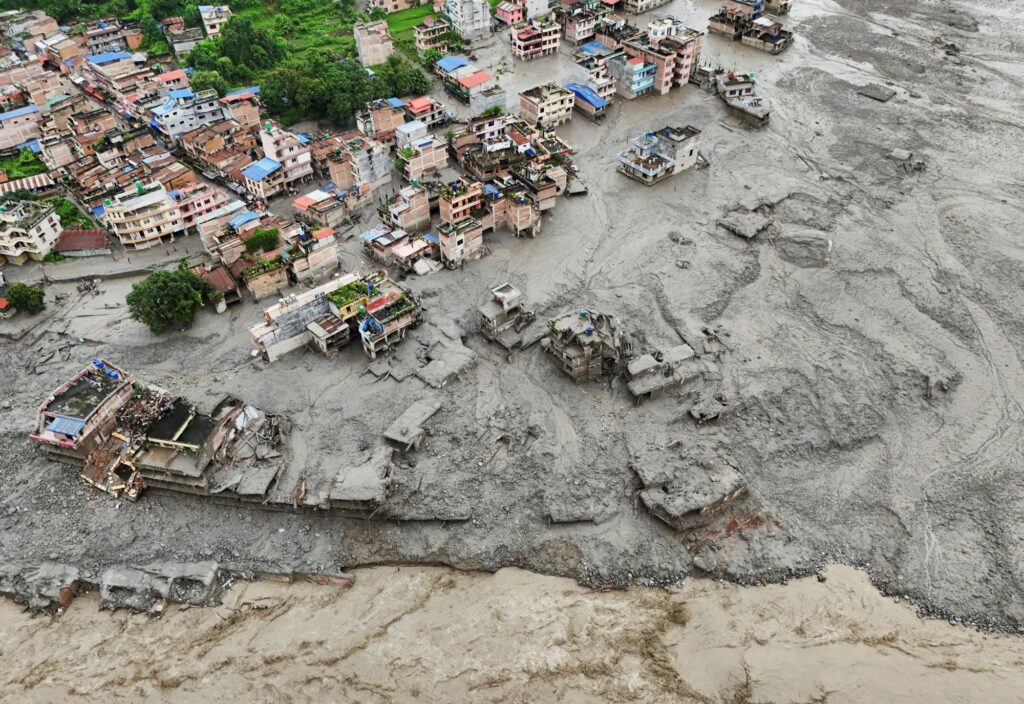
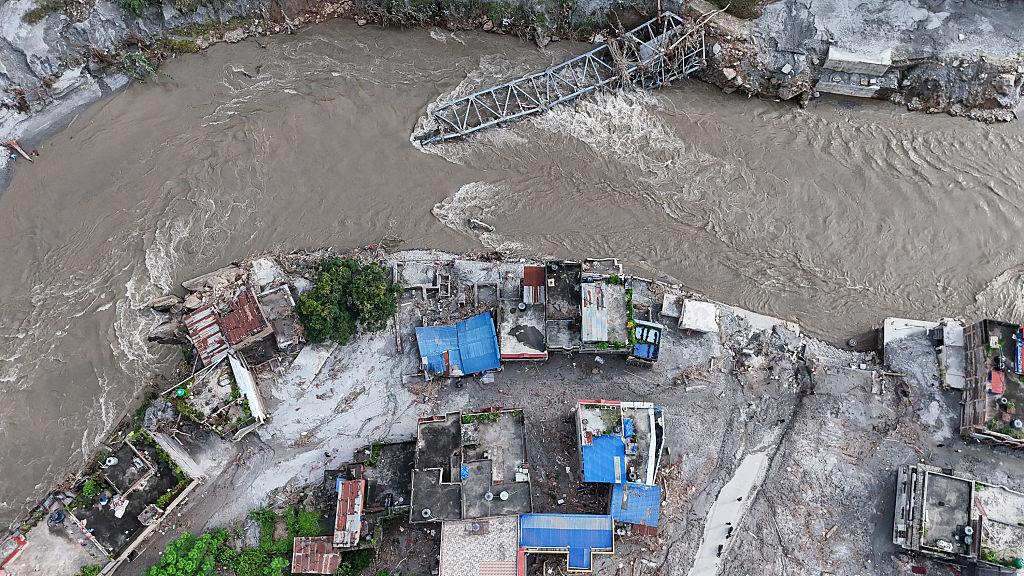
A wall of ice, rock, and mud came down a Himalayan mountainside on the morning of August 26, 2026 and within minutes, entire villages along the Nepal-Tibet border simply stopped existing. Roads gone. Bridges gone. Hydropower plants buried under silt so thick that rescue teams couldn’t even find where the buildings used to stand.
More than a week later, the numbers are still hard to process. Over a thousand people confirmed dead. Thousands more still unaccounted for. And hundreds of hydropower workers who may still be alive, trapped in tunnels drilled deep into the mountains.
If you’ve been following the headlines and still don’t fully understand what happened or why the search for the missing is taking so long, this article breaks it down in plain language no jargon, just what’s actually going on.
What Caused the Nepal-Tibet Floods? The Glacier Collapse Explained
Here’s the short version: this wasn’t a normal monsoon flood. It started with a glacier.
At around 8:40 a.m. local time on August 26, a massive section of the Langtang-Lirung glacier roughly 3,000 feet wide snapped off high in the mountains on the Tibetan side of the border and tumbled nearly 4,000 feet down into the Lhende river valley. That’s the Nepal glacier collapse 2026 event you’ve probably seen mentioned everywhere.
The falling ice and rock hit the Lhende river with such force that it registered as a magnitude 5.2 seismic event on monitoring stations around the world. Scientists initially thought it might have been an earthquake that triggered the collapse, but researchers now believe it was the other way around the collapse itself caused the tremor, not a tectonic event.
The ice and debris temporarily dammed the river, forming a lake. When that natural dam gave way shortly after, it unleashed a catastrophic surge of water, mud, ice, and boulders straight down the valley into Nepal’s Rasuwa district.
Table: Nepal-Tibet Floods 2026 Key Facts
| Detail | Figure/Fact |
|---|---|
| Date of collapse | August 26, 2026, around 8:40 a.m. local time |
| Trigger | Glacier collapse on Langtang-Lirung mountain |
| Seismic reading | Magnitude 5.2 (detected worldwide) |
| Deaths (Nepal) | Over 1,050 |
| Missing (Nepal) | Nearly 4,250 |
| Deaths (Tibet, China) | 16 |
| Missing (Tibet, China) | 546 |
| Distance flood traveled | Around 150 km (some debris/bodies reached India) |
| River water rise | Up to 9 meters in 30 minutes (Trishuli River) |
| Hydropower workers missing | Around 900–930 |
(Figures based on early September 2026 government and news reports; numbers are still being updated as search efforts continue.)
How Did the Flood Spread So Fast?
This is the part that catches most people off guard. The Lhende river feeds into the Bhote Koshi, which then joins the Trishuli River one of Nepal’s biggest rivers, lined with towns, farms, and hydropower plants.
Within half an hour, water levels on the Trishuli reportedly rose by as much as 9 meters. Imagine standing by a river and watching it climb nearly 30 feet before you’ve even had time to call your family.
The surge tore through a 72-kilometer stretch along the Trishuli, wiping out the Gyirong border checkpoint on the China side and dozens of settlements in Nepal. Debris and even bodies were carried more than 150 kilometers downstream, some reportedly reaching into India.
Read More : DR Congo Crisis: How War and Cobalt Are Fueling a Humanitarian Disaster
Why Are Thousands Still Missing in the Nepal Floods?
This is the question everyone’s asking, and honestly, it’s the hardest part of this disaster to explain simply.
A few reasons:
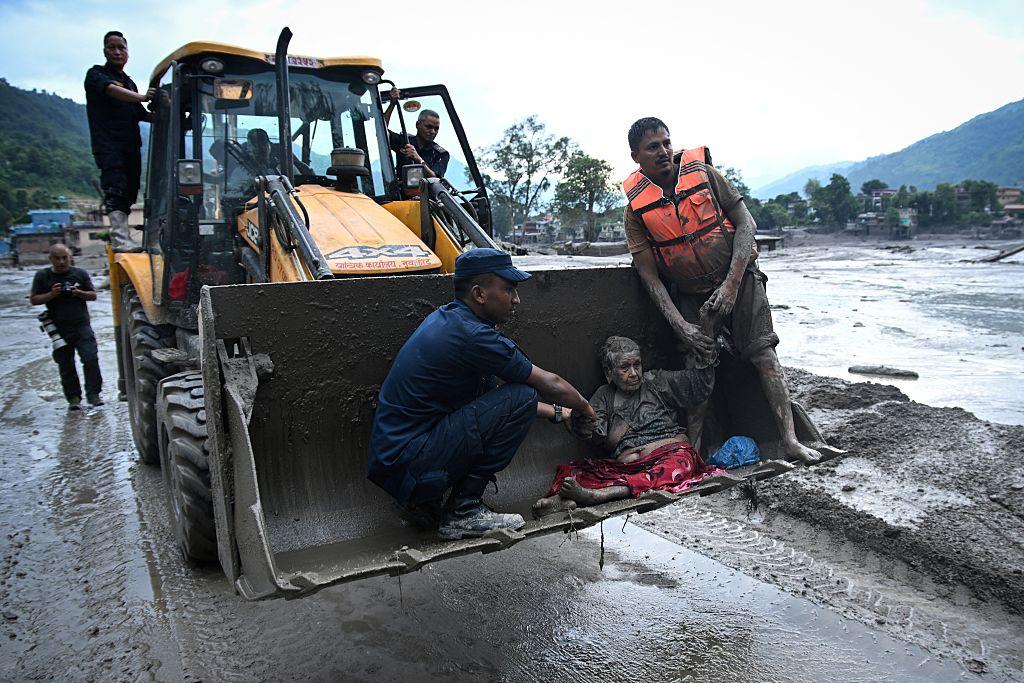
– The flood didn’t just flood it buried. Thick layers of mud and silt covered entire settlements. Rescuers aren’t just searching through water; they’re digging through hardened sludge in some places.
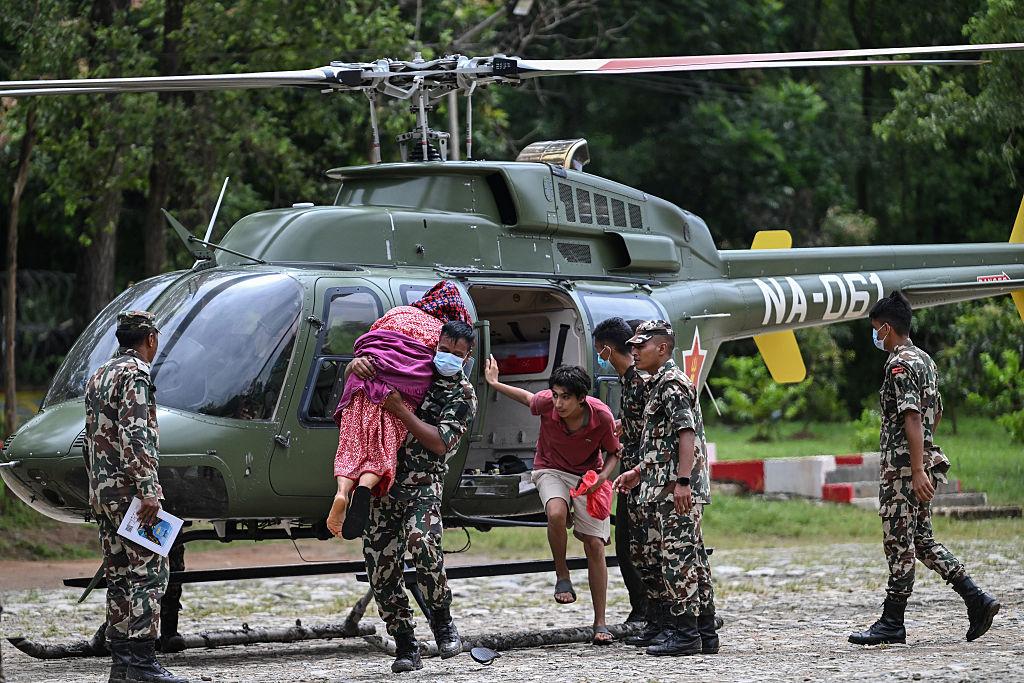
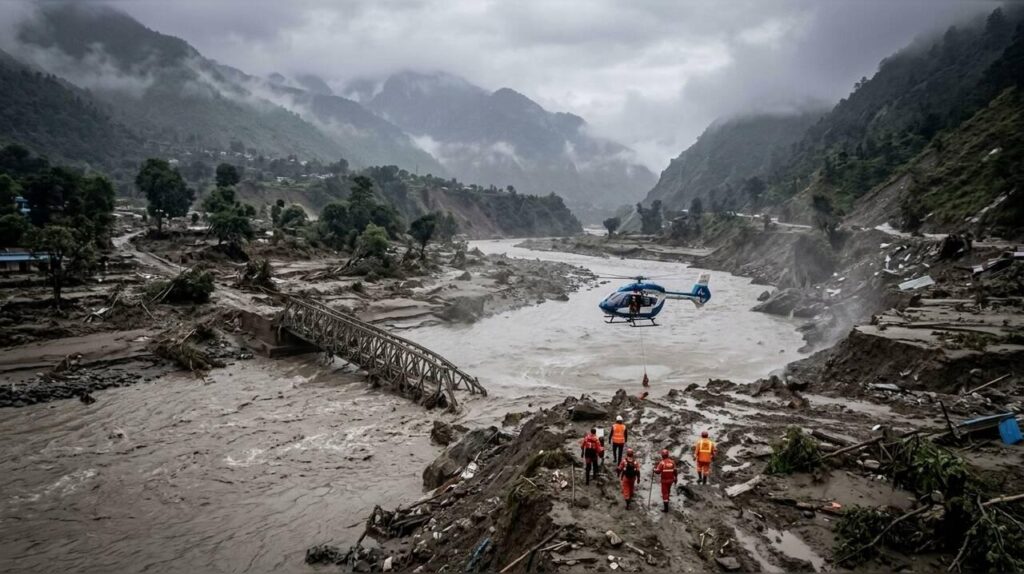
– Roads and bridges are gone. Many of the worst-hit villages are only reachable by helicopter now, and bad weather has grounded aircraft for days at a time.
– Communication was cut off. Cell towers and base stations in border areas like Gyirong were destroyed, so families couldn’t even confirm who survived.
– Bodies were swept far downstream. Some victims were carried over 150 km away, which means identification and recovery take much longer.
– Mass burials without ID. With morgues overwhelmed, Nepali authorities have had to bury unidentified victims, which will likely keep the “missing” count uncertain for a long time.
Nepal’s disaster authority has put the missing figure at close to 4,250 people in Nepal alone, with hundreds more unaccounted for on the Tibetan side.
Read More : 7.4-Magnitude Earthquake Hits Colombia – What Happened and Why Was It So Powerful?
Nepal Floods 2026: Why Are Hundreds of Hydropower Workers Still Trapped?
This is arguably the most heartbreaking thread of the whole disaster.
Nepal has built dozens of hydropower projects along the Trishuli and its tributaries, tapping the same rivers that just destroyed everything in their path. Many of these plants have deep tunnels some stretching for kilometers into the mountainside where workers were on shift when the flood hit.
Roughly 900 hydropower workers went missing across around a dozen projects. The worst-hit was the Upper Trishuli-1 project under construction in Rasuwa, where nearly 600 workers were unaccounted for at one point.
The problem rescuers are facing is almost surreal: at some sites, the flood buried the power stations so completely that crews literally couldn’t locate the tunnel entrances. One rescue expert described it as the flood having “removed the power stations from the surface, like they’re just not there.”
At the Trishuli 3A plant, rescue teams drilled holes into the mud just to pump in air and lower down food for workers believed trapped inside not knowing for certain if anyone was still alive to receive it. Nearly 300 workers have been pulled out alive so far, some after days underground.
Nepal’s army is leading the tunnel rescues, with international help pouring in India has sent tunnel-rescue specialists and forensic teams, and aid has arrived from the UN, the Red Cross, Australia, South Korea, and the US.
Read More : Why Could Nepal’s Flood Recovery Cost $5 Billion? The Damage Is Worse Than It Looks
Tibet Floods 2026: What Happened Along the Nepal-China Border?
On the Tibetan side, the town of Gyirong bore the brunt of the initial impact. CCTV footage showed people being swept away by the wall of water and debris as it tore through the border checkpoint.
For days, communication with the outside world was largely cut off. Chinese state media later reported that phone signals had been restored after emergency base stations were installed, allowing rescue teams at the border to finally coordinate more effectively.
A secondary concern followed the main disaster: a barrier lake that had formed from blocked debris overflowed slightly on August 28, forcing Chinese authorities to briefly pause rescue work and issue fresh flood warnings before the lake gradually drained by August 30.
Nepal Glacier Collapse 2026: How Climate Change Fits In
Scientists studying the event have pointed to a pattern that’s becoming disturbingly familiar in the Himalayas and in other high mountain ranges too. Rising temperatures are destabilizing glaciers and permafrost that used to hold mountainsides together. When that ice weakens or melts, huge chunks of rock and ice can let go without much warning.
This isn’t the first time something like this has happened near this exact border area. A similar, smaller flood hit the same Lhende river region in July 2025, and a glacier collapse triggered a nearly identical disaster in India’s Chamoli district back in 2021. Researchers say these events are becoming more frequent as the climate warms, and that warning systems in remote, high-altitude areas simply haven’t kept pace.
Read More : Nepal Flash Floods 2026: Hundreds Dead After Glacier Collapse Triggers Devastating Floods
Himalayan Flood Disaster 2026: What Warning Signs Were Missed?
Experts studying the region have flagged a few uncomfortable truths:
– Many high-altitude glaciers and slopes in the Himalayas aren’t monitored closely enough to catch early destabilization.
– Hydropower expansion has put more infrastructure and more people directly in the path of river valleys fed by unstable glaciers.
– Early warning systems exist for some glacial lake outburst floods, but this event was different a direct glacier and rock collapse rather than a slow-building lake breach making it harder to predict with current tools.
What This Disaster Means for the Future of the Himalayas
This event is forcing a hard conversation in Nepal, China, and India about where it’s actually safe to build. Hydropower is a major source of income and electricity for Nepal, but this disaster has shown how vulnerable those tunnels and dams are when the mountains above them start to fail.
Expect to see renewed pressure for better glacier monitoring, stronger early-warning networks along Himalayan rivers, and tougher questions about building large infrastructure projects in high-risk valleys even though rebuilding will likely happen in many of the same places, because communities and livelihoods are tied to these rivers.
Read More : Europe’s Rivers Are Drying Up: The Europe Water Crisis 2026 Explained
FAQs About the Nepal-Tibet Floods 2026
1. What caused the Nepal-Tibet floods in 2026?
A large section of the Langtang-Lirung glacier collapsed on the Tibetan side of the border, sending ice, rock, and debris crashing into the Lhende river. This created a temporary dam that later burst, sending a massive flood surge through Nepal’s Rasuwa district and beyond.
2. Why are thousands of people still missing?
Thick mud burial, destroyed roads and bridges, lost communication networks, and bodies swept over 150 km downstream have all made it extremely difficult for rescue teams to locate and identify victims quickly.
3. How many hydropower workers are still trapped?
Around 900 hydropower workers went missing across roughly a dozen projects along the Trishuli River, with the Upper Trishuli-1 project the worst affected. Close to 300 have been rescued so far.
4. Was the Nepal glacier collapse caused by an earthquake?
No. Early reports suggested an earthquake, but researchers now believe the seismic signal detected worldwide was caused by the glacier collapse and debris avalanche itself, not a separate tectonic earthquake.
5. Is climate change linked to this disaster?
Scientists say warming temperatures are likely contributing to glacier and slope instability in the Himalayas, making collapses like this one more frequent, though pinning an exact cause on any single event takes further study.
Final Thoughts
What’s happening in Nepal and Tibet right now isn’t just a news headline it’s thousands of families waiting by their phones, hoping for one more call. It’s rescue crews digging through mud with their bare hands because the machines can’t reach some of these villages. It’s workers’ wives, like the pregnant woman mentioned by one survivor searching for his brother-in-law, waiting for news that may never come easy.
The scale of this disaster is a reminder that the Himalayas, for all their beauty, are changing faster than the infrastructure built beneath them. As search efforts continue and the missing count slowly gets updated, one thing is already clear: this won’t be the last glacier-triggered disaster the region sees and the question now is whether enough gets done before the next one hits.

C0-Founder and Editor
Tazeen and Arzoo are the Co-Founders and Editors of THE NEWSTER. They specialize in covering world news, technology, weather, business, and trending stories. Their mission is to deliver accurate, timely, and well-researched journalism while making complex topics clear, reliable, and easy for readers to understand.
About The Author