FIFA World Cup 2026 Host Country: Three Nations, One Historic Tournament
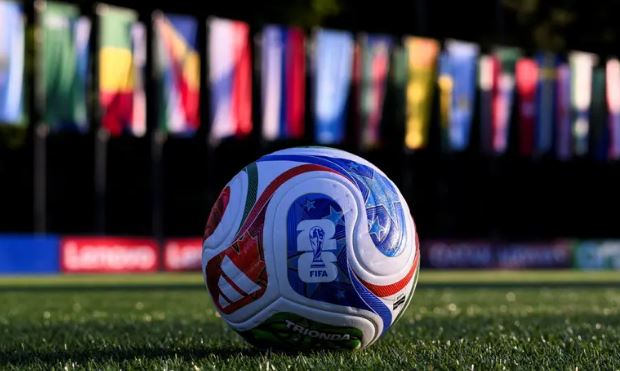
FIFA World Cup 2026 Host Country
The FIFA World Cup 2026 host country setup is unlike anything before USA, Canada, and Mexico sharing 104 matches across 16 cities. Here’s everything you need to know.
I still remember watching the 2026 hosting announcement with a group of friends, someone had a cold pizza on the table and nobody touched it for twenty minutes because we were glued to the screen. Three countries. Sixteen cities. Forty-eight teams. It felt like the kind of news that takes a moment to actually land.
And now it’s here. The FIFA World Cup 2026 has started. The tournament kicked off on June 11 in Mexico City, and for the next five weeks, North America becomes the center of the football universe.
If you’ve been trying to wrap your head around how this whole FIFA World Cup 2026 host country setup actually works which games are where, which stadiums matter most, what’s actually different about this World Cup this is the article that breaks it all down without making your brain hurt.
FIFA World Cup 2026 Host Country Overview: How Three Nations Split the Tournament
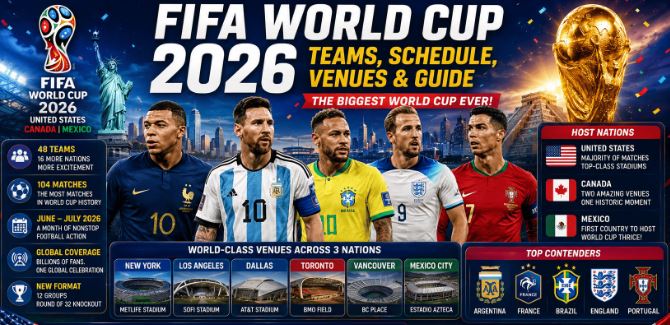
The FIFA World Cup 2026 host country arrangement is genuinely unprecedented. For the first time in World Cup history, the tournament is being co-hosted across three nations the United States, Canada, and Mexico spanning 16 cities from June 11 to July 19, 2026.
But “co-hosted” doesn’t mean equally split. The US is carrying the heavy load here.
Of the 104 matches in total, 78 take place on American soil including every game from the quarter-finals onward. Canada and Mexico each host 13 matches, with their fixtures concentrated in the group stage and the early rounds of the knockout phase.
So if you’re planning to attend the later knockout rounds or the final, you’re heading to the United States. Mexico and Canada get the opening stages which, honestly, are where some of the most electric atmospheres tend to be.
Why This FIFA World Cup 2026 Host Country Setup Is a First
The FIFA World Cup 2026 host country selection isn’t just historically significant for logistics. It represents a few firsts that are worth understanding:
First time three nations have hosted simultaneously. Previous tournaments had at most two South Korea and Japan in 2002. Three is completely new territory for FIFA and for fans trying to plan trips.
First 48-team World Cup. The tournament expanded from 32 to 48 teams, consisting of 12 groups of four teams each a change from the original planned format of 16 groups of three resulting in 104 total matches, up from the 64 played in Qatar 2022.
Mexico hosts its third World Cup. Mexico becomes the first nation ever to host three different men’s World Cups, having previously staged the tournament in 1970 and 1986. The Estadio Azteca already one of the most iconic venues in football history now adds another chapter to its legacy.
Record prize money. The winning team receives $50 million USD, up from $42 million awarded in Qatar 2022. All 48 participating nations also receive an upfront preparation payment of $1.5 million before the tournament begins, meaning even teams eliminated in the group stage collect a minimum total payout of $10.5 million.
The 16 Host Cities: A Country-by-Country Breakdown
United States FIFA World Cup 2026 Host Country With 11 Venues
The US has the most venues and the most matches of any FIFA World Cup 2026 host country. The American stadiums include AT&T Stadium in Arlington, Texas; Mercedes-Benz Stadium in Atlanta; MetLife Stadium in East Rutherford, New Jersey; Gillette Stadium in Foxborough, Massachusetts; NRG Stadium in Houston; SoFi Stadium in Inglewood, California; Arrowhead Stadium in Kansas City; Hard Rock Stadium in Miami Gardens; Lincoln Financial Field in Philadelphia; Levi’s Stadium in Santa Clara; and Lumen Field in Seattle.
The standout venues worth knowing:
MetLife Stadium, New Jersey This is where it all ends. The 82,500-seat MetLife Stadium hosts the World Cup final on July 19. It’s the biggest stage in football, and for one night in July, it becomes the most watched venue on the planet.
AT&T Stadium, Dallas AT&T Stadium and Mercedes-Benz Stadium in Atlanta each host nine matches more than any other venue including one of the two semi-finals. If you want volume of football, Dallas is the city.
SoFi Stadium, Los AngelesEight matches, including one semi-final. Hosting a World Cup semi-final in LA is the kind of thing that happens once in a lifetime.
Mexico FIFA World Cup 2026 Host Country Opening Ceremony Nation
Mexico’s role as FIFA World Cup 2026 host country starts at the very beginning.
The tournament opens on June 11 with Mexico vs. South Africa in Mexico City. That’s a statement. The host nation, at the most storied stadium in Mexican football history, kicking off the biggest World Cup ever staged.
Mexico’s three venues are Estadio Azteca in Mexico City (capacity 83,000), Estadio BBVA Bancomer in Guadalupe near Monterrey (capacity 53,500), and Estadio Akron in Zapopan near Guadalajara (capacity 48,000).
The Azteca is the venue that gets all the attention and it deserves it. This is a stadium where Diego Maradona scored the Hand of God and the Goal of the Century in the same match in 1986. Having it host the opening game of the 2026 World Cup is a decision that respects what football history actually looks like.
Canada FIFA World Cup 2026 Host Country’s Northwest Venues
Canada’s inclusion as a FIFA World Cup 2026 host country was genuinely exciting for a country that has watched World Cups from the outside for decades. The Canadian men’s national team qualified for their own tournament only their second-ever World Cup appearance.
Canada’s two venues are BMO Field in Toronto (capacity 45,000) and BC Place in Vancouver (capacity 54,000).
BC Place in Vancouver sits approximately 4,500 kilometers from Hard Rock Stadium in Miami which gives you a sense of just how geographically spread this FIFA World Cup 2026 host country arrangement actually is. This isn’t a tournament you can follow in person without serious travel planning.
Read More : 10 Best Netflix Series in 2026: Top-Rated Shows You Need to Watch Right Now
FIFA World Cup 2026 Host Country Format: What’s Actually Different to Watch
Understanding the format of this FIFA World Cup 2026 host country edition matters if you’re following the tournament.
The top two nations in each group advance to the knockout round along with the eight best third-placed sides, creating a Round of 32 before the traditional Round of 16. That’s an extra knockout round compared to any previous World Cup.
What this means practically:
– More matches to track 104 games over 39 days is a serious viewing commitment
– More upsets possible — 48 teams means more smaller nations, more unpredictable results
– Group stage matters differently third-placed teams can still advance, which changes how teams approach their final group game
The time zone spread across the FIFA World Cup 2026 host country trio also means kickoff times vary wildly depending on where you are in the world. If you’re watching from Asia or Europe, some matches start at genuinely inconvenient hours. Using a tournament calendar tool Google Calendar’s ICS import works well is the most reliable way to track all 104 fixtures without missing anything.
FIFA World Cup 2026 Host Country Ceremonies and Halftime Show
This FIFA World Cup 2026 host country edition is going all-in on spectacle beyond football.
Three opening ceremony performances are scheduled: J. Balvin and Tyla hit the stage in Mexico City on June 11, Katy Perry and Future perform at SoFi Stadium in Los Angeles, and Michael Bublé and Alanis Morissette appear in Toronto on June 12. Three cities, three ceremonies fitting for a three-country host.
The finale is even bigger. The 2026 World Cup final features the first-ever halftime show in World Cup history, inspired by the NFL’s Super Bowl model, to be held at MetLife Stadium on July 19. Madonna, Shakira, and BTS are headlining the performance, with Doja Cat, Tems, Coldplay, J. Balvin, and Emmanuel Kelly also set to perform in a show lasting approximately 24 minutes, produced by Global Citizen.
A World Cup halftime show was unthinkable five years ago. Now it’s happening in New Jersey in front of 82,500 people and a global television audience in the billions.
How to Follow the FIFA World Cup 2026 Host Country Tournament Without Losing Your Mind
The scale of this FIFA World Cup 2026 host country setup creates a practical challenge: 104 matches across 16 cities in three countries, three time zones, and six weeks. Here’s how to handle it without burning out by week two.
Step 1: Set up a tournament calendar. The FIFA official app and the Fox Sports app (for US viewers) both have schedule tools with reminders. Alternatively, import the ICS calendar file from FIFA’s website directly into Google Calendar or Apple Calendar it syncs automatically when schedules update.
Step 2: Pick your groups to follow closely. With 12 groups running simultaneously in the opening stage, trying to watch everything is impossible. Identify the four or five groups with teams you care about and schedule around those.
Step 3: Know your broadcast platform. In the US, Fox Sports and Telemundo are the rights holders. In Canada, it’s TSN and CTV. In the UK, BBC and ITV are sharing coverage. Check the official FIFA broadcast partners list to find your region’s official stream. Having the right app downloaded before the tournament starts saves a lot of scrambling when a match you want kicks off.
Step 4: Plan around the knockout stages.Quarter-finals onward are all in the United States, mostly on weekends. These are the easiest matches to schedule viewing parties around the timing tends to be more reasonable for North American and European audiences.
Step 5: Use Reddit’s [r/soccer] for real-time updates. During major matches, the live match threads there move fast and catch things broadcasters sometimes miss. Not a replacement for watching, but useful when you can’t.
Common Mistakes Fans Make Following the FIFA World Cup 2026 Host Country Setup
A few things keep coming up in conversations about attending or following this FIFA World Cup 2026 host country edition:
Assuming all host cities are equally accessible. Vancouver to Miami is a six-hour flight. If you’re planning to follow a team through multiple rounds, map out the travel before you commit to tickets. The regional hub structure helps, but it doesn’t eliminate long distances entirely.
Buying tickets for group stage matches without checking if the team will actually be competitive. With 48 teams, several nations are making their first-ever World Cup appearances. If you buy tickets for a specific team’s group game and they’re eliminated before the match which can happen in a competitive group you’re watching a different fixture than you planned for.
Underestimating the heat. Houston in late June. Miami in June. Dallas in late June and early July. These aren’t mild venues. Hydration and heat management for anyone attending in person is genuinely important, not just obvious advice.
Missing the early Mexico games. The atmosphere at the Azteca for El Tri’s group stage matches is going to be extraordinary. Those games will be some of the loudest, most intense environments in the entire tournament and they’re happening in the first two weeks.
FIFA World Cup 2026 Host Country Key Dates to Mark Right Now
| Date | Event | Venue |
| June 11 | Opening match: Mexico vs. South Africa | Estadio Azteca, Mexico City |
| June 16 | Argentina vs. Algeria (defending champions) | TBC |
| Late June | Round of 32 begins | Various US venues |
| Early July | Round of 16 | US venues |
| July 14 | Semi-finals | AT&T Stadium (Dallas) + MetLife (NJ) |
| July 19 | The Final | MetLife Stadium, New Jersey |
The FIFA World Cup 2026 Host Country Is a Once-in-a-Generation Tournament
The FIFA World Cup 2026 host country arrangement three nations, sixteen cities, forty-eight teams, a hundred and four matches is something that’s never existed before and may never exist again in this exact form.
There’s a version of this FIFA World Cup 2026 host country experience you follow obsessively from your couch, tracking every result through a FIFA app and arguing about VAR decisions on Reddit at midnight. There’s a version where you fly to Dallas for a quarter-final and realize you’re watching football history in an NFL stadium surrounded by 90,000 people who flew in from four different continents.
Both versions are worth having.
The football started June 11 in Mexico City. The final is July 19 in New Jersey. Everything in between is five weeks of the best sport on earth, spread across the biggest tournament it’s ever staged.
About The Author