10 Best Ways Students Can Use ChatGPT for Homework and Research (2026 Guide)

ChatGPT for Homework and Research
Struggling with assignments? Here’s how to actually use ChatGPT for homework and research the smart way real tips, real mistakes, and a few things I wish I’d known sooner.
10 Best Ways Students Can Use ChatGPT for Homework and Research (2026 Guide)
Last semester my cousin texted me at 11:47 p.m., half panicking, asking if it was “cheating” to ask ChatGPT to explain her chemistry homework because she genuinely didn’t understand a word of it. She’d already tried her textbook twice and watched a YouTube video that made things worse.
That question stuck with me, because I’ve been there too. A few years back I was drowning in a research paper, staring at a blank Google Doc at 1 a.m., and I opened ChatGPT mostly out of desperation. What I found wasn’t a shortcut to skip the work it was more like having a very patient tutor who never got annoyed when I asked the same question three different ways.
Since then I’ve spent a ridiculous amount of time figuring out what actually works when you use ChatGPT for homework and research, and what just gets you into trouble (academically and otherwise). This isn’t a “just paste your essay prompt and copy the output” guide. It’s the stuff I learned by messing it up first.
Why Students Are Actually Turning to ChatGPT
This isn’t some tiny trend. According to Pew Research Center, the share of U.S. teens who said they’d used ChatGPT for schoolwork roughly doubled between 2023 and 2024, and it’s kept climbing since. The College Board found that by May 2025, well over two-thirds of high schoolers reported using it for assignments. RAND’s more recent research puts ChatGPT well ahead of every other AI tool in classrooms, including Google Gemini and Grammarly’s AI features.
But here’s the part that doesn’t get talked about enough: the same research shows students are split on how it should be used. Pew found most teens think it’s fine to use ChatGPT to research a new topic, but far fewer think it’s okay to use it to write an entire essay. That gap is basically the whole point of this article there’s a smart way to use it and a lazy way, and only one of them actually helps you learn.
| Stat | Source |
|---|---|
| Teens using ChatGPT for schoolwork rose from 13% to 26% in one year | Pew Research Center |
| 69% of high schoolers reported using ChatGPT for assignments | College Board (2025) |
| 53% of students aged 12–29 use ChatGPT specifically, more than any other AI tool | RAND American Youth Panel |
| Only 18% of teens think it’s acceptable to use ChatGPT to write essays outright | Pew Research Center |
| 54% of teens think it’s fine to use it for researching new topics | Pew Research Center |
1. Ask It to Explain, Not Answer
The single biggest shift for me was changing how I phrase things. Instead of “solve this equation,” I’ll say “explain how you’d approach this equation, step by step, like I’ve never seen this type of problem before.” You get the reasoning, not just a number to copy down which matters when the same concept shows up on a test.
2. Use It to Break Down Confusing Textbook Chapters
Textbooks are often written like nobody wants you to actually understand them. I’ll paste a rough summary of a dense paragraph (not the whole copyrighted text, just my own notes on it) and ask ChatGPT to explain it “like I’m a first-year student who missed the lecture.” It’s genuinely good at translating jargon into plain language.
3. Brainstorm Before You Write, Not Instead of Writing
For essays, I use it purely for the blank-page problem. I’ll ask for five possible angles on a thesis or a rough outline structure, then I write the actual thing myself. The moment you let it draft full paragraphs for you, two things happen: your grade risks an academic integrity flag, and you don’t actually practice writing which is the whole point of the assignment.
Read More : Tech articles
4. Turn Your Notes Into Practice Quizzes
Before exams, I paste in my own lecture notes and ask for 15 practice questions based only on that material. It’s faster than making flashcards by hand, and it forces you to actually re-read your notes to feed it good material in the first place.
5. Use It as a Research Starting Point Never the Final Word
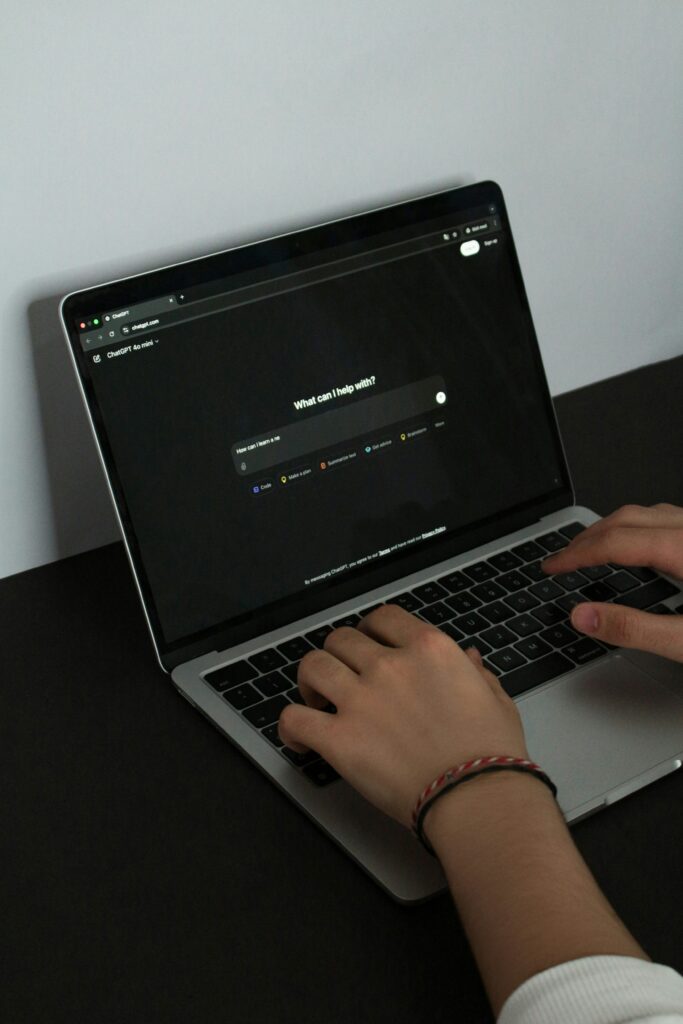
This is where I made my worst mistake. Early on, I asked ChatGPT for sources on a history topic, and it gave me a citation for a book that, as far as I could tell, didn’t exist. AI models can confidently invent sources that sound completely real. Now I only use it to figure out what to search for good keywords, related subtopics, key names and then I do the actual searching in Google Scholar, JSTOR, or my school library database.
6. Get Feedback on a Draft You Already Wrote
After I finish a draft, I’ll paste it in and ask something specific like “where does my argument get weaker” or “which paragraph feels repetitive.” It’s like a free second reader who has read literally everything, though I still run grammar through Grammarly separately since ChatGPT sometimes rewrites your voice instead of just flagging issues.
7. Simplify Math and Science Step-by-Step
For anything with formulas, I ask it to solve the problem showing every single step, then I redo the problem myself with a similar example without looking. If I can’t redo it alone, I didn’t actually learn it I just watched someone else do it.
8. Build Study Guides for Group Projects
When I’m coordinating with a group, I’ll ask ChatGPT to turn our shared notes into a condensed study guide everyone can review before we meet. It saves the awkward “did everyone actually read the material” moment.
9. Practice Explaining Things Back
This one sounds backwards, but it works: after ChatGPT explains a concept, I try explaining it back in my own words and ask it to point out what I got wrong. This is basically the Feynman technique with a tutor who never gets tired of checking your work.
Read More : Best Gaming Mobile for PUBG – Top Phones for PUBG and COD Mobile in 2026
10. Check Your Understanding of Your School’s AI Policy First
This isn’t a “use case” exactly, but it should be step zero. Rules vary wildly some professors are fine with using ChatGPT for homework and research as a study aid but ban it for graded writing; others ban it outright. RAND’s research found only about a third of students said their school had a clear, schoolwide policy, which means a lot of students are guessing. Ask your teacher directly. It takes two minutes and saves you a very bad conversation later.
Common Mistakes I See (and Made Myself)
– Copy-pasting answers straight into assignments. Turnitin and similar detection tools have gotten better, and even when they’re wrong, professors notice writing that doesn’t sound like you.
– Trusting citations without checking them. Always verify sources actually exist before putting them in a bibliography.
– Using it for topics you should just ask your teacher about. Sometimes a two-minute office hours conversation beats twenty minutes of back-and-forth prompting.
– Letting it replace practice. RAND’s research found a majority of students now believe heavy AI use is hurting critical thinking skills and tellingly, that concern is even higher among students who don’t use it much, suggesting it’s a real pattern worth taking seriously, not just an anxiety.
– Not double-checking math and science answers. It gets things wrong more often than people expect, especially on multi-step problems.
Final Thoughts
The students who get the most out of this tool aren’t the ones using it to skip the work they’re the ones using it to understand the work faster. My cousin, by the way, ended up asking ChatGPT to explain her chemistry problem in three different ways until one finally clicked, then did the rest of the worksheet on her own. That’s the difference. Used well, ChatGPT for homework and research isn’t a cheat code. It’s closer to a study partner who’s always awake at 1 a.m. when you need one.
Read More : How to Use ChatGPT for Students to Study Smarter (2026 Guide)

C0-Founder and Editor
Tazeen and Arzoo are the Co-Founders and Editors of THE NEWSTER. They specialize in covering world news, technology, weather, business, and trending stories. Their mission is to deliver accurate, timely, and well-researched journalism while making complex topics clear, reliable, and easy for readers to understand.
About The Author