Canada US Tariff War Explained: Why Canada Hit Back With Retaliatory Tariffs in 2026
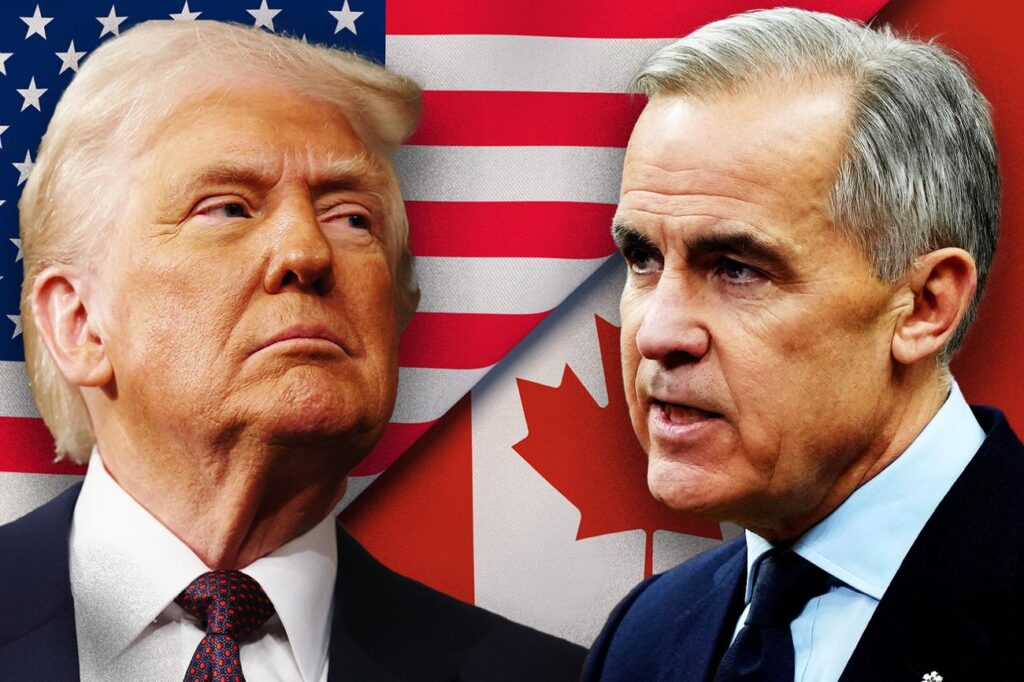
Canada US Tariff War Explained
Canada US Tariff War Explained: Learn why Canada imposed retaliatory tariffs on US goods, what triggered the trade dispute, and how the escalating tariffs could affect trade, prices, businesses, and both economies.
Canada US Tariff War Explained: Why Canada Hit Back With Retaliatory Tariffs
I was standing in a Costco in Mississauga two weekends ago, staring at a shelf of Kirkland maple syrup that had somehow gotten more expensive than the last time I checked, and the guy next to me just muttered, “Yeah, it’s the tariffs again.” That’s basically how most Canadians are finding out about this whole mess not from a press conference, but from their grocery bill.
So let’s actually break down what’s going on, because “trade war” gets thrown around a lot and most articles either drown you in policy jargon or oversimplify it into “Trump bad, Canada mad.” I want to walk you through the actual sequence of events, why Canada didn’t really have a choice, and what it means for your wallet. This is my attempt at a proper Canada US tariff war explained, written the way I’d explain it to a friend over coffee, not a textbook.
Read More : US Fires Missiles at Cargo Ship Near Iran: What Happened in the Strait of Hormuz?
What Actually Happened (The Short Version)
Here’s the timeline, stripped of the noise:
Talks between Washington and Ottawa had been dragging on for months, with both sides publicly saying they wanted a deal. Then, late on a Friday night in Washington, negotiations collapsed. Hours later right at midnight the US went ahead and slapped a 50% tariff on roughly $20 billion worth of Canadian goods, hitting things like hockey equipment, building materials, liquor, cement, and certain clothing categories.
Canadian Prime Minister Mark Carney came out the next morning and called it ” a miscalculation.” Not exactly diplomatic-speak he was clearly frustrated. He said Canada would match the US “dollar for dollar,” with retaliatory tariffs set to kick in on September 8, targeting American steel, dairy, appliances, agricultural equipment, pulp and paper, and electronics.
What struck me is how reluctant Carney sounded doing it. He basically admitted that some of these countermeasures will raise costs for Canadians too, and that plenty of American companies caught in the crossfire didn’t ask for any of this either. That’s not the tone of someone escalating for political points it’s someone who felt cornered into a response.
Why Canada Imposed Retaliatory Tariffs on the US
This is the part people actually want answered, so let’s get into it.
1. It’s about leverage, not spite. In trade negotiations, if one side raises tariffs and the other does nothing, there’s zero incentive for the aggressor to back down. Canada’s retaliatory tariffs are meant to make the pain roughly symmetrical, so American exporters and their senators start pressuring Washington to come back to the table.
2. Domestic political pressure. Canadian steelworkers, dairy farmers, and manufacturers were already hurting from earlier rounds of US tariffs going back to 2025. A government that does nothing while its own industries take a hit doesn’t stay popular for long.
3. Precedent matters. This isn’t Canada’s first rodeo with this exact playbook. Back in February 2025, when the US first imposed 25% tariffs on Canadian goods, Trudeau’s government responded with 25% tariffs on $155 billion worth of American products. Carney, who took over as PM in March 2025, inherited that standoff and has now had to escalate it again after this latest breakdown.
4. Protecting specific industries. The sectors Canada picked for retaliation steel, dairy, appliances, agricultural equipment, electronics aren’t random. They’re chosen to apply pressure on US states and industries that have political weight, while also shielding Canadian producers in those same categories from being undercut.
A Quick Look at the Numbers
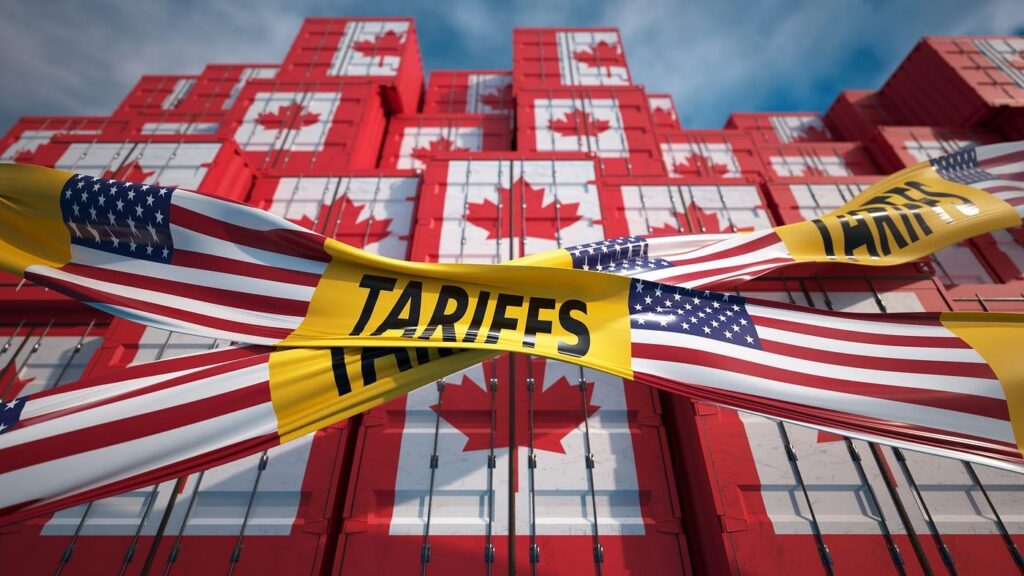
Numbers help more than adjectives here, so here’s a simple table of how this thing has escalated over time.
| Date | Action | Scale |
|---|---|---|
| Feb 1, 2025 | US announces tariffs on Canadian goods | 25% general, 10% on energy |
| Feb 2025 | Canada’s first retaliatory round | 25% on C$155 billion of US goods |
| Aug 1, 2025 | US raises non-USMCA-compliant tariffs | 25% to 35% |
| Aug 22, 2026 | US imposes new tariffs after talks collapse | 50% on ~$20 billion of Canadian goods |
| Sept 8, 2026 | Canada’s retaliatory tariffs take effect | “Dollar for dollar” match, targeting steel, dairy, appliances, ag equipment, pulp/paper, electronics |
What jumps out to me is the jump from 25% to 50% in this latest round. That’s not a small nudge that’s a real escalation, and it explains why Carney used the word “miscalculation.” A 50% tariff on $20 billion in goods isn’t symbolic; it changes actual purchasing decisions for businesses on both sides of the border.
Read More : West Bank at Breaking Point: What Is Happening in the Occupied Territory?
Canada US Trade War and USMCA 2026: Where Does the Agreement Fit In?
If you’re thinking, “wait, don’t Canada, the US, and Mexico have a free trade deal for exactly this reason?” you’re right, and it’s a fair question.
The USMCA (called CUSMA in Canada) was supposed to keep most trade between the three countries tariff-free. But here’s the catch: a chunk of these tariffs are being applied to goods that aren’t classified as USMCA-compliant, or they’re being justified under separate national security or emergency powers that sit outside the normal trade agreement rules.
The Canada US trade war and USMCA 2026 situation is genuinely awkward because the agreement is up for a scheduled joint review, and this blow-up is happening right in the middle of that process. Some trade analysts I’ve read describe it less as “USMCA breaking down” and more as both governments testing how much pressure they can apply before the formal review talks even start. Either way, if you were hoping USMCA would act like a shield against all this, it hasn’t at least not for the categories currently caught in the dispute.
Canada US Trade War Impact on Consumers
Read More : North Korea Nuclear War Warning: Will US-South Korea Drills Spark a Real Crisis?
Okay, this is the part that actually affects your day-to-day life, so let’s slow down here.
Groceries and dairy. Dairy is one of the sectors Canada is targeting on the US side, and it’s also one where Canada has its own protections (supply management). Expect price movement on both sides of the border for cheese, butter, and related products.
Appliances and electronics. If you’re planning to buy a fridge, washing machine, or laptop in the next few months, prices are worth watching closely. Tariffs on appliances and electronics tend to show up at the register within weeks, not months, because retailers pass costs through fast.
Building materials and construction. If you’re renovating, lumber, cement, and steel-related costs have been volatile since the earlier 2025 rounds, and this new escalation adds another layer of uncertainty for contractors quoting jobs.
Alcohol. US liquor is directly targeted by the American tariffs, and several Canadian provinces have previously pulled US alcohol brands from liquor store shelves during earlier rounds of this dispute. If you’ve got a favorite bourbon from a US distillery, it might be worth checking whether it’s still on the shelf.
Steel and manufacturing jobs. This one’s less about a receipt and more about the local economy steel towns on both sides of the border feel this fastest, through order slowdowns and layoffs before it ever shows up in a headline.
Here’s my honest take from watching the 2025 round play out: the price increases don’t hit everything at once, and they don’t hit evenly. Some categories barely move. Others jump noticeably within a month. If you want to actually track it instead of guessing, Statistics Canada’s monthly CPI release and the US Bureau of Labor Statistics CPI report are the two places I’d bookmark they break inflation down by category, so you can see exactly which goods are moving.
Read More : Ukraine Sends New Peace Proposal to US: Could the Russia-Ukraine War Finally End?
Step-by-Step: How to Protect Your Budget During This
If you want practical steps instead of just doom-scrolling headlines, here’s what I’ve actually been doing and recommending to family:
1. Check country-of-origin labels before big purchases. Appliances and electronics often list manufacturing origin on the box or spec sheet a quick search of the model number plus “made in” usually clears it up.
2. Compare prices before and after September 8. If you’re planning a big purchase a fridge, a car part, building materials buying before the retaliatory tariffs land on September 8 could save you real money.
3. Watch grocery flyers for substitution options. Local Canadian dairy and produce brands often become the cheaper option once US alternatives get pricier apps like Flipp are handy for comparing store flyers side by side.
4. Track CPI data monthly, not just when a headline scares you. StatCan and BLS reports are free and take five minutes to skim.
5. If you run a small business that imports from the US, talk to a customs broker now about tariff classification sometimes goods qualify for exemptions if they meet USMCA rules of origin, and it’s worth checking before assuming the higher rate applies.
What Happens Next
Nobody has a crystal ball here, but based on how the last round played out, a few things are likely:
– Expect both governments to keep talking behind the scenes even while tariffs are technically in effect that’s basically what happened for most of 2025.
– Watch for province-level and state-level responses too. Individual provinces have pulled US products from shelves before, and US states with export-heavy industries tend to lobby Washington hard when their own businesses start losing Canadian buyers.
– The USMCA joint review, whenever it formally kicks off, will be the moment that either resets this relationship or hardens it further.
FAQs
Q: Why did Canada impose retaliatory tariffs on the US in 2026?
A: Because the US imposed a 50% tariff on about $20 billion worth of Canadian goods after trade talks collapsed in August 2026. Canada’s retaliatory tariffs, starting September 8, are meant to apply equal pressure and protect Canadian industries like steel and dairy from being undercut.
Q: What products are affected by the Canada US tariff war?
A: On the US side, tariffs hit Canadian hockey equipment, building materials, liquor, cement, and clothing. Canada’s retaliation targets US steel, dairy, appliances, agricultural equipment, pulp and paper, and electronics.
Q: Does USMCA protect against these tariffs?
A: Only partially. Many of the tariffs apply to goods classified as non-USMCA-compliant or are justified under separate emergency powers, so the trade agreement hasn’t blocked this round of measures.
Q: How does the Canada US trade war impact consumers directly?
A: Expect price movement on groceries (especially dairy), appliances, electronics, alcohol, and building materials. Some categories shift within weeks; others take longer to show up at checkout.
Q: Will prices go back down once the trade war ends?
A: Historically, some prices ease once tariffs are lifted, but not all retailers don’t always roll back prices at the same pace they raised them. It depends heavily on the category and how much competition exists in that market.
Q: Is this the first Canada-US trade war under Trump?
A: No. Tensions started back in February 2025 with an earlier round of 25% tariffs and matching Canadian retaliation. This 2026 escalation to 50% is a significant jump from that original dispute.
Wrapping This Up
I’ll be honest after following this since the original 2025 tariffs, what stands out most isn’t the politics, it’s how normal this has started to feel for a lot of Canadians. Nobody’s shocked anymore when a new round of tariffs gets announced. That’s kind of the problem. When trade disputes between two of the most integrated economies on the planet start feeling routine, it’s usually regular people shoppers, small business owners, factory workers who absorb the cost while the headlines move on to the next thing.
If you take one thing from this: keep an eye on the September 8 date, watch your grocery and appliance prices over the following few weeks, and don’t assume this gets resolved quickly just because both sides keep saying they want a deal. Based on how the last eighteen months have gone, “temporary” trade disputes here have a habit of sticking around longer than anyone initially promises.

C0-Founder and Editor
Tazeen and Arzoo are the Co-Founders and Editors of THE NEWSTER. They specialize in covering world news, technology, weather, business, and trending stories. Their mission is to deliver accurate, timely, and well-researched journalism while making complex topics clear, reliable, and easy for readers to understand.
About The Author