Why Could Nepal’s Flood Recovery Cost $5 Billion? The Damage Is Worse Than It Looks
Nepal's Flood Recovery Cost $5 Billion
Nepal’s flood recovery cost $5 billion is now the working estimate after the August 2026 glacier-collapse floods. Here’s why the damage runs so deep and what rebuilding actually involves.
Why Could Nepal’s Flood Recovery Cost $5 Billion?
I’ve spent the last few days doing what a lot of us have refreshing news feeds, watching drone footage of entire neighborhoods buried under grey sludge, and trying to make sense of numbers that keep climbing every few hours. First it was 360 dead. Then 469. Then 538. The missing count has swung between 1,000 and 2,000 depending on which agency is counting. That kind of chaos tells you something on its own: this wasn’t a normal monsoon flood. Something much bigger broke loose in the Himalayas on August 26, 2026, and Nepal is now staring down a bill that could hit $5 billion money the country simply doesn’t have sitting around.
If you’ve been searching for Nepal’s Flood Recovery Cost $5 Billion and wondering whether that number is real or just a scary headline, I dug through the official statements, the finance ministry’s own words, and the on-ground reporting to lay it out plainly. Short answer: yes, it’s real, and honestly, it might even be conservative.
What Actually Happened on August 26
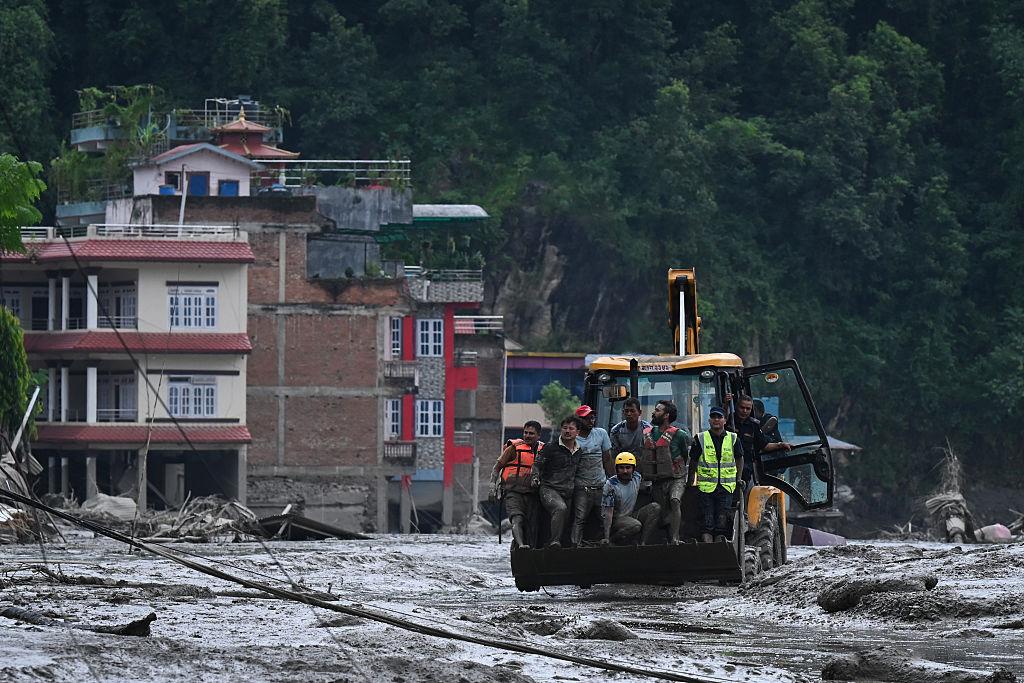
Before we get into the money, it helps to know what caused this. This wasn’t rainfall in the usual sense. A chunk of glacier roughly 610 meters wide sheared off high in Langtang National Park, near the Nepal-China border, and fell nearly 1,200 meters down the mountainside. The impact was so violent that seismic sensors initially logged it as an earthquake. That collapsing ice and rock slammed into the valley below, displaced the river, and sent a wall of mud, boulders, and debris crashing through towns at speeds survivors describe as looking like “liquid cement” moving faster than anyone could run.
Within half an hour, water levels on the Trishuli River reportedly rose by around 9 meters. Villages that had stood for generations were gone within minutes.
3. Why Could Reconstruction Cost $5 Billion?
This is the question everyone keeps asking, so let’s break it down.
Nepal’s Finance Minister, Swarnim Wagle, told reporters the initial government estimate sits between $4 billion and $5 billion. Separately, Binod Chaudhary Nepal’s only billionaire and chairman of the Chaudhary Group gave Bloomberg Television the same ballpark figure, saying he “wouldn’t be surprised” if the final bill reached $5 billion once every road, bridge, and power station is accounted for.
To put that in perspective: Nepal’s entire economy is worth around $45.5 billion a year. A $5 billion reconstruction bill isn’t a rounding error it’s close to 10-11% of the country’s total GDP. Imagine a country having to rebuild a tenth of its yearly economic output from scratch, in mountains where even getting a bulldozer to the site takes days.
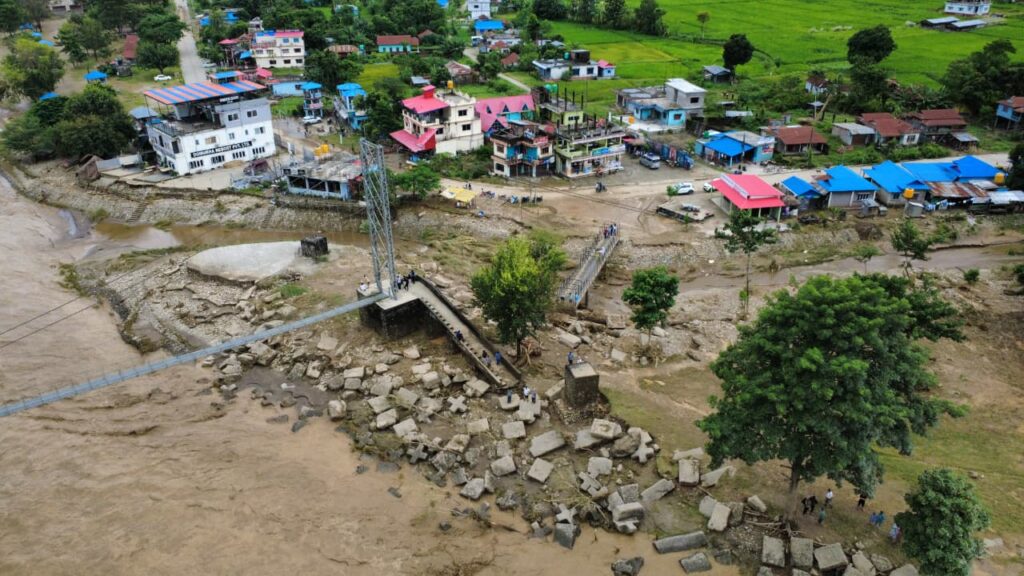
The reason the number keeps climbing is simple: every fresh helicopter survey finds another destroyed bridge, another wiped-out hydropower plant, another village that engineers hadn’t reached yet. Preliminary Nepal government figures already put damages at roughly NPR 200 billion(close to $1.5 billion) just from the first wave of assessments and that was before full access was even possible to the hardest-hit valleys.
Read More : Nepal Flash Floods 2026: Hundreds Dead After Glacier Collapse Triggers Devastating Floods
4. Which Areas and Infrastructure Were Hit Hardest?
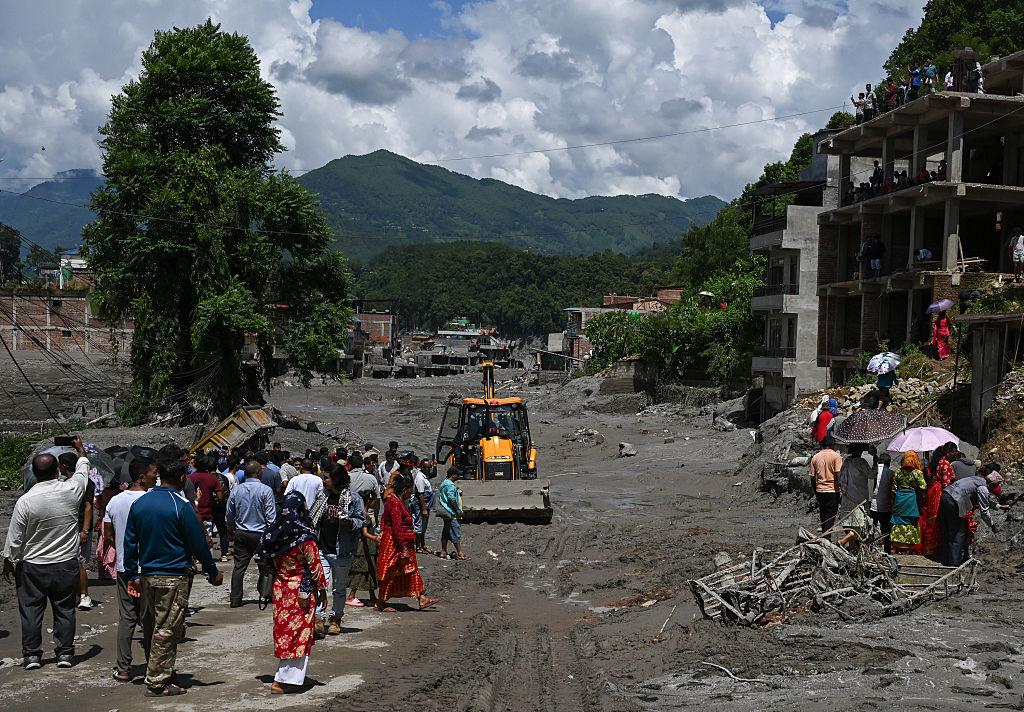
The disaster zone runs along Nepal’s mountainous northern border with China, in districts that are already some of the hardest places in the country to reach:
– Rasuwa ground zero, closest to the glacier collapse and the China border crossing
– Nuwakot towns like Bidur, Trishuli, Betrawati, and Devighat buried under silt over 1.5 meters deep in places
– Dhading a downstream district that took the brunt of the surge as it moved south along the Trishuli and Narayani rivers. Dhading wasn’t near the original glacier collapse, but the sheer volume of water and debris carried bodies and wreckage tens of kilometers into the district. Disaster-authority tallies have recorded around 27 to 40 bodies recovered here as search efforts continued.
– Gorkha also hit downstream, further south than Dhading, again mostly from material and victims carried in by the river rather than a local point of impact. Recovery counts here have ranged from roughly 20 to 46 bodies depending on the day’s tally. What makes Gorkha especially hard to process is that this is the same district devastated by Nepal’s 2015 earthquake, which killed almost 9,000 people nationwide meaning some communities here are now facing their second catastrophic disaster in just over a decade.
– Chitwan downstream flooding as debris-choked rivers pushed further south
Floodwaters reportedly reached as high as 80 meters above normal river level in some spots. That’s not a flood in the backyard-garden-hose sense that’s a wall of water high enough to swallow a six-story building.
Read More : Europe’s Rivers Are Drying Up: The Europe Water Crisis 2026 Explained
5. Roads, Bridges and Buildings: What Needs to Be Rebuilt?
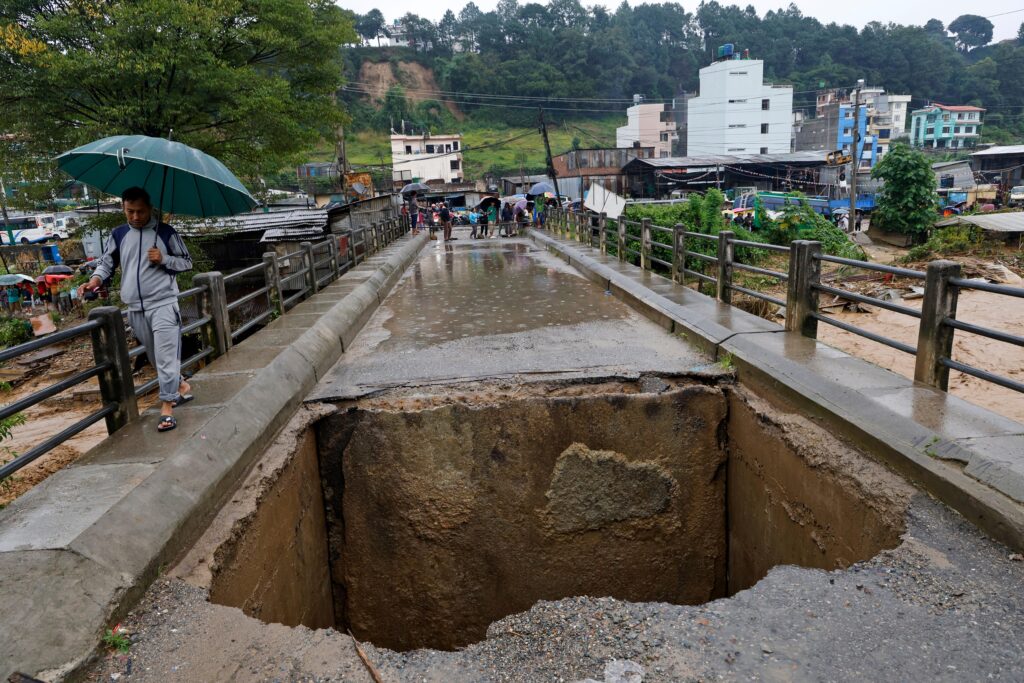
Here’s where the scale really hits home. Nepal’s Roads Department gave an early estimate of Rs 15 billion in damage to roads and bridges alone, covering:
– 41 bridges destroyed or structurally compromised
– 42 kilometers of road wiped out
– An 80-kilometer stretch of the critical highway connecting Nepal to the China border a lifeline for cross-border trade badly damaged
– Roughly 700 megawatts of hydropower capacity, either operating or under construction, knocked offline or destroyed
– Thousands of private homes, along with farmland and small businesses, buried or swept away
That road to China had actually been rebuilt once already, after flooding damaged it in 2025. Now it needs to be rebuilt again which tells you how unstable this whole region has become.
6. How Many People Were Killed, Missing or Displaced?
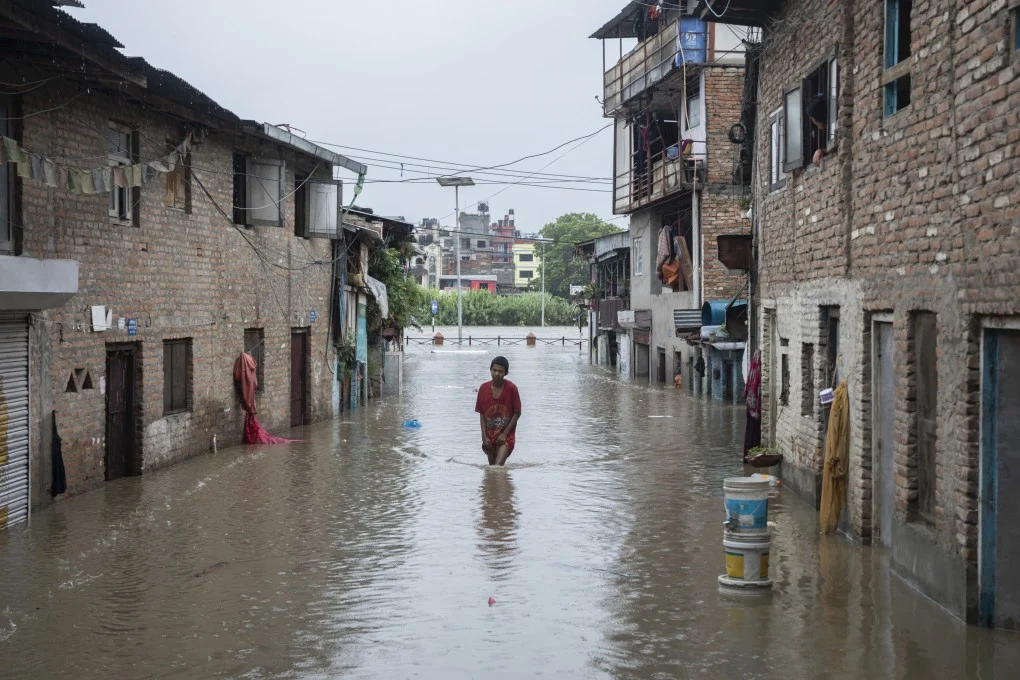
The numbers here are genuinely painful to track because they shift with almost every official update. As of the most recent figures I could confirm:
– At least 538 people confirmed dead in Nepal (with additional deaths reported across the border in Tibet)
– Around 1,000 to 1,200 people still missing, including a large number of foreign tourists and pilgrims
– Nearly 3,750 people rescued so far by Nepalese army, police, and volunteer teams
– UNICEF estimates roughly 17,000 childrenhave been directly impacted
– Hundreds of families displaced into temporary shelters across the Himalayan region
Officials have been upfront that these numbers will likely rise further as rescue teams reach areas that are still cut off by damaged roads.
Read More : 7.4-Magnitude Earthquake Hits Colombia – What Happened and Why Was It So Powerful?
7. Why Is Nepal Struggling to Finance the Recovery?
Nepal isn’t a wealthy country to begin with. Its national budget is a fraction of what a $5 billion rebuild demands, and a huge chunk of government revenue already goes toward basic services, not disaster reserves.
A few things make this financing puzzle especially hard:
– Terrain. Getting cement, steel, and machinery into valleys with no functioning roads costs far more than construction in flat, accessible regions.
– Timing. This hit during monsoon season, when landslide risk is already elevated, slowing rebuilding efforts before they can even start.
– Compounding disasters. Nepal is still economically recovering from the 2015 earthquake, which cost around $9 billion and took the better part of a decade to rebuild from.
– Limited domestic capital markets. Nepal can’t simply borrow the way larger economies can without straining its debt sustainability.
Wagle himself said this bill should end up smaller than the 2015 earthquake’s $9 billion, but “smaller than a $9 billion disaster” is still an enormous ask for an economy this size.
8. Who Will Pay for Nepal’s Reconstruction?
Right now, funding is expected to come from a mix of sources:
– The Nepal government’s own budget, reallocated from other priorities
– International aid and multilateral loans agencies like the UN’s OCHA are already coordinating relief, and development banks typically step in with concessional loans after disasters of this scale
– Private sector contributions the Chaudhary Group has already mobilized staff and resources to build temporary rehabilitation centers and says it will spend more on this recovery than it did after the 2015 quake
– Bilateral support, particularly from neighboring China, given that the disaster also struck Tibet’s Gyirong County
– NGOs and humanitarian organizations like Project HOPE, which deployed emergency response teams within days
None of this is confirmed or finalized Nepal’s government has said a clearer damage assessment and funding plan should emerge within about a week of the disaster.
9. How Long Could Reconstruction Take?
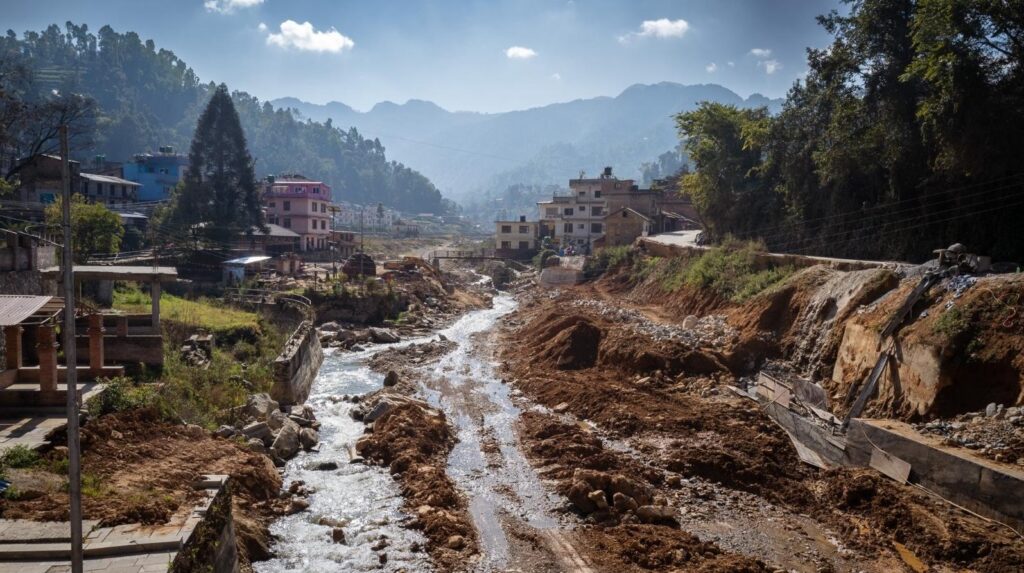
Chaudhary drew a direct comparison to the 2015 earthquake recovery, which took seven to eight years from start to finish. Given that this disaster hit even more remote, harder-to-access terrain, there’s little reason to expect Nepal’s flood recovery to move faster.
Realistically, expect this to unfold in phases:
1. Emergency relief (weeks) shelter, food, medical care, search and rescue
2. Temporary infrastructure (months) makeshift bridges, emergency roads, restoring basic power
3. Permanent rebuilding (multiple years) proper roads, bridges, hydropower plants, and housing built to withstand future events
Read More : Typhoon Causes Landslides in the Philippines 2026 : 15 Killed as East Asia Braces
10. Could Climate Change Make Future Floods Worse?
This is the part that worries scientists the most. The glacier that collapsed had shown unusually warm surface conditions in the weeks before, with less snow cover exposing more bare ice a pattern consistent with a warming Himalayan region. Researchers at the Kathmandu-based International Centre for Integrated Mountain Development haven’t confirmed a direct causal link to climate change for this specific event, but they’re clear that the broader trend is concerning.
And this isn’t an isolated case. In 2025, Nepal saw two separate glacial-lake or ice-avalanche floods in the same general region one in Humla, one at the Rasuwagadhi border crossing that destroyed the same Friendship Bridge connecting Nepal to China. The Himalayas are one of the most densely populated mountain regions on Earth, and glacial instability is becoming a recurring threat rather than a rare event.
11. What Happens Next for Flood Survivors?
For the people who lost homes, farmland, or family members, the road ahead is brutally practical:
– Temporary shelters and rehabilitation centers are being set up across Nuwakot and Rasuwa
– Aid groups are distributing tents, food, and clean water via helicopter to communities still cut off by road
– A newly formed “barrier lake” at the original collapse site is being closely monitored, since authorities are worried it could burst and trigger a second wave of flooding downstream
– Schools, clinics, and local markets in the affected districts will need to be rebuilt largely from scratch
Read More : Tropical Storm Maysak Flooding in Southern China 2026: 39 Dead, Thousands Evacuated
12. Nepal Floods 2026: Key Facts and Latest Updates
| Category | Latest Figure |
|---|---|
| Estimated reconstruction cost | $4–5 billion |
| Share of Nepal’s GDP | ~9–11% |
| Confirmed deaths (Nepal) | 538+ |
| People still missing | ~1,000–1,200 |
| People rescued | ~3,750 |
| Children affected (UNICEF) | ~17,000 |
| Bridges destroyed/damaged | 41 |
| Roads destroyed/damaged | 42 km (plus 80 km border highway) |
| Hydropower capacity affected | ~700 MW |
| Preliminary Nepal govt. damage estimate | NPR 200 billion (~$1.5B) |
| Comparable disaster | 2015 earthquake ($9B, 7–8 year rebuild) |
| Trigger event | Glacier collapse, Langtang National Park, Aug 26, 2026 |
(Figures are early estimates and are expected to change as damage assessments continue.)
Nepal Flood Damage and Reconstruction Cost: The Bigger Picture
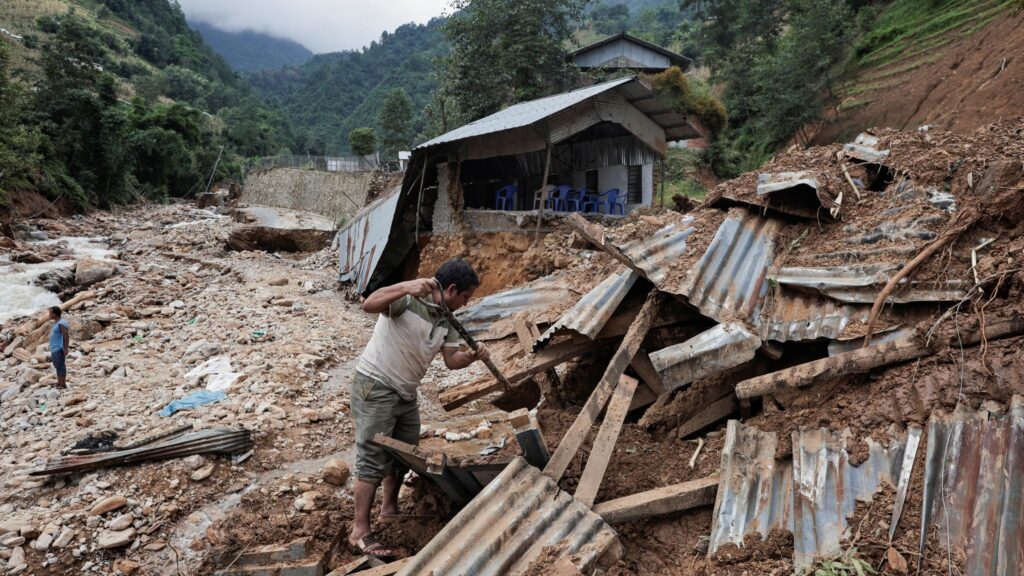
What strikes me most, having followed disaster recovery stories for years, is how this Nepal floods 2026 economic impact goes beyond the headline dollar figure. It’s not just about rebuilding a bridge or repaving a road. It’s farmers who lost the only land they had. It’s small hydropower operators who may never recoup their investment. It’s kids who won’t have a school building to walk back into for years.
When people ask how much will Nepal flood recovery cost, the honest answer is: nobody knows the final number yet, and anyone who tells you they do is guessing. What we do know is that $4-5 billion is the floor, not the ceiling, and the real cost in displaced lives and lost years doesn’t show up on a spreadsheet.
Frequently Asked Questions
1. How much will Nepal’s flood reconstruction cost?
Nepal’s Finance Minister and the country’s leading business figure, Binod Chaudhary, both estimate the reconstruction bill at roughly $4 billion to $5 billion, based on early damage assessments. That figure is expected to be refined as full surveys of the affected districts are completed.
2. Why are Nepal floods so destructive?
Nepal’s geography is the core problem. Steep Himalayan valleys funnel floodwater and debris at extreme speed, glaciers in the region are increasingly unstable due to warming trends, and the remote terrain makes both rescue efforts and reconstruction far slower and costlier than in flatter regions.
3. How many people were affected by the Nepal floods?
As of the latest updates, more than 538 people have died in Nepal, roughly 1,000 to 1,200 remain missing, nearly 3,750 have been rescued, and an estimated 17,000 children have been affected across the disaster zone.
4. Who is funding Nepal’s flood recovery?
Funding is expected to come from Nepal’s own government budget, international humanitarian aid, multilateral development loans, private sector contributions (including from the Chaudhary Group), and bilateral support, particularly given that neighboring Tibet was also affected.
5. How long will Nepal take to rebuild after the floods?
Based on comparisons to Nepal’s 2015 earthquake recovery, which took seven to eight years, officials expect this rebuild to also take several years given the remote and difficult Himalayan terrain involved.

C0-Founder and Editor
Tazeen and Arzoo are the Co-Founders and Editors of THE NEWSTER. They specialize in covering world news, technology, weather, business, and trending stories. Their mission is to deliver accurate, timely, and well-researched journalism while making complex topics clear, reliable, and easy for readers to understand.
About The Author