Famous Political Scandals Explained: Biggest Controversies in History
Famous Political Scandals Explained: Biggest Controversies in History
Famous political scandals explained in plain English from Watergate to modern corruption cases. Real stats, a comparison table, and lessons that still matter today.
Famous Political Scandals and Controversies Explained: The Stories Behind the Headlines
I still remember sitting in a college lecture hall when my professor said something that stuck with me: “Every generation thinks its political scandal is the worst one ever.” He was wrong and right at the same time. Some scandals really do change the course of history. Others just make for good gossip at dinner parties before everyone forgets about them in six months.
I’ve spent years reading through court documents, old newspaper archives, and government reports for research projects, and one thing became obvious pretty fast political scandals follow patterns. Once you see the pattern, you start recognizing it in real time, whether it’s happening in Washington, London, Islamabad, or anywhere else.
So let’s actually break down some of the most famous political scandals explained in a way that makes sense, without the dry textbook tone.
Why Political Scandals Keep Happening
Before we get into specific cases, it helps to understand why this keeps repeating itself.
Power attracts people who want more of it. Add money, secrecy, and weak oversight, and you’ve got a recipe that plays out over and over. When you look at political corruption scandals explained across different countries, the ingredients are almost always the same three things: hidden money, abused power, and a cover-up that eventually falls apart.
The cover-up part is important. In most cases, the original act wasn’t even the thing that destroyed careers it was the lying about it afterward.
Watergate: The Scandal That Set the Template
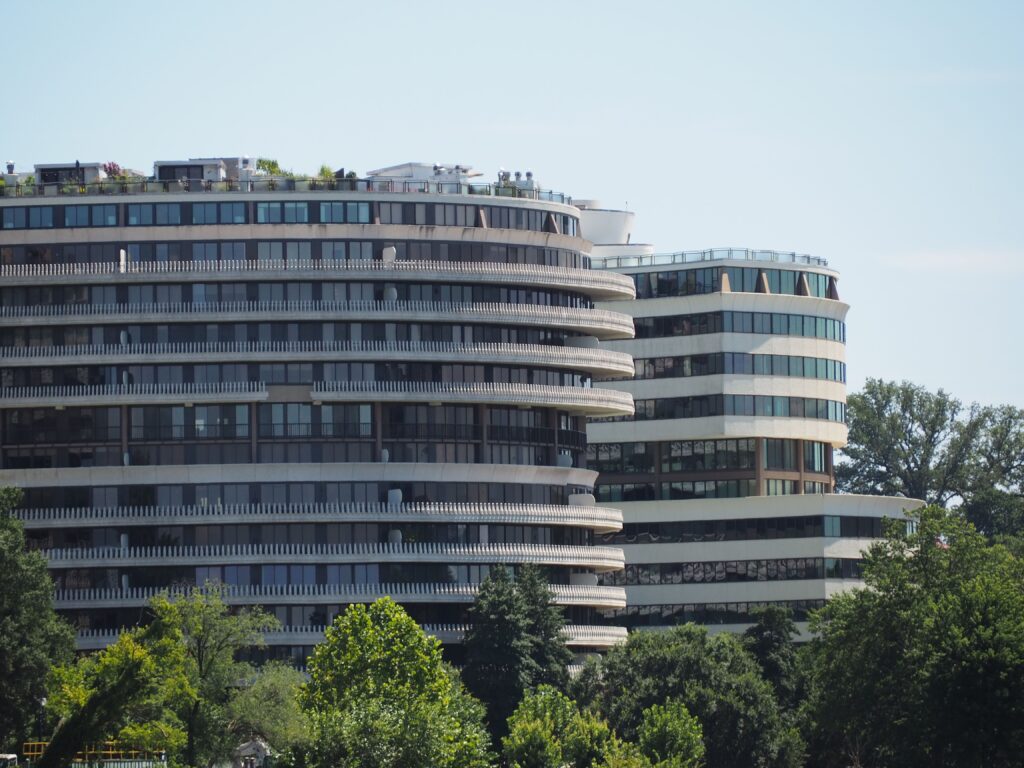
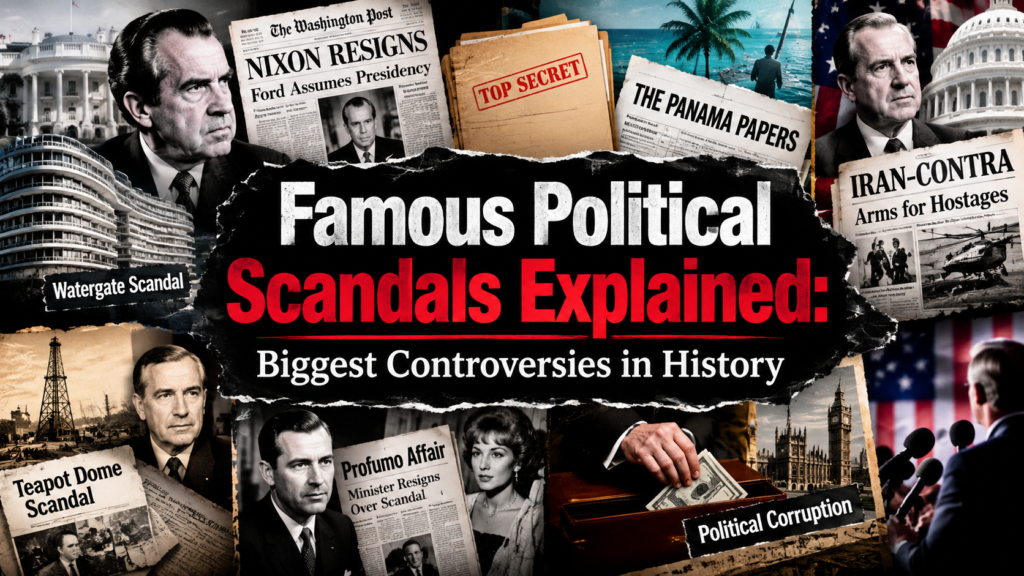
You can’t talk about famous political scandals explained without starting here. In 1972, operatives connected to President Nixon’s re-election campaign broke into the Democratic National Committee headquarters at the Watergate complex in Washington, D.C.
The break-in itself was almost sloppy. What made it historic was the cover-up. Nixon’s administration tried to hide its involvement, and investigative journalists Bob Woodward and Carl Bernstein, working with an anonymous source known as “Deep Throat,” slowly pulled the thread until the whole thing unraveled.
Nixon resigned in August 1974 the only U.S. president to do so. It’s still the reference point people use whenever a new scandal breaks. That’s actually where the “-gate” suffix comes from (Deflategate, Pizzagate, and so on).
Teapot Dome: The Original Oil Scandal
Long before Watergate, there was Teapot Dome in the 1920s. U.S. Interior Secretary Albert Fall secretly leased federal oil reserves to private companies in exchange for personal loans and gifts. He was later convicted of bribery the first Cabinet official in U.S. history to go to prison for actions taken while in office.
When people ask about the biggest political scandals in history explained, this one usually gets overlooked because it’s older, but it set a legal precedent for how bribery cases involving public officials get prosecuted.
Read More : Pakistan’s Role in US-Iran Tensions: Can Islamabad Restart Peace Talks?
The Panama Papers: A Global Wake-Up Call
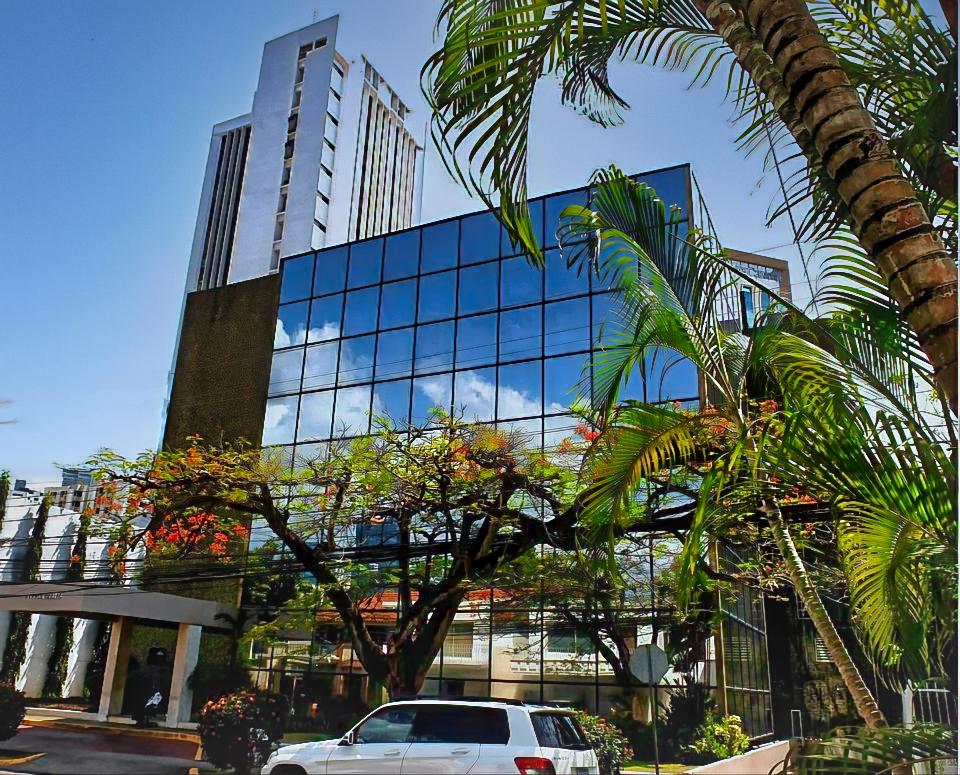
Fast forward to 2016. A massive leak of 11.5 million documents from a Panamanian law firm exposed how world leaders, celebrities, and business figures used offshore accounts to hide wealth and dodge taxes.
This one hit different because it wasn’t just one country’s problem. Leaders in Iceland, Pakistan, and Russia were all implicated in some way. Iceland’s Prime Minister actually resigned within days of the leak going public.
If you want to understand shocking political scandals around the world, the Panama Papers show how interconnected global corruption really is money doesn’t stay in one country, and neither does the fallout.
Read More : Canada US Tariff War Explained: Why Canada Hit Back With Retaliatory Tariffs in 2026
1MDB: Malaysia’s Billion-Dollar Heist
The 1Malaysia Development Berhad (1MDB) scandal involved roughly $4.5 billion allegedly siphoned from a state investment fund. Former Prime Minister Najib Razak was convicted on corruption charges connected to the case.
What’s wild is how the stolen money reportedly funded luxury real estate, artwork, and even helped finance the Hollywood movie “The Wolf of Wall Street” which is almost too ironic given the film’s subject matter.
A Quick Comparison Table
| Scandal | Year | Country | Core Issue | Outcome |
|---|---|---|---|---|
| Teapot Dome | 1921–1923 | USA | Bribery over oil leases | First Cabinet member jailed |
| Watergate | 1972–1974 | USA | Break-in and cover-up | Nixon resigned |
| Iran-Contra | 1985–1987 | USA | Illegal arms sales | Multiple convictions |
| Panama Papers | 2016 | Global | Offshore tax evasion | Iceland PM resigned |
| 1MDB | 2015–2018 | Malaysia | Embezzlement | PM convicted, fund dissolved |
Read More : North Korea Nuclear War Warning: Will US-South Korea Drills Spark a Real Crisis?
What the Data Actually Shows
Transparency International’s Corruption Perceptions Index tracks how corrupt the public sector is perceived to be across 180 countries every year. In their most recent reports, over two-thirds of countries scored below 50 out of 100 meaning serious corruption problems are still the norm rather than the exception, not the rare headline event people assume.
That statistic matters because it shows political scandals and controversies explained in the news are really just the visible tip of a much bigger, quieter iceberg. Most corruption never makes headlines at all it just shows up as wasted public funds, stalled infrastructure projects, or services that never quite work the way they should.
How These Scandals Usually Unravel
If you’ve followed a few of these cases like I have, you start noticing a pattern in how they get exposed:
1. A whistleblower or leak starts it. Someone inside the system decides to talk, or documents get leaked to journalists.
2. Investigative journalists dig deeper. This is usually slow, unglamorous work reading financial records, cross-checking dates, verifying sources.
3. Official investigations follow. Once public pressure builds, government bodies or prosecutors open formal inquiries.
4. The cover-up gets exposed. This is almost always what causes the biggest damage, more than the original act.
5. Legal or political consequences hit. Resignations, convictions, or in rare cases, total exoneration.
Understanding this sequence helps when you’re reading breaking news about a new scandal you can usually tell which stage things are at.
Read More : 200000 US Visas at Risk: Who Could Lose Their Visa Under Trump’s New Plan?
Why This Matters to Regular People
I know politics can feel distant from everyday life, but major political controversies explained properly usually connect back to something practical taxpayer money, public trust, or policy decisions that affect regular families.
When a government official pockets funds meant for schools or hospitals, that’s not abstract. That’s a real budget shortfall somewhere. Following these stories isn’t just entertainment; it’s a way of holding institutions accountable, even from the sidelines.
FAQs
What is considered the biggest political scandal in modern history?
Watergate is usually cited as the most influential, mainly because it directly led to a presidential resignation and reshaped how journalists cover government accountability.
Are political scandals more common now than in the past?
Not necessarily more common just more visible. Leaks, social media, and global journalism networks like the ones behind the Panama Papers mean scandals surface faster and spread further than they used to.
What usually causes a political scandal to become public?
Most start with a whistleblower, a leaked document, or dogged investigative journalism rather than official government disclosure.
Do political scandals actually lead to real consequences?
Sometimes. Resignations and convictions do happen, as seen with Nixon and Najib Razak, but plenty of scandals fade without any legal consequences at all.
Where can I track political corruption data reliably?
Transparency International’s Corruption Perceptions Index and investigative outlets like the International Consortium of Investigative Journalists (ICIJ) are solid, well-documented sources.
Final Thoughts
Political scandals that changed history didn’t happen because people suddenly became greedy greed was always there. They happened because someone eventually said “this isn’t right” and refused to stay quiet.
That’s really the throughline across every case here, from Teapot Dome to 1MDB. The scandal itself is rarely the surprising part. What’s surprising is who finally decides to expose it, and how long it takes for the truth to catch up.

C0-Founder and Editor
Tazeen and Arzoo are the Co-Founders and Editors of THE NEWSTER. They specialize in covering world news, technology, weather, business, and trending stories. Their mission is to deliver accurate, timely, and well-researched journalism while making complex topics clear, reliable, and easy for readers to understand.
About The Author