Venezuela Earthquake Live Updates: 164 Dead, 971 Injured as Rescue Efforts Intensify
Venezuela Earthquake Live Updates
Get the latest Venezuela Earthquake Live Updates as the death toll rises to 164 and hundreds remain trapped. Follow rescue efforts, damage reports, and international aid developments.
I was scrolling through my phone Wednesday evening when the notifications started flooding in one after another, each one worse than the last. Twin earthquakes. Venezuela. Buildings down. Hundreds feared dead. It felt unreal, the kind of thing you see in disaster movies, not on your news feed on a regular Wednesday.
But this is very real. And for the people of Venezuela, it’s a nightmare that’s still unfolding right now.
Here’s everything we know so far about the Venezuela earthquake live updat, and why the next 48–72 hours are so critical for the survivors still trapped under the rubble.
What Happened: A Double Blow in Under a Minute
This wasn’t just one earthquake. It was two back to back, within seconds of each other.
A magnitude 7.2 earthquake struck near San Felipe, the capital city of Yaracuy state, just after 6:04 p.m. ET. Just 40 seconds later, it was followed by a larger 7.5 magnitude quake, some 23 kilometers southeast of Yumare, a town also in Yaracuy state.
That one-two punch is what made this so catastrophic. Buildings that might have survived one strong shake had no time to recover before the second, more powerful quake hit. These are the largest earthquakes to hit the country in more than a century.
The timing made things even worse. The quakes struck during a national holiday in Venezuela, with many people at home. That means more families were inside their apartments and houses when the walls came down.
Venezuela Earthquake Live Updates: The Death Toll Is Rising
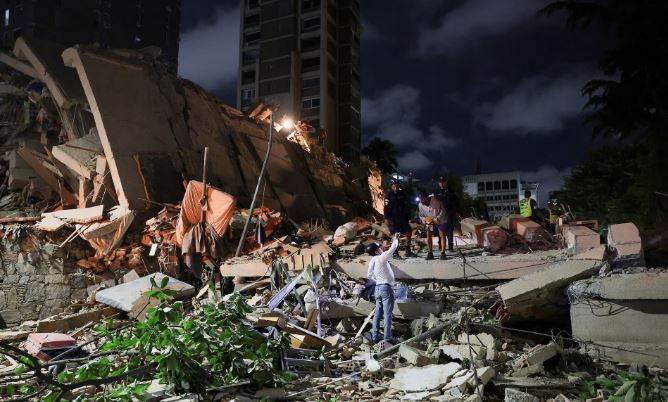
As of early Thursday morning, the death toll has risen to at least 164 people, with 971 people confirmed injured, according to acting Venezuelan President Delcy Rodríguez. However, the true death toll is feared to be much higher, given the number of collapsed and damaged buildings, as authorities continue search and rescue efforts.
Those numbers are heartbreaking on their own but experts say they’re almost certainly an undercount.
The U.S. Geological Survey said it estimates a 44% chance that the death toll from the Venezuela earthquakes could exceed 10,000 people, and a 30% chance it could surpass 100,000. The agency issued a “red alert” for shaking-related fatalities and economic losses, saying “high casualties and extensive damage are probable and the disaster is likely widespread.”
The figures that don’t even fully account for La Guaira, the coastal state just north of Caracas. Interim President Delcy Rodriguez said initial casualty figures do not include those from the worst-affected La Guaira state. Videos circulating on social media from that area show entire apartment blocks flattened along a major coastal road and it’s gut-wrenching to watch.
Why the Damage Is So Severe
If you’re wondering how two earthquakes even powerful ones could cause this level of devastation, a geophysicist named Vashan Wright from UC San Diego explained it well. The damage was so extensive because Venezuela lies in a “massive strike-slip fault zone” straddling the Caribbean and South American tectonic plates. Caracas is also in a deep sedimentary basin, which further amplifies the seismic waves from earthquakes.
In plain terms: the ground beneath Caracas acts like a bowl of jelly. It makes the shaking worse and lasts longer.
About 80 percent of Venezuela’s population lives in quake-prone areas, and many live in houses not built to withstand strong earthquakes. In the hard-hit area of Altamira in Caracas, many of the buildings that collapsed are built on sediments, making them much more vulnerable to seismic waves. There’s also lots of informal housing across the country, and those types of buildings are not prepared to sustain very strong earthquakes.
This is the kind of vulnerability that doesn’t show up until disaster strikes.
“The Scene Was Like a Horror Movie” Survivors Speak
Reading the survivor accounts is difficult. These are real people who went through something most of us can barely imagine.
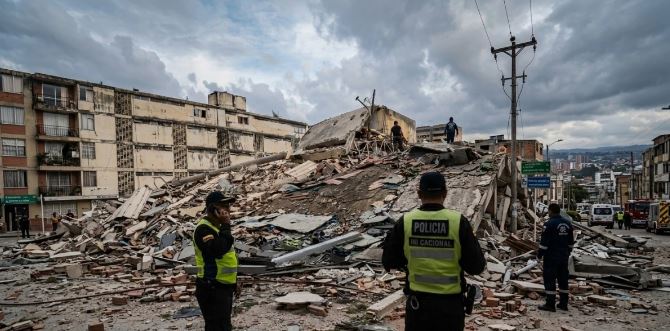
In Caracas, people evacuated swaying buildings and remained outside, many visibly shocked as they saw entire walls that had collapsed, making furniture visible from the street. Dust columns could be seen in two neighborhoods of the capital, where restaurants and other businesses are typically busy.
One woman described escaping her building: “When we went downstairs, the scene was like a horror movie,” said Maria Alejandra, a resident from a nearby building. “We had to climb over the rubble and everything.”
Another resident who lived through the devastating 1967 Caracas earthquake said this was unlike anything he’d experienced before.
Video footage showed emergency workers scrambling over the pancaked debris of a collapsed building in the capital as night fell, while distraught relatives sought help for loved ones believed to be trapped. Several dazed survivors were taken away, some on stretchers.
Venezuela Earthquake Live Updates: Rescue Teams Racing Against Time
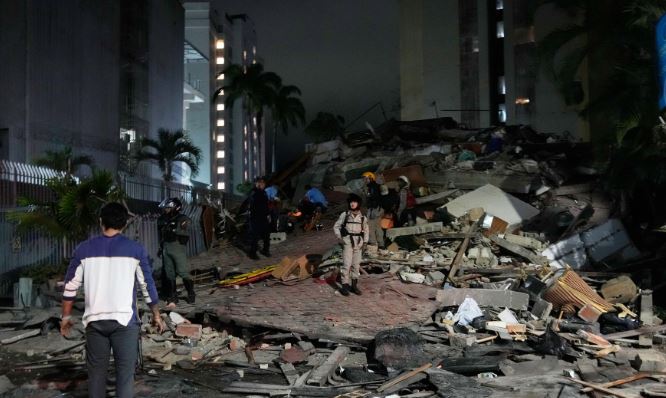
Right now, the single most important thing is getting people out of the rubble alive. The first 72 hours are the critical window in disaster rescue after that, survival rates drop sharply.
Rescue workers worked through the night attempting to find survivors still trapped under the rubble, and international teams headed to Venezuela to assist.
International help started pouring in fast. Rescue teams were being sent from the Dominican Republic, France, El Salvador, Mexico, Switzerland, Spain, Italy, and Qatar. Other countries offered humanitarian aid, including China, Brazil, and several Caribbean nations.
The U.S. response was notably swift. Secretary of State Marco Rubio said the US has already sent rescue teams to Venezuela, deploying search and rescue teams from Fairfax County, Virginia, and Los Angeles. He described the response as “big, fast, and effective.”
The state telecom company CANTV announced it would offer internet, fixed telephone, and television services free of charge for 48 hours, taken “in response to the contingency situation generated by the recent earthquakes.” That’s a small but meaningful lifeline for families desperately trying to reach each other.
What’s Shut Down Right Now
If you have family or friends in Venezuela, or if you’re trying to travel there, here’s what you need to know:
Venezuela has declared a state of emergency. Simón Bolívar International Airport near Caracas has temporarily closed after suffering damage the runway itself has been cracked. School classes are suspended nationwide for a week. Rail services and non-essential activities have also been temporarily canceled.
At least 30 aftershocks have occurred since the two main earthquakes, and the ground is still not stable. Authorities are urging people to stay out of damaged buildings.
The U.S. Embassy in Caracas urged American citizens in the country to monitor local media and follow updates through the State Department’s Smart Traveler Enrollment Program (STEP), avoid damaged areas and buildings, and seek secure shelter.
The Bigger Picture: A Country Already on Its Knees
What makes this tragedy even more heartbreaking is the context Venezuela is already living in. This comes at a dire time for Venezuela, which is still deep in political and financial crisis being led by an interim government after US forces captured President Nicolás Maduro earlier this year, and facing an economy crippled by years of hyperinflation.
The infrastructure needed to respond to a disaster like this hospitals, roads, communications was already strained. Internet connectivity dropped sharply across Venezuela after the quakes damaged power and telecoms infrastructure, before recovering slightly in the hours afterward. These disruptions may hinder rescue efforts and the flow of information being reported out of affected areas.
Acting President Rodríguez said she is coordinating with the International Monetary Fund to create an initial assistance fund of $200 million. It’s a start, but rebuilding after a disaster of this scale will take years and billions more.
How to Follow the Venezuela Earthquake Live Updates
If you’re looking to stay on top of this as it develops, here are the most reliable sources right now:
– CNN’s live blog is being updated frequently and has on-the-ground reporting.
– Al Jazeera’s live blog has strong Latin America coverage and regular updates.
– NBC News live updates have been thorough, especially on the U.S. response.
– NetBlocks (netblocks.org) is tracking internet and communications outages in real time.
– The USGS Earthquake Hazards Program has technical data on aftershocks and magnitude updates.
If you have family in Venezuela, WhatsApp and Telegram have been more reliable than regular phone calls, since CANTV’s free service is active right now.
A Note on What Happens Next
In the coming days, watch for a few things as this story continues to develop.
The death toll will rise almost certainly significantly as rescue teams reach areas that haven’t been accessible yet, particularly in La Guaira. The aftershock count, already past 30, will continue. And the international aid operation will either ramp up effectively or get bogged down by Venezuela’s airport damage and logistical challenges.
The people of Venezuela are showing extraordinary resilience neighbors pulling neighbors out of rubble, communities coming together in the streets overnight. That resilience matters. But they also need the world’s help, and they need it now.
This is a story that’s far from over. Keep checking back for the latest Venezuela earthquake live updates as rescue operations continue and the full scale of the disaster becomes clearer.
Last updated: June 25, 2026. This article will be updated as new information becomes available.
Read More : Caribbean Resort Fire: Deadly Blaze Destroys Popular Vacation Spot, 1,700 Evacuated

C0-Founder and Editor
Tazeen and Arzoo are the Co-Founders and Editors of THE NEWSTER. They specialize in covering world news, technology, weather, business, and trending stories. Their mission is to deliver accurate, timely, and well-researched journalism while making complex topics clear, reliable, and easy for readers to understand.
About The Author