Venezuela Earthquake Live Updates: Rescuers Race Against Time as 72 Hour Survival Window Nears End
Venezuela Earthquake
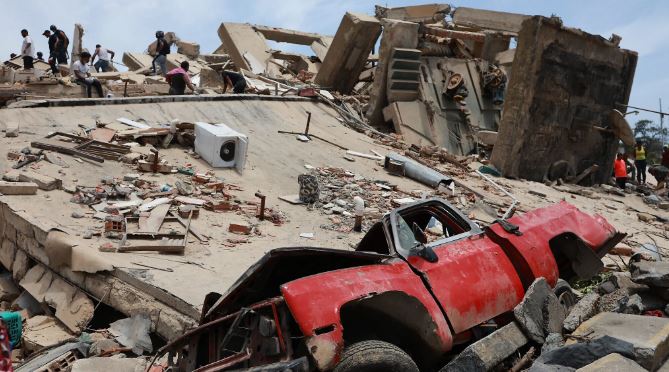
Venezuela earthquake rescuers continue searching for survivors as the crucial 72-hour rescue window nears its end, with hopes fading amid widespread devastation.
Imagine waking up to missed calls from family in another country calls you can’t return because the phone lines are down and you have no idea if they’re alive. That’s the nightmare thousands of Venezuelans abroad are living right now, scrolling through missing-persons websites and WhatsApp groups, hoping for a name, a photo, anything.
This is not a distant headline. This is happening right now.
On June 24, 2026, Venezuela was struck by back-to-back earthquakes a 7.2 magnitude foreshock followed just 39 seconds later by a 7.5 magnitude mainshock both centered near San Felipe, Yaracuy. The double punch was catastrophic. In La Guaira, the coastal state north of Caracas, entire apartment blocks crumbled. The country’s main international airport shut down. Hospitals were overwhelmed before the dust even settled.
What the Venezuela Earthquake Has Left Behind
By Saturday, June 27 just three days after the quake the numbers are staggering and still climbing.
At least 920 people are confirmed dead, over 3,000 have been injured, and at least 172 people remain trapped under the rubble of collapsed buildings. Independent tracking databases suggest more than 50,000 people are unaccounted for though the Venezuelan government has not confirmed that figure.
The USGS’s PAGER system has warned that the death toll could rise significantly, potentially exceeding 100,000. That’s not a typo. The scale of this disaster is still being understood.
What made it worse? Timing and geology. June 24 is a national holiday in Venezuela the anniversary of the Battle of Carabobo which meant most people were at home rather than at work when the earthquake struck. More people in residential buildings. More families together. More casualties in the exact places that collapsed.
The 72-Hour Window and Why It Matters
If you’ve followed earthquake disasters before Turkey in 2023, Haiti in 2010 you’ve probably heard the term “golden window.” It refers to the roughly 72 hours after a disaster during which survival rates for trapped victims are highest. After that, the chances of finding someone alive drop sharply.
Rescuers right now are racing against this closing window, searching rubble for survivors as time runs critically short. Every hour counts. Every sound picked up by acoustic sensors or rescue dogs matters.
Rescuers from El Salvador located a 15-year-old girl trapped on the ninth floor of a collapsed building in Catia La Mar, La Guaira state. That’s the kind of story you cling to in moments like this.
Venezuelan public television broadcast footage of a girl covered in dust wrapping herself in a dark sweatshirt as she emerged from the rubble with the help of rescuers. A young man was brought out on a stretcher in the San Bernardino district of Caracas to applause from onlookers as his tearful mother cried out, “Leandro, I love you.”
These moments are rare. And they are becoming rarer by the hour
On the Ground: What Rescuers Are Dealing With
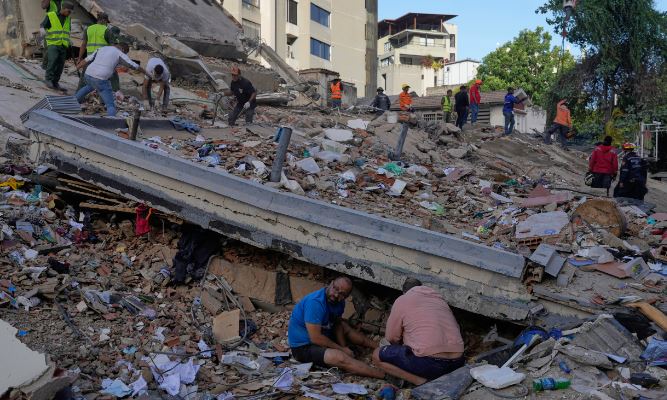
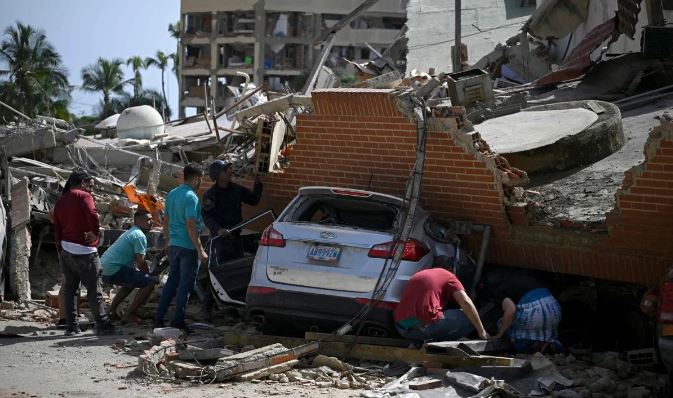
The situation in La Guaira is unlike anything the region has seen in modern times. The area is now fully militarized, with officials urging the public not to travel there. Satellite imagery shows collapsed buildings and people living on streets, in parks, in parking lots.
Retired schoolteacher Juan Alberto Mendaño climbed through wreckage past a dead body when he spotted a woman trapped and signaling for help with her hand. “When we heard the scream, there was nothing we could do,” he said.
That helplessness is echoing across the country. One mother Dayana Delgado, a mother of three demanded to know where the heavy machinery the government had promised was, saying it was ordinary residents doing the digging through crumpled buildings. Her 8-year-old son was still missing when she spoke to reporters.
Overwhelmed hospitals have set up improvised wards in hallways and even on the street, the result of years of chronic underfunding and neglect in Venezuela’s healthcare system.
Global Response: Who Is Helping with Venezuela Earthquake Relief
One of the more unexpected dimensions of this disaster is the international response surprising given Venezuela’s complicated geopolitical standing.
The US has deployed elite urban search-and-rescue teams from Fairfax County, Virginia, and Los Angeles County, as well as medical resources and humanitarian assistance. US Secretary of State Marco Rubio confirmed the US would also provide overhead satellite imagery to assess damage, particularly in coastal areas.
Colombia sent over 60 rescuers and four search dogs. El Salvador dispatched 300 rescuers and paramedics, along with 50 metric tons of humanitarian aid. Chile deployed a specialized USAR (Urban Search and Rescue) unit. Mexico sent a team from its Secretariat of National Defense. Spain announced it will deploy a field hospital.
The United Nations is also coordinating the deployment of urban search-and-rescue teams.
Venezuela’s acting president Delcy Rodríguez said she “deeply appreciates” the cooperation, including from the United States a remarkable statement given the tensions between the two governments earlier this year.
What’s Making This Harder: The Venezuela Crisis Within a Crisis
Here’s something that doesn’t always make it into breaking news coverage: Venezuela was already in deep trouble before June 24.
The country was already mired in political and financial crisis. Doctors have said chronic underfunding left the healthcare system completely unequipped to handle the surge of patients now arriving. Thirteen hospitals were damaged in the earthquake. The main airport in La Guaira Simón Bolívar International was shut down due to damage, complicating the delivery of international aid.
Venezuelans abroad have struggled to make contact with relatives due to interrupted phone service across the country. Within hours of the quake, unofficial missing-persons websites went live as desperate families uploaded photos and names a grassroots effort born from desperation.
Several Venezuelan soccer players were also among those killed in the earthquake. The Venezuelan Football Federation confirmed the losses, adding a layer of collective grief to an already devastated country.
How to Help What You Can Actually Do Right Now
If you’re outside Venezuela and want to help, here’s what actually works:
Donate to established organizations already on the ground. Médecins Sans Frontières (Doctors Without Borders) has personnel there. The International Red Cross and UNICEF are coordinating relief. Avoid sending physical goods unless a specific organization requests them they often create logistical problems.
Share verified missing-persons information carefully. Several independent websites have launched to track missing people. If you see someone sharing names or photos, verify before resharing misinformation spreads fast in disasters and wastes precious search time.
Follow official Venezuela earthquake live updates through outlets like CNN, Al Jazeera, or Reuters, which have reporters on the ground. Information is changing by the hour.
If you have family in Venezuela: The Red Cross has a family tracing service specifically for disasters. You can also try contacting local consulates, which are often coordinating lists of survivors at hospitals and shelters.
The Days Ahead
The 72-hour window is closing. But search efforts won’t stop there in Turkey’s 2023 earthquake, survivors were found more than a week later. What changes after 72 hours isn’t hope. It’s the odds.
Buildings were flattened. Streets cracked open. Furniture hung from the open facades of half-collapsed towers. Rebuilding La Guaira and parts of Caracas will take years and billions of dollars that Venezuela, frankly, doesn’t have right now.
But the immediate task the one that matters this weekend is finding whoever is still alive under that rubble. Every rescue team, every dog, every piece of listening equipment is a reason for someone’s family to keep their phone on.
Keep watching the Venezuela earthquake live updates. Keep paying attention. The people buried under that concrete are counting on the world not to look away.
Read More: Venezuela Earthquake Live Updates: 164 Dead, 971 Injured as Rescue Efforts Intensify

C0-Founder and Editor
Tazeen and Arzoo are the Co-Founders and Editors of THE NEWSTER. They specialize in covering world news, technology, weather, business, and trending stories. Their mission is to deliver accurate, timely, and well-researched journalism while making complex topics clear, reliable, and easy for readers to understand.
About The Author