West Bank at Breaking Point: What Is Happening in the Occupied Territory?
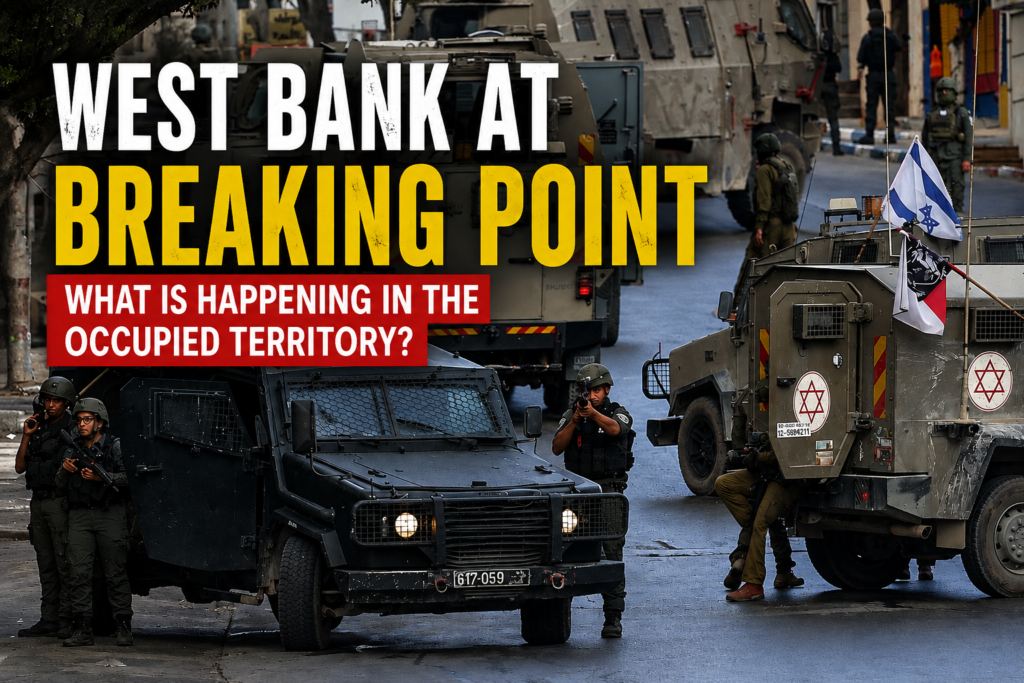
West Bank at Breaking Point
West Bank at Breaking Point explains the 2026 crisis settler violence, UN warnings, checkpoints, and what it means for Palestinian families right now.
West Bank at Breaking Point: What Is Happening in the Occupied Territory?
Picture this: you’re a shepherd. You’ve grazed your sheep on the same hillside your whole life, and your father did before you. One night in March, armed men from a nearby outpost show up, steal your entire flock over 400 sheep, your family’s whole livelihood and beat you and your son before they leave. That’s not a hypothetical. NPR’s Emily Feng documented almost exactly this happening to a Palestinian shepherd in the West Bank this year, and it’s part of why so many people are now searching “West Bank at breaking point” trying to understand what’s going on.
If you’ve seen headlines about the West Bank crisis 2026 and felt confused about how it got this bad, you’re not alone. This isn’t a new conflict but 2026 has pushed it into territory that even longtime UN officials are calling unprecedented. Let’s break down what’s actually happening, in plain language, with the numbers to back it up.
Why People Are Saying the West Bank Is at Breaking Point
The phrase isn’t an exaggeration. In late July 2026, the UN’s human rights office (OHCHR) said settler violence in the West Bank had hit an all-time high and that’s saying something, given how bad things already were. Nearly 700 Palestinians across nine communities were displaced by settler attacks in just the first four months of the year.
To put it simply: this is happening faster and more often than at any point since anyone started keeping records.
Read More : Nizhnekamsk Drone Strike in Russia: What Happened in Russia Amid the Ukraine War?
The Numbers Nobody Can Ignore (West Bank Latest News)
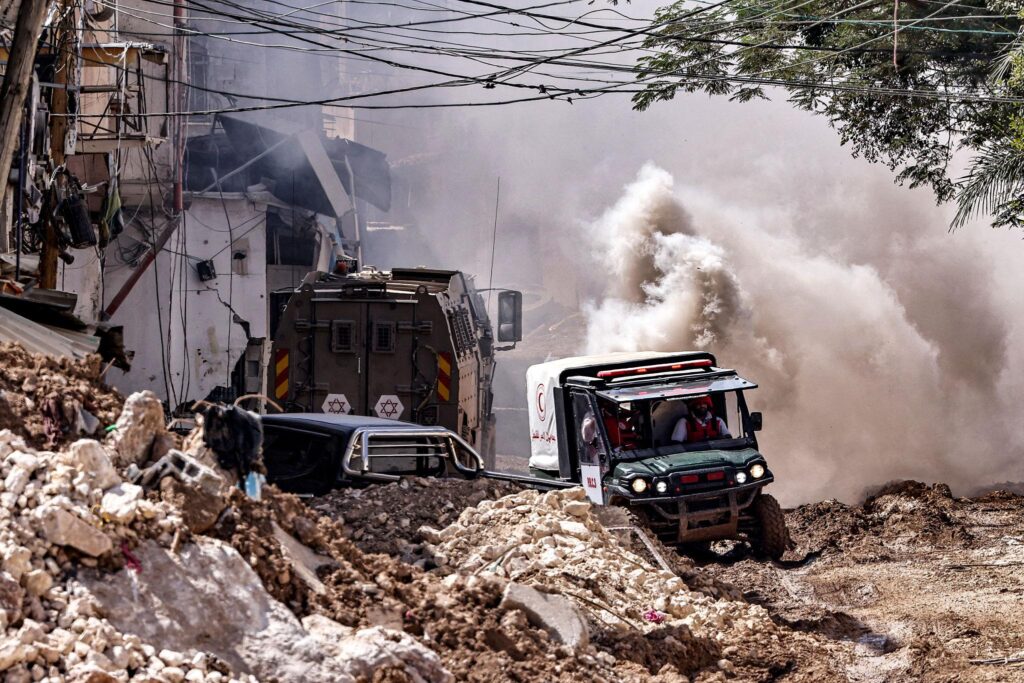
Numbers can feel abstract, so here’s a quick-reference table pulling together the most recent, credible figures. I’ve kept this to sourced data only no rounding up for drama.
| Metric | Figure | Source |
|---|---|---|
| Palestinians killed in West Bank, Jan–July 2026 | 68 (at least 13 by settlers) | UN OCHA |
| Palestinians killed in settler-related attacks, full year so far | 18–76 (estimates vary by tracking method and cutoff date) | UN / OHCHR |
| Settler attacks recorded, Jan–June 2026 | Over 1,020 (up from 757 in same period 2025) | UN, via Save the Children |
| Monthly attack rate, early 2026 | ~190/month, on pace for 2,000+ by year-end | OHCHR |
| Children displaced by settler violence, Jan–June 2026 | Over 1,000 | Save the Children |
| Palestinians injured by settlers in 2026 | Around 569 | UN data |
| Palestinians held in Israeli jails (as of July 1, 2026) | 9,299 (3,244 without charge) | Al Jazeera reporting |
| Rise in settler attack severity, 2024 to 2025 | Up 50% | Israeli military’s own data |
| West Bank poverty rate, end of 2025 vs. pre-Oct 2023 | 28% vs. 12% | Recent economic survey |
| West Bank unemployment rate | Over 30% | Same survey |
A few things jump out. First, the acceleration attack rates in 2026 aren’t just high, they’re climbing month over month. Second, the economic collapse running alongside the violence: poverty more than doubling isn’t just a side effect, it’s reshaping entire communities.
Read More : Mecca Defence Pact Signed as Hormuz Agreement Nears: What It Really Means
What’s Actually Driving the West Bank Crisis 2026
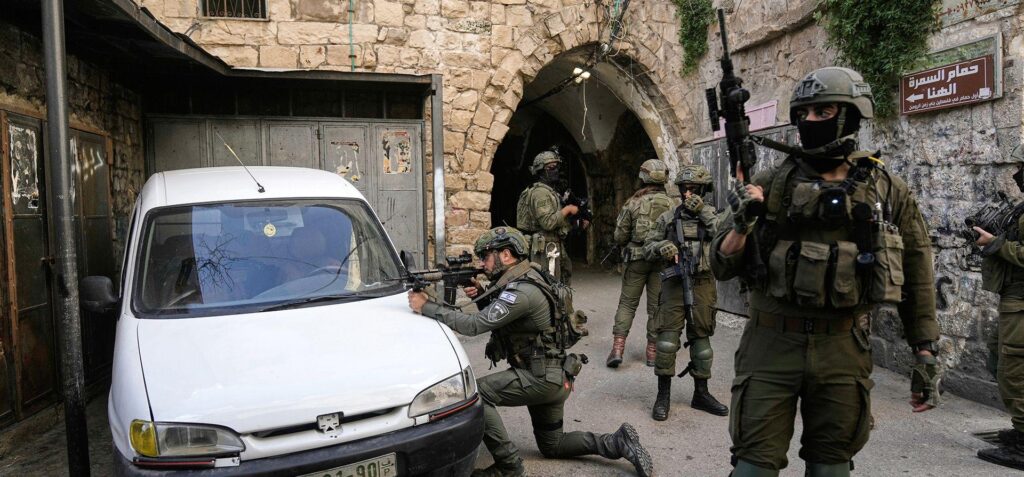
A few things are colliding at once, and it helps to separate them out instead of lumping everything into “the conflict.“
1. Settler violence with little accountability.
Human Rights Watch and the UN have both documented incidents where dozens of settlers sometimes including children approach a village at dawn, throw stones at homes, and in some cases open fire. In one incident near Nablus in late July, two separate attacks left four Palestinians and two Israelis dead. Rights groups have repeatedly flagged that settlers are rarely prosecuted, and Israeli soldiers are seldom convicted, even when incidents are caught on video.
2. Settlement expansion continues.
Even as the violence spikes, new settlement construction hasn’t slowed. Israel’s Finance Minister has pushed forward plans for hundreds of new housing units in at least one West Bank settlement this year alone. For Palestinians, this isn’t abstract policy it’s land they’ve farmed for generations being fenced off or bulldozed.
3. A military crackdown following deadly attacks.
After Palestinian gunmen killed two Israeli soldiers near Nablus in July, the Israeli military launched a large-scale operation across the West Bank storming towns, detaining hundreds of people, and expanding checkpoints. Settlers reportedly grew bolder during this period, with some vandalizing property while soldiers were focused elsewhere.
4. Economic strangulation.
Since October 2023, roughly 120,000 Palestinians who used to hold work permits into Israel have been barred from entering. More recently, an Israeli military commander in the West Bank ordered a ban on the remaining 30,000 workers with permits from entering settlements for jobs. When your only income source disappears overnight, poverty follows fast and it has.
5. Politics back home in Israel.
There’s a general election coming in Israel this October, and polling suggests the current government could lose. That context matters because expanding settlements plays well with the coalition’s base even as it inflames tensions on the ground. Palestinians, notably, have no vote in an election that will directly shape their daily lives.
What a Day Actually Looks Like Right Now
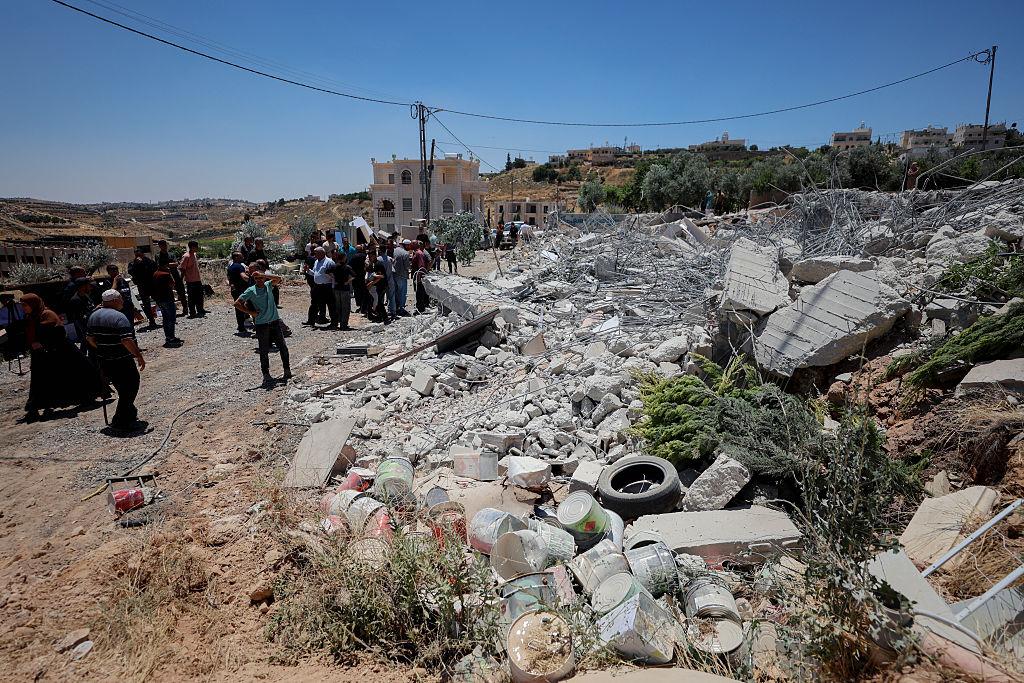
This is the part statistics can’t fully capture. In many rural Palestinian communities, families now organize overnight watch shifts actual rotating shifts, like a neighborhood watch, except the risk is an armed group showing up before sunrise. Farmers describe being unable to reach their own olive groves without a military escort or without risking confrontation. Checkpoints that used to be occasional inconveniences have, in many areas, become daily obstacles to reaching a hospital, a school, or a job.
If you’re trying to follow this as it develops, a few tools are actually useful for keeping track in near real time:
UN OCHA’s oPt (occupied Palestinian territory) portal publishes weekly humanitarian updates and casualty figures.
B’Tselem an Israeli human rights organization that documents incidents on the ground, often with photo and video evidence.
Al Jazeera’s live West Bank tracker and NPR’s Middle East desk for daily English-language reporting.
Save the Children’s West Bank updates specifically tracks the impact on children and displacement.
These aren’t perfect or unbiased in every case no single source ever is on a conflict this contested but cross-checking two or three of them gives you a far clearer picture than relying on a single headline.
Read More : Who is Saadiya Ahmed: What’s Actually Known About Sadiq Khan’s Wife
UN Warns West Bank Situation Could Escalate Further
This is the part worth sitting with. Human Rights Watch has explicitly said the current trajectory “threatens mass atrocities” if nothing changes. That’s not casual language from a group that’s typically careful about how it characterizes escalating violence.
The UN’s language has shifted too from “concerning” in past years to “all-time high” now, with officials noting that settlers and Israeli security forces have, in a number of documented cases, acted together during attacks on Palestinian communities rather than as separate forces.
None of this is happening in a vacuum, either. It’s unfolding alongside intensified Israeli military action in Gaza, which means international attention and aid resources are stretched across two crises simultaneously something aid organizations have openly said is straining their ability to respond to either one properly.
Read More : India Cockroach Protest Ends in Victory After Education Minister Resigns
What Can Actually Be Done Realistically
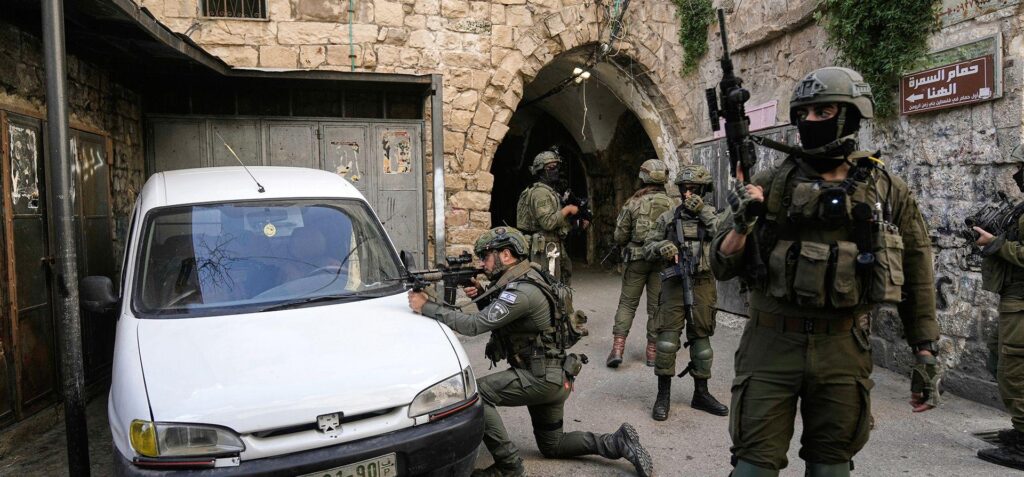
I won’t pretend there’s a quick fix here; anyone who tells you otherwise is oversimplifying a decades-old situation. But a few concrete, documented paths get raised repeatedly by policy analysts and humanitarian groups:
1. Accountability mechanisms independent investigations into settler attacks, with actual prosecutions, rather than the near-total impunity documented so far.
2. Halting settlement expansion something the International Court of Justice weighed in on roughly two years ago, ruling on the legality of the broader settlement enterprise.
3. Restoring work permits a direct, immediate way to address the economic collapse driving poverty and unemployment.
4. Increased humanitarian access easing movement restrictions so aid, medical care, and basic goods can actually reach communities that need them.
5. International monitoring presence expanded observer missions in flashpoint areas, something rights groups have pushed for repeatedly.
None of these are simple to implement politically. But they’re the specific, actionable items showing up again and again in UN and NGO reporting not vague calls for “peace,” but concrete steps.
Read More : Kemi Badenoch Biography And Family: From Engineer to Conservative Party Leader
Quick FAQs on the West Bank Crisis
Q: Is the West Bank part of Israel or Palestine?
Neither, technically. It’s classified under international law as occupied Palestinian territory, administered under a mix of Israeli military control and limited Palestinian Authority governance, depending on the zone (Areas A, B, and C under the Oslo Accords framework).
Q: What’s causing the spike in settler violence specifically in 2026?
A combination of factors: continued settlement expansion, a military crackdown following deadly attacks near Nablus in July, upcoming Israeli elections that make hardline positions politically useful, and a documented pattern of settlers acting with little fear of prosecution.
Q: How many Palestinians have been displaced this year?
Close to 700 people across nine communities were displaced by settler attacks in just the first four months of 2026, according to OHCHR. Save the Children separately documented over 1,000 displaced children in the first half of the year.
Q: Are Israeli civilians also being harmed?
Yes. The UN reported around 20 Israelis injured in West Bank incidents by mid-July 2026, and a gunfight near Nablus in July killed two Israeli soldiers alongside four Palestinians an event that triggered the subsequent military crackdown.
Q: Where can I follow reliable, updated information?
UN OCHA’s oPt portal, B’Tselem, and major wire-service coverage (Reuters, AP, Al Jazeera, NPR) are good starting points. Cross-check multiple sources given how contested and fast-moving the situation is.
Q: Is this connected to the war in Gaza?
They’re separate but related crises. Both are unfolding under the same Israeli government, both involve Palestinian civilians, and international attention and humanitarian resources are currently stretched across both simultaneously.
Where This Leaves Us
The honest answer is: nobody knows exactly where this goes next. What the data makes clear is that the trend line attacks per month, displacement numbers, economic collapse is moving in one direction, and it’s not toward calm. The Israeli election in October could shift government policy, for better or worse, but Palestinians living through this right now don’t get a vote in that outcome.
If there’s one thing worth taking away, it’s this: behind every statistic in that table above is a family deciding whether it’s safe to sleep tonight, or a farmer wondering if his olive trees will still be standing in the morning. That’s what “breaking point” actually means here not a metaphor, but a daily, lived reality for hundreds of thousands of people.

C0-Founder and Editor
Tazeen and Arzoo are the Co-Founders and Editors of THE NEWSTER. They specialize in covering world news, technology, weather, business, and trending stories. Their mission is to deliver accurate, timely, and well-researched journalism while making complex topics clear, reliable, and easy for readers to understand.
About The Author